

Kongming Pickled Mustard Root 孔明菜
Kongming Pickled Mustard Root is featured among the local specialties of Hubei.
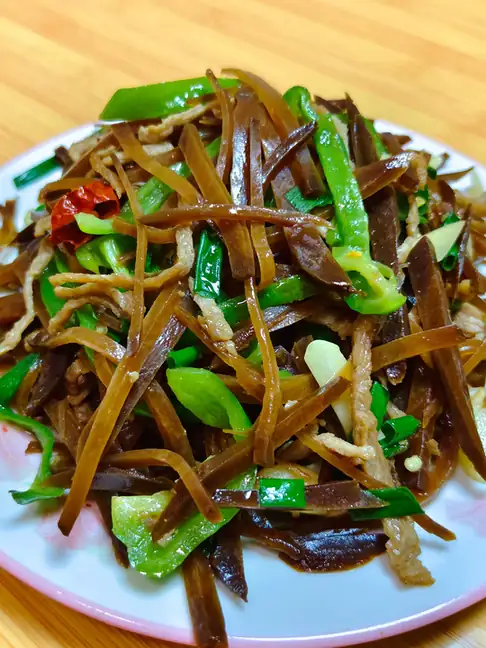
Image notes
Resized for the web; the photo itself has not been edited.
Kongming Pickled Mustard Root (孔明菜) is another name for Xiangyang Datoucai (襄阳大头菜), a salt-pickled mustard root from Xiangyang (襄阳) in Hubei. The Xiangyang city government names the roots from Dongjin (东津镇) and Shuanggou (双沟镇) in Xiangzhou District (襄州区) as the best known.
How it is made
The raw material is a root mustard (芥菜) of the cabbage family: a dense, conical, white-fleshed root with little water, plenty of fibre and a strong mustard bite, which the Xiangyang government says is not suited to eating raw. It is turned into a pickle in stages: selection, a first sun-drying, mixing with seasoning, a second drying, adding more seasoning, sealing and curing. The finished root weighs only about forty percent of its original weight.
Because it is cured mainly with salt, it keeps well, generally for more than half a year, and the Xiangyang government says the flavour improves the longer it is stored. There are two main styles, five-spice (五香味) and plain.
Flavour and texture
The cured root is yellow-brown, balanced between sweet and salty, fragrant with a slight sourness, and crisp. The Xiangyang government calls it one of China's four famous pickled vegetables and records that it was praised as "中国一绝" (unique in China) by Zou Jiahua (邹家华), then a vice-premier.
How it is eaten
It can be eaten as it is or stir-fried, and the Xiangyang government says it tastes better still cut into strips and fried with shredded pork. Restaurant dishes built on it include shrimp with datoucai (虾仁大头菜) and sliced fish with datoucai (鱼片大头菜). At Xiangyang banquets a few plates of appetisers come before the meal, and datoucai is always among them; the meal can end with a light soup of greens and shredded mustard root.
Where it comes from
In Xiangyang it is commonly just called "咸菜" (salted vegetable). Both of its other names, Kongming cai and Zhuge cai (诸葛菜), point to Zhuge Liang (诸葛亮), the Three Kingdoms strategist. According to local legend the pickle dates from his years of seclusion at Longzhong (隆中) in Xiangyang, and he later had the mustard root pickled so that his soldiers had something to eat with their rice.
More dishes to compare
Explore related local specialties and compare their names, preparation notes and ordering guidance.
Mianyang three steamed dishes 沔阳三蒸 →
Another Hubei dish for contrast: a hot steamed spread from Mianyang against a salt-cured root from Xiangyang that keeps for months.
Sources & reading
Written from the linked sources and fact-checked against them on 2026-09-25. Recipes and servings vary between kitchens.