

Taihe Pressed Tofu Sheets 太和千张
Taihe Pressed Tofu Sheets is featured among the local specialties of Hubei.
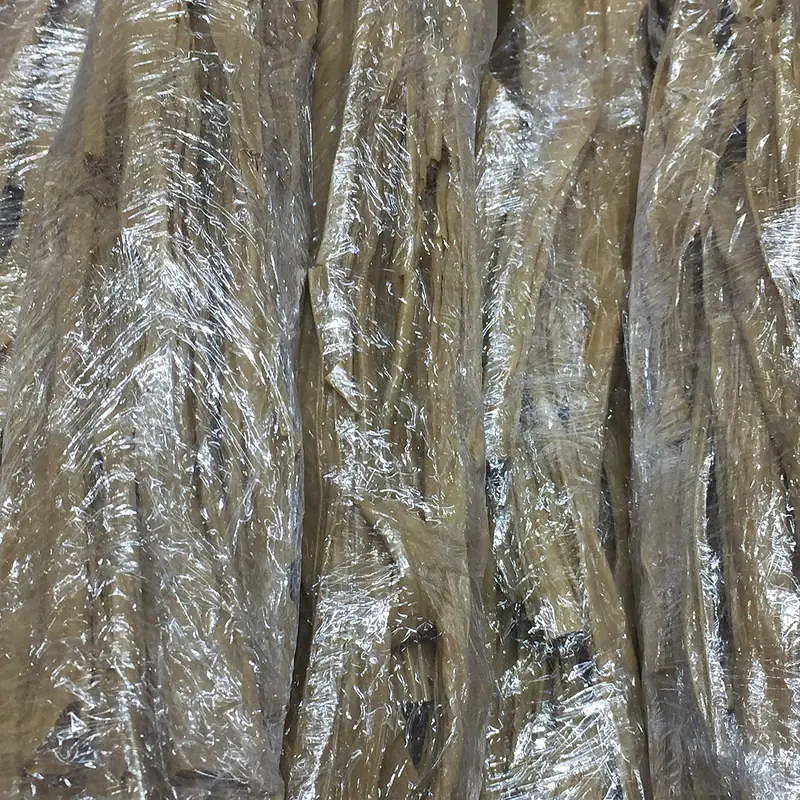

Photo adjustments
Full frame retained; EXIF orientation normalized, proportionally resized to at most 800 pixels and converted to WebP. No generated pixels or subject changes. Cards may crop the display.
Taihe Pressed Tofu Sheets (太和千张) are paper-thin sheets of pressed bean curd made by hand in Xiebu village (谢埠村), in Taihe town (太和镇) on the shore of Liangzi Lake (梁子湖) in Ezhou (鄂州). The Ezhou city government describes them as thin as a cicada's wing and white as snow, and records that they were sent to the imperial court as tribute in the Ming and Qing dynasties.
Ingredients
The sheets are made from local soybeans and spring water; Hubei Daily's rural edition names soybeans grown in Liangzihu District (梁子湖区) as the best raw material. Xiebu lies below Mount Wuchang (武昌山), an outlying ridge of the Mufu Mountains (幕阜山), and the city government's account has villagers drawing water from a sweet spring beside the village to grind the beans. Hubei Daily's rural edition found one workshop using water from an old well next to it.
How it is made
The soaked beans are ground on a stone mill and strained through gauze, and the milk is heated over a wood-fired stove until it comes to the boil after about 30 minutes. It is then set with gypsum until it turns to soft curd. While still hot, the curd is poured over cotton cloth, one layer of curd to one layer of cloth; the Hubei Daily watched makers wrap the curd in cloth strips nearly 4 metres long. The stack goes into a wooden mould and is pressed under weights to drive out water, then unmoulded. One roll of cloth usually takes ten layers, which maker Cheng Jianlai (程建来) calls the key to the sheets' thinness: they come out almost transparent, and one maker says two of them are not as thick as a single machine-made sheet. Working by hand from 8 am to 8 pm, one workshop turns out about 3,000 sheets a day.
How it is eaten
The sheets can be dressed cold, stir-fried or boiled. One Xiebu maker names hotpot and stir-fries with meat as good uses, and the Ezhou city government suggests the best way is to cook fish from Liangzi Lake in the spring water and serve it with the tofu sheets.
Sources & reading
Written from the linked sources and checked sentence by sentence against quoted extracts by a separate reviewer on 2026-09-24. Recipes and servings vary between kitchens.