

Soup-Filled Steamed Buns 汤包
Soup-Filled Steamed Buns is featured among the local specialties of Hubei.
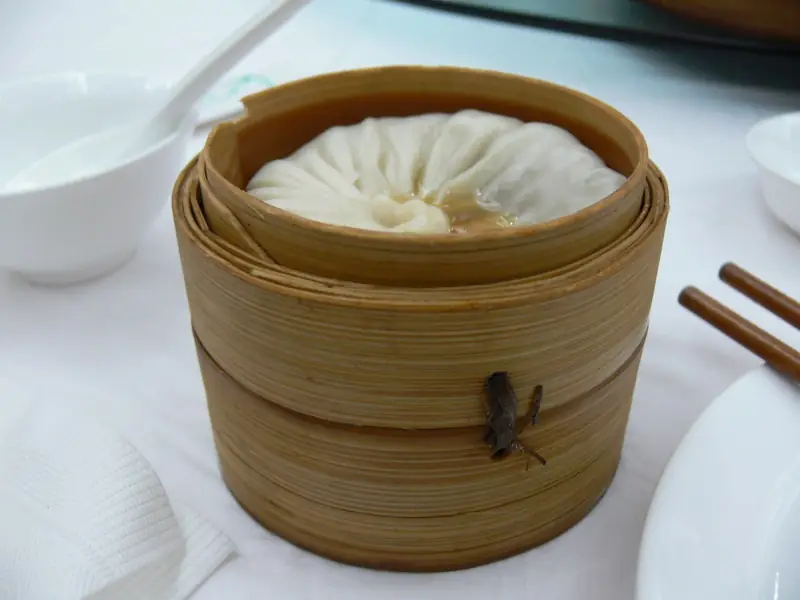

Photo adjustments
EXIF orientation normalized; resized without changing aspect ratio; converted to WebP. No subject edits.
Soup-Filled Steamed Buns (汤包) in Wuhan (武汉) are small basket-steamed buns with a thin wrapper around minced meat and hot broth. The Wuhan version is tied to Siji Mei (四季美), a restaurant founded in 1922 whose tangbao the Hubei Provincial Intangible Cultural Heritage Protection Centre counts among Wuhan's four famous snacks. The Siji Mei making technique is recognised as intangible cultural heritage and has passed to a fourth generation.
Where it comes from
The technique came to Wuhan from the Jiangsu and Zhejiang region about a century ago. Siji Mei was founded by Tian Yushan (田玉山), and its early shop of some 30 square metres on Hualou Street (花楼街) specialised in tangbao, served alongside noodle soups and Jiangsu-Zhejiang dishes; it hired a Nanjing chef, Xu Dakuan (徐大宽), who made the buns to the Jiangsu-Zhejiang standard for xiaolong buns. The Wuhan style took shape under chef Zhong Shengchu (钟生楚), known as the 'tangbao king', who reworked the Zhenjiang (镇江) method to suit the Wuhan taste for saltier, oilier food and set strict standards for making the buns. In 1956 the shop moved to Zhongshan Avenue (中山大道) at Jianghan Road (江汉路). That restaurant was pulled down in 2010 to build Wuhan Metro Line 2, and a Siji Mei flagship reopened on Jiqing Street (吉庆街), Zhongshan Avenue, in May 2017.
How it is made
The Jiangsu-Zhejiang method Siji Mei adopted has four stages: boil a stock for the aspic, set it into jelly, make the minced-meat filling, then wrap the buns and steam them in steamer baskets. The jelly melts into broth as the buns steam. Rolling the wrappers, filling them and pinching eighteen pleats takes practice: foreign experts who tried it at Siji Mei ahead of the 2026 Spring Festival found it hard going.
Flavour and texture
Hubei's intangible-heritage portal describes the Siji Mei bun as having a thin wrapper, a tender filling and a fresh, rich broth, salty and savoury. The Wuhan Bureau of Commerce adds that it is oily without being greasy. One bite releases a spill of hot broth. Besides fresh meat, Siji Mei's range grew to three-delicacy, shrimp, crab roe, shiitake, squid and other fillings, and in 1987 it staged a tangbao banquet showing more than 50 kinds.
Sources & reading
Written from the linked sources and checked sentence by sentence against quoted extracts by a separate reviewer on 2026-09-24. Recipes and servings vary between kitchens.