

Tujia Stacked Steamer Platter 土家抬格子
Tujia Stacked Steamer Platter is featured among the local specialties of Hubei.
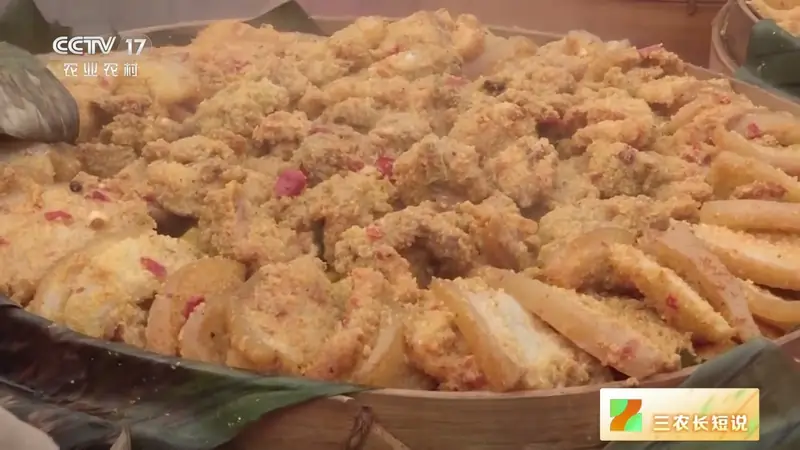
Image notes
Resized for the web; the photo itself has not been edited.
Tujia Stacked Steamer Platter (土家抬格子) is a Tujia dish of seasoned pork steamed over pumpkin in bamboo-wood steamer trays, served in Tujia communities around Yichang (宜昌), Hubei. Its name, tai gezi, literally means 'carrying the trays', and it is the dish Tujia families offer guests in the days before Spring Festival.
How it is made
China News Service described the method in a 2024 report from Sanyuchong Village (三渔冲村), Longzhouping Town (龙舟坪镇), Changyang (长阳). Fresh pork is washed and cut into large slices, then mixed with ginger, garlic, light soy sauce, baijiu, ground Sichuan pepper, chilli powder, zha guangjiao (榨广椒, a local seasoning) and maize meal, and left for 20 minutes. Peeled sweet pumpkin is cut into small cubes and tossed in maize meal.
The clean bamboo-wood trays are lined with lotus leaves; the pumpkin is spread over the bottom and the seasoned pork laid on top. The trays are covered and steamed over a fierce fire for an hour, and a handful of chopped spring onion goes on when the lid comes off.
Flavour and texture
The steamed pork slices are soft enough to melt in the mouth, and the rich meat flavour mixes with the sweetness of the pumpkin underneath. At the farm restaurant run by Li Hongyan (李红艳) in Sanyuchong, a lighter version with less fat and added spare ribs, potato or yam has become the usual order.
Where it comes from
In Tujia areas, inviting guests to eat tai gezi before Spring Festival is described by China News Service as the highest courtesy a host can show. Li Hongyan, who has made it for more than 20 years, says eating it together celebrates the harvest, asks for good fortune in the new year and thanks neighbours and friends. The steaming trays stand for a life that keeps rising, a pun on zhengzheng rishang (蒸蒸日上). The head of Longzhouping's cultural station calls it the first great dish of the Tujia, and Changyang has held several mass tai gezi feasts at Fangshan (方山) on the Qingjiang River (清江).
At the Chexi Folk Customs Scenic Area (车溪民俗风景区) in Yichang's Dianjun District (点军区), the Hubei Daily reported in 2023 that the Tusi (native chieftain) banquet (土司宴), served at round tables along the old street, cannot begin until tai gezi has been set down to anchor the table.
Sources & reading
Written from the linked sources and fact-checked against them on 2026-09-24. Recipes and servings vary between kitchens.