

Xishui Nine-Hole Lotus Root Starch 浠水九孔藕粉
Xishui Nine-Hole Lotus Root Starch is featured among the local specialties of Hubei.
Photo adjustments
EXIF orientation normalized; resized without changing aspect ratio; converted to WebP. No subject edits.
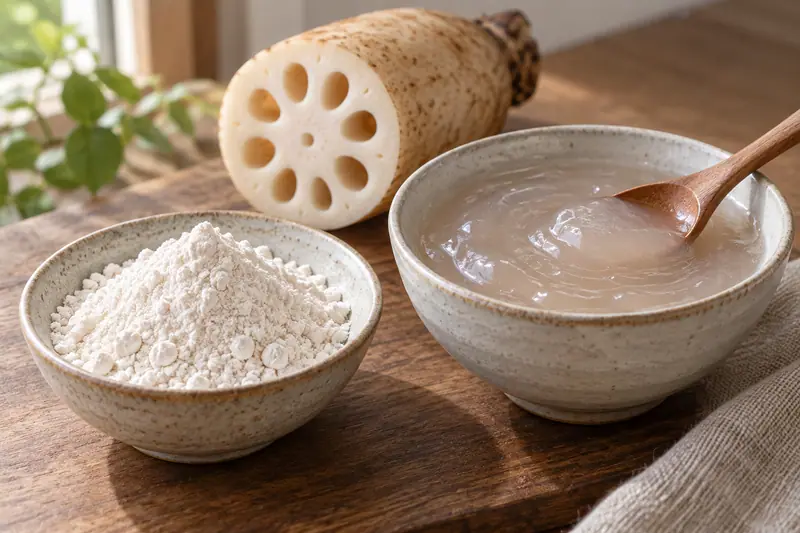
Xishui Nine-Hole Lotus Root Starch (浠水九孔藕粉) is lotus-root starch from Xishui in Huanggang, Hubei, and the name describes exactly what was ground down to make it.
How lotus-root starch is made
Lotus roots are washed, grated or crushed, and the pulp is rinsed so the starch settles out of the water. The sediment is dried into a fine powder that keeps for a long time. To eat it, the powder is first mixed with a little cold water to make a smooth slurry, then hot water is poured in while stirring, and the mixture thickens into a translucent gel. Getting the order right matters: powder added straight to boiling water clumps, which is the most common mistake people make at home.
Flavour and texture
Well-made lotus-root starch has almost no flavour of its own beyond a faint sweetness and a clean, slightly earthy note; its appeal is the texture. Mixed thin it drinks like a light soup, and mixed thick it sets into a smooth, glossy gel that holds the shape of the bowl. Sugar, osmanthus or dried fruit are usually added to the sweet version, and plain starch can also be used to thicken savoury dishes.
Xishui and the Hubei starch tradition
The supplied record links this starch to Xishui and gives no history, so no origin claim is made here. The regional material explains what sits behind the name: the nine-hole lotus root is grown around Banhe town in Xishui, and a newspaper report describes it as the only lotus root of its kind, with two more holes than ordinary root, adding that sweet preparations and lotus-root starch balls made from Banhe root were recorded in Chinese cookbooks. The same root has held geographical indication protection since 2010. That is why Hubei lists lotus-root products under separate place names: the town in front of the name marks where the root was grown and milled.
Ingredients and dietary checks
Pure lotus-root starch contains nothing but starch from the root, so it is naturally free of gluten, dairy and nuts. Packet versions often add sugar, osmanthus, sesame or dried fruit, which changes both the flavour and the allergy picture, so read the label. If you want a plain starch for cooking rather than a sweet drink, buy the version with no added sugar and check for any mention of flavouring.
How to buy and mix it
In shops and markets this is bought as a powder by weight or in packets, not ordered as a dish. Ask whether the starch is pure or sweetened, and how much is needed for one bowl: roughly a heaped tablespoon per cup of water is the usual starting point. If you are buying loose powder, ask how fresh it is, since the starch loses its clean taste over a long storage.
How to eat it
Serve the gel warm, in a small bowl, as a snack or a light finish to a meal. Stir it once more just before eating, since it thickens further as it cools, and add sugar or osmanthus at the table rather than in the pot if you are making it for several people. For a savoury use, mix the starch with cold water and stir it into a soup at the end to thicken it.
More dishes to compare
Explore related local specialties and compare their names, preparation notes and ordering guidance.
Mianyang Lotus Root Starch 沔阳藕粉 →
Mianyang Lotus Root Starch (沔阳藕粉) is the lotus-root starch of another Hubei place, listed alongside this one in the same catalogue. Both are made by washing starch out of ground lotus root, and both are eaten as a warm gel. Comparing them is a question of colour, fineness and whether the packet is pure starch or sweetened, which is exactly what to check when buying either.
Questions before you order
What is lotus-root starch used for?
It is mixed with hot water into a warm gel, usually sweetened, and it can also be used as a thickener for soups. It is a pantry product rather than a restaurant dish.
Why did my powder turn lumpy?
Because hot water was added before the powder was dispersed. Mix the starch with a little cold water into a smooth slurry first, then pour in hot water while stirring.
Sources & reading
The supplied food list supports this name and regional association. The culinary terms below are explained as menu vocabulary; a local recipe, origin story and venue availability have not been independently verified.