

Crayfish Tail Balls 虾球
Crayfish Tail Balls is featured among the local specialties of Hubei.
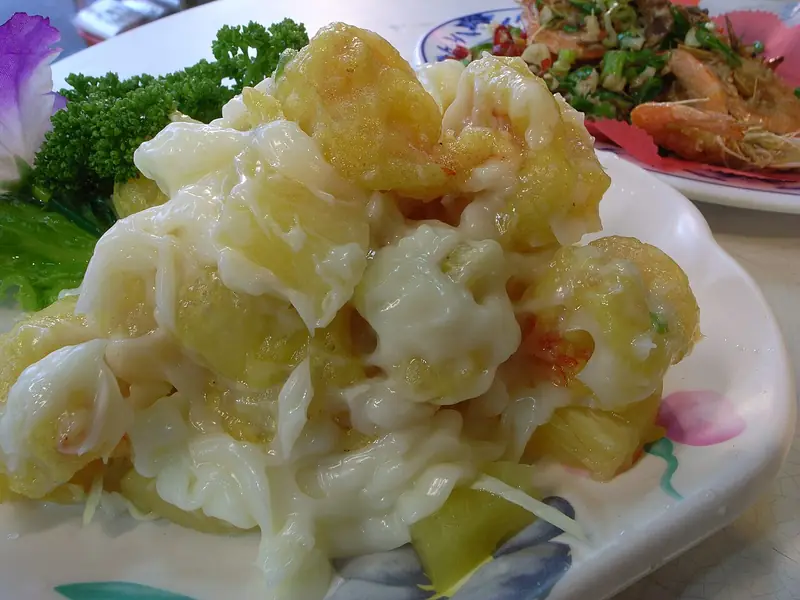

Photo adjustments
EXIF orientation normalized; resized without changing aspect ratio; converted to WebP. No subject edits.
Crayfish Tail Balls (虾球) is a crayfish dish from Qianjiang in Hubei, and the second character of the name means ball: it is the peeled tail meat, curled in the pan.
How crayfish tails are prepared
Crayfish tails are either peeled raw, with the shell and digestive tract removed, or boiled first and shelled afterwards. The meat is then cooked quickly, usually stir-fried with garlic, ginger, chilli and aromatics, or simmered briefly in a seasoned sauce. Quick cooking matters: crayfish tail meat is lean and turns rubbery if it is overcooked. A light coating of starch before frying is common, which helps the meat stay tender and gives it something to hold the sauce.
Flavour and texture
Peeled crayfish tail tastes sweet and mild, closer to prawn than to crab, with a firm, springy bite. Without the shell there is none of the work or the head juices that come with a whole braised crayfish, so the seasoning has to do more of the job. Expect garlic and chilli in most versions, and look for a dish that is glossy rather than swimming in oil, since the meat itself releases very little fat.
The Qianjiang crayfish pair
The supplied record places this dish in Qianjiang and gives no history, so none is added here. What the regional material shows is the setting: Qianjiang raises crayfish in flooded rice paddies and its government promotes 虾稻共作 — crayfish grown together with rice — as the standard model, with hundreds of thousands of mu under the practice. The city's processing sector then splits that harvest into tails, seasoned whole crayfish and shelled meat, which is exactly the division this entry represents.
Ingredients and dietary checks
The core is crayfish tail meat with garlic, ginger, chilli, cooking wine and often soy or a fermented paste, plus oil and sometimes a starch coating. That makes the dish unsuitable for anyone avoiding shellfish, and the cooking wine means it may not suit people who avoid alcohol. Wheat can appear in soy sauce or a coating, so ask if you need to be certain. Some kitchens add sugar to round off the chilli, which is worth knowing if you are watching salt or sugar.
How to order it
Ask how spicy the version is and whether the tails come in a sauce or dry-fried, because the two eat quite differently. If you want the flavour without the heat, ask for the chilli on the side rather than assuming the kitchen will adjust the sauce. Portions are usually generous enough to share, so ask how large one order is if there are only two of you.
How to eat it and plan a meal
Eat the tails with rice, so the sauce has something to soak into, and add a plain vegetable dish to balance the chilli and oil. Because the meat is already shelled, the dish is easy to share and needs no table technique. One order per two or three people is usually enough alongside rice and greens, and cold beer or tea is the usual partner.
More dishes to compare
Explore related local specialties and compare their names, preparation notes and ordering guidance.
Qianjiang Braised Crayfish 潜江油焖大虾 →
Qianjiang Braised Crayfish (潜江油焖大虾) is the whole braised crayfish: shell on, heads and claws included, cooked in a heavy oil-based sauce that you mop up with your fingers. Xia Qiu is the same animal peeled down to the tail and cooked as a quick dish, so the comparison is really about how much work the diner is expected to do and how much seasoning the meat has already absorbed.
Questions before you order
Is xia qiu the same as crayfish?
Yes, it is crayfish tail meat, peeled and cooked as a dish. The name describes the round shape the tail takes in the pan rather than a different animal.
Do I need to shell anything?
No. The tails arrive peeled, which is the point of the dish. If you want the full experience including the head juices and the shell, order the whole braised crayfish instead.
Sources & reading
The supplied food list supports this name and regional association. The culinary terms below are explained as menu vocabulary; a local recipe, origin story and venue availability have not been independently verified.