

Xiaogan Fermented Glutinous Rice Wine 孝感早米酒
Xiaogan Fermented Glutinous Rice Wine is featured among the local specialties of Hubei.
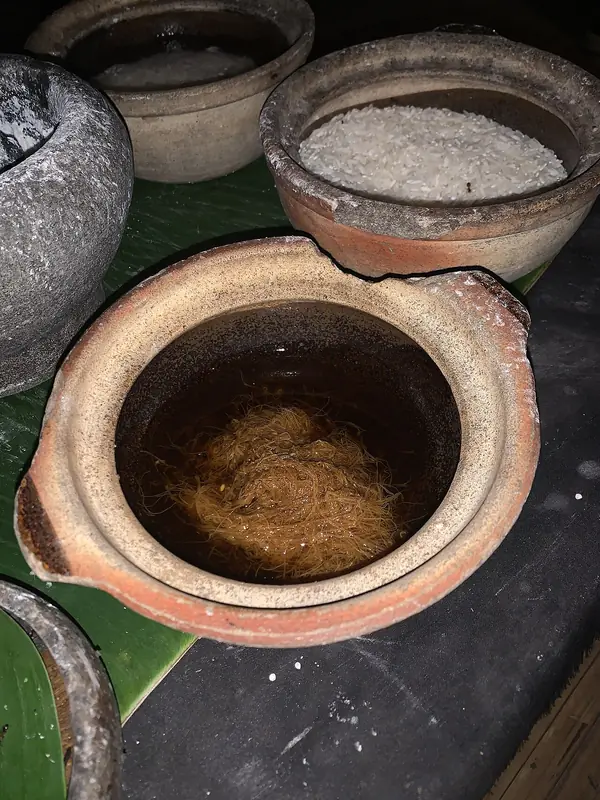
Xiaogan Fermented Glutinous Rice Wine (孝感早米酒) is the rice-wine entry for Xiaogan in Hubei, a fermented glutinous-rice drink that the city's own heritage page dates to the Ming dynasty and records as being made with a locally prepared starter rather than with a commercial yeast.
How it is made
The Xiaogan municipal heritage page records seven steps. Local long-grain glutinous rice from the Zhuhu area is selected, and a starter is made by fermenting local wild herbs ground together with rice flour. The rice is washed, soaked – the time depending on the temperature – drained, and steamed in a wooden steamer over a high flame for about ten minutes. The cooked rice is rinsed, spread out and cooled to roughly 30 C, then tossed with crushed starter powder. It goes into a container and ferments sealed at about 31 C, which is the step that turns starch into sugar and then into a little alcohol. A separate rice slurry is also prepared and fermented to thicken some versions.
Flavour and texture
The recorded raw wine is 米散汤清、颜色碧绿、味香浓郁、入口甜美: grains scattered in a clear broth, a greenish cast to the liquid, a strong fragrance and a sweet entry. That green-tinged clarity is a useful marker – it is young, lightly fermented rice wine rather than a filtered bottle. Sweetness comes first and the alcohol is gentle, which is why the drink is served as a dessert or breakfast bowl as often as it is drunk on its own.
Local roots and traditions
The heritage page dates the Xiaogan craft to the Hongzhi reign of the Ming dynasty and says the region has made rice wine for more than five hundred years, with a shop trade that began in the 1920s. Locally made starter and local rice are both part of the recorded method, which is what ties the drink to the district rather than to rice wine in general. Xiaogan also markets 麻糖 and 米酒 together as its signature pair. One caveat: the heritage page covers 孝感米酒, and the assigned catalogue name carries an extra 早 that the record does not explain.
Ingredients and dietary needs
The recorded ingredients are glutinous rice, water and a rice-flour starter cultured with local herbs. It is a fermented drink, so it contains alcohol, however mild, and it is not suitable for anyone avoiding alcohol or for children. It is made from rice rather than wheat, but a shared kitchen can still not be promised free of cross-contact. Because it is sweet and often served with added ingredients, ask what has been stirred in rather than assuming it is only rice and water.
How to order Xiaogan Fermented Glutinous Rice Wine
Write 孝感米酒 and ask 是清汤的还是糊汤的 – clear-broth or thickened – since the two eat quite differently. Useful questions are 有酒味吗 (does it taste of alcohol), 是热的还是凉的 (hot or cold) and 加了什么 (what has been added). Expect 30-odd recorded variations in Xiaogan shops, so naming what you want is easier than naming a brand.
How to eat it and plan a meal
A small bowl is the normal portion, and the drink works as a sweet ending or as a light breakfast item rather than as a drink to accompany a heavy main course. Stir it before you start, since the grains settle, and sip rather than gulp because the sweetness is concentrated. If you are ordering a set meal, save it for the last course.
More dishes to compare
Explore related local specialties and compare their names, preparation notes and ordering guidance.
Xiaogan sweet fermented rice 孝感米酒 →
Xiaogan sweet fermented rice (孝感米酒) is the plain, documented form of the same local rice wine; the entry 孝感早米酒 carries an extra character whose meaning the assigned record does not establish, so the two are best treated as the same drink until a source says otherwise.
Questions before you order
How much alcohol is in it?
The assigned record does not give a figure. It is a fermented rice wine rather than a distilled spirit, so the alcohol is mild, but it is present and the drink is unsuitable if you avoid alcohol.
What does the 早 in the name mean?
The municipal heritage page documents 孝感米酒 and does not explain 早. Treat the extra character as part of the catalogue label and ask at the counter rather than assuming a special morning version.
Sources & reading
The supplied food list supports this name and regional association. The culinary terms below are explained as menu vocabulary; a local recipe, origin story and venue availability have not been independently verified.
