

Jiangyong Yao Mountain Oil Tea 江永瑶山油茶
Jiangyong Yao Mountain Oil Tea is featured among the local specialties of Hunan.
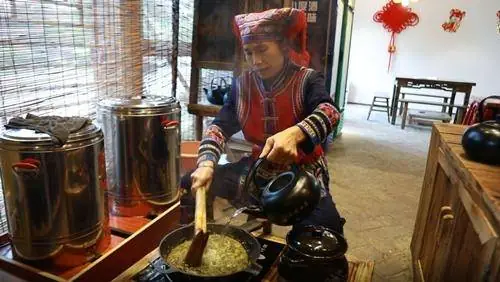
Image notes
Resized for the web; the photo itself has not been edited.
Jiangyong Yao Mountain Oil Tea (江永瑶山油茶) is a savoury tea soup made by the Yao people of Jiangyong County (江永县) in Yongzhou (永州), Hunan. Tea leaves are fried with lard, ginger and garlic, pounded to a pulp, boiled with spring water and poured over toppings such as spring onion and puffed rice. The Yongzhou culture and tourism bureau calls it the favourite food of Jiangyong's Yao people and the best thing they offer a guest.
How it is made
Locals say they 'beat' (打) oil tea rather than boil it. The tea pan is heated first and soaked tea leaves are fried over a low fire until fragrant, then pounded again and again with a tea pestle and turned often. Ginger, garlic, raw peanuts and lard go in and are pounded to a pulp until all the flavour is out, and sweet mountain spring water is added and brought to the boil. In one farmhouse demonstration reported by Voice of Hunan (华声在线), the broth is boiled until it turns yellow-green, strained into bowls through a bamboo sieve and seasoned with salt.
The tea itself matters most, according to one Jiangyong oil-tea shop owner: a large-leaf tea grown in Yuankou Yao Township (源口瑶族乡) is considered the best, and leaves picked between Qingming and Guyu in April make the finest colour and taste. When a shop owner goes into the hills in the morning to pick fresh leaves, regulars book a private room to taste the first oil tea of spring made with them.
Flavour and texture
A local saying runs that the first pan is bitter, the second drinkable, and the third and fourth make good oil tea. The first sip tastes slightly bitter and astringent, followed by a sweet aftertaste. Made with Yuankou leaves, the broth comes out golden like chicken soup; a villager serving it to visitors describes bitterness, rich aroma and fiery heat arriving together.
How it is eaten
The tea is ladled into bowls already scattered with chopped spring onion, puffed rice, peanuts and fried crisps, or coriander, and served with small snacks on the side. Jiangyong Yao families drink a bowl before every meal and call it 'immortals' soup' (神仙汤). Oil-tea shops have sprung up across Jiangyong, which has a Nüshu (女书) oil-tea culture street, and at a tasting during the Nüshu culture and tourism festival, Yao hosts sang a tea-offering song (敬茶歌) as they brought bowls to guests.
Where it comes from
The Hunan Department of Culture and Tourism states, citing historical records, that oil tea goes back to the Tang dynasty, more than a thousand years ago. Jiangyong's version has been named one of Yongzhou's ten signature snacks and a Hunan gold-medal tourist snack, and it received the China Gold-Medal Tourist Snack title in the award's first round.
Sources & reading
Written from the linked sources and fact-checked against them on 2026-09-24. Recipes and servings vary between kitchens.