

Xiangxiang Baked Rice Cake 湘乡烘糕
Xiangxiang Baked Rice Cake is featured among the local specialties of Hunan.
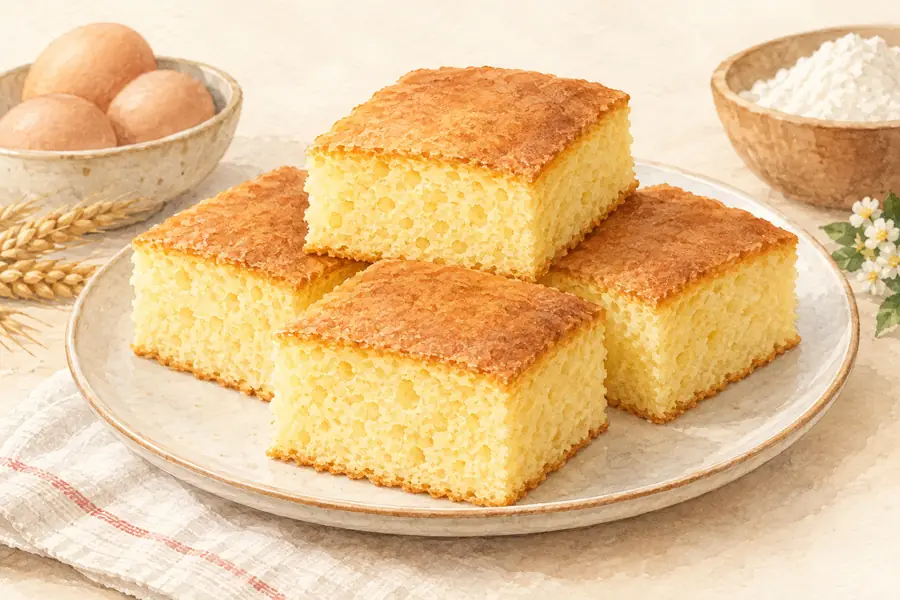
Xiangxiang Baked Rice Cake (湘乡烘糕) is a thin, crisp rice cake from Xiangxiang (湘乡) in Xiangtan, Hunan. Hunan Daily (湖南日报) counts it among the province's four famous cakes, alongside Xiangtan wick cake (湘潭灯芯糕), Ningxiang amomum cake (宁乡砂仁糕) and Yiyang sesame cake (益阳麻香糕).
Ingredients
Hunan Daily reports that the cake is made from single-crop rice grown in the basin of the Lian River (涟水). Each piece is shaped like a roof tile, so the cakes stack in only one direction; turn one piece the wrong way and a long row is hard to gather up.
Flavour and texture
Tasting it in the workshop of Zhang Xinlong (张新龙) in Lünan village (铝南村), Xiangxiang, in December 2016, the reporter found it thin and crisp, toasty, faintly sweet and strongly scented of rice. Before baking it is very plain, like a dried slice of steamed bun and barely sweet; baking turns it crisp and brings out the rice aroma. If it seems too dry, it can be stirred into water to make a rice paste. The paper places it among the cakes that are light and not too sweet, suited to go with tea.
Where it comes from
Hunan Daily calls Xiangxiang Baked Rice Cake a food of "Old Xiangxiang" (老湘乡), the county that existed from 3 BC to 1952 and covered today's Xiangxiang city, Shuangfeng County (双峰县), Louxing District (娄星区) of Loudi, most of Lianyuan (涟源) and parts of Shaoshan (韶山) and Anhua (安化). The technique was created locally in the Song and Yuan periods and later refined by Nie Fuyuan (聂福元) and his son, from Jiangxi, who opened the Tianyuan (天元) cake shop at Zhenxiang Tower (镇湘楼) in the county town; its sales spread and other shops copied it.
According to the Xiangxiang county gazetteer cited by the paper, when the Hunan Army (湘军) went to fight outside the province in the Xianfeng reign, Zeng Guofan (曾国藩) ordered the cake shops to make it in bulk as army rations and as tribute to the court. From 1852 to the middle of the Guangxu reign it travelled with the Hunan Army across China. It went to the front again in 1932 with 400 Xiangxiang volunteers during the Shanghai fighting, and after Xiangxiang was taken by the People's Liberation Army in August 1949, the county government helped the cake shops restart production to support the army's advance south, with more than ten shops working day and night.
Sources & reading
Written from the linked sources and checked sentence by sentence against quoted extracts by a separate reviewer on 2026-09-25. Recipes and servings vary between kitchens.