

Baotou Shaomai Dumplings 包头烧麦
Baotou Shaomai Dumplings is featured among the local specialties of Inner Mongolia.
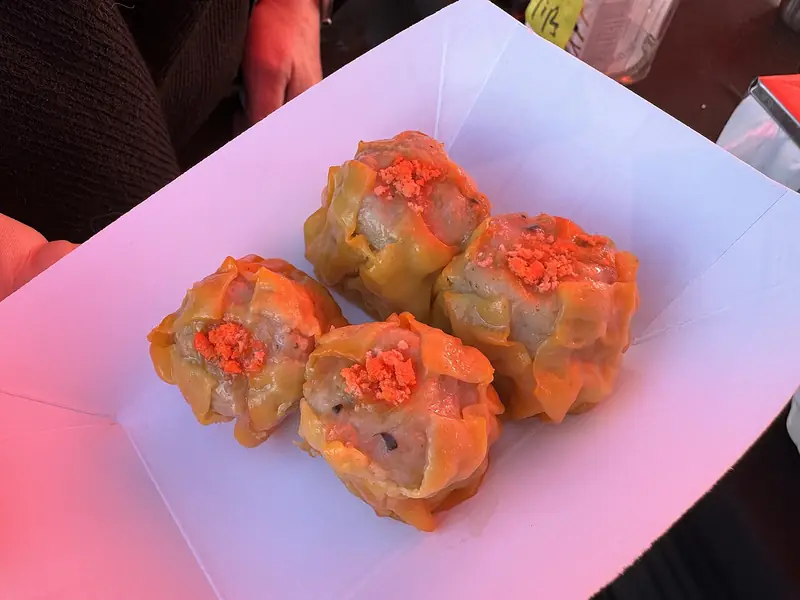
Baotou Shaomai Dumplings (包头烧麦) are thin-skinned steamed dumplings filled with mutton, eaten for breakfast in Baotou (包头), Inner Mongolia, with vinegar and a pot of tea. The Baotou Daily (包头日报) says the snack is popular mainly in the Yellow River's "Front Bend" area (黄河前套), which includes Hohhot (呼和浩特) and Baotou, and notes that the name is written with several sets of characters (稍麦, 烧麦, 烧美).
Ingredients
According to the Baotou Daily, the wrappers use "snowflake" flour (雪花粉) from the Hetao Plain (河套平原). The earliest fillings used only wether mutton from Sonid (苏尼特) and Ujimqin (乌珠穆沁) in Xilingol (锡林郭勒); when the grazing is good, cooks also use freshly slaughtered mutton from Darhan Muminggan Joint Banner (达茂旗) and Guyang County (固阳县) in Baotou. The scallions are dry-land scallions from Bikeqi (毕克齐) in Hohhot or Houyingzi (后营子) in Baotou, of which only the tender middle of the white part is used. Guyang flaxseed oil (胡麻油) is preferred for mixing the filling.
How it is made
Zhang Jun (张军), who runs the Beitou shaomai shop (背头烧麦) in Donghe District (东河区), described the method to Inner Mongolia Daily (内蒙古日报) in 2024. Wheat dough is rolled with a special rolling pin into thin wrappers shaped like lotus leaves. The filling mixes local mutton with flaxseed oil, scallion, salt, cooked starch, ginger and Sichuan pepper, and each wrapper is gathered gently around it into the shape of a pomegranate before steaming.
Flavour and texture
Straight from the steamer the dumplings are translucent, the skin thin as a cicada's wing yet supple enough not to tear. Inner Mongolia Daily says the filling is tender and leaves no harsh scallion taste. The Baotou Daily notes that the mutton and flaxseed oil make them somewhat greasy, which is why vinegar and brick tea come with them.
How it is eaten
The usual dip is aged Shanxi vinegar; the Baotou Daily also suggests local sea-buckthorn vinegar (沙棘醋), and, for heat, chilli oil stirred into the vinegar, made from Tuoketuo County's (托克托县) "Red Lantern" dried chillies doused with hot Guyang flaxseed oil. Brick tea is the standard drink, and a local saying has it that a day in Hohhot or Baotou starts with a liang of shaomai (the unit they are ordered by) and a pot of brick tea. In Donghe, where old Baotou culture began, regulars at the old shaomai houses gather after morning exercise to order one or two liang and talk.
Where it comes from
Most accounts trace the dumpling to old Guihua (归化城), now Yuquan District of Hohhot, and link the name to food "sold on the side"; a draft Suiyuan gazetteer (绥远通志稿) completed in 1937 says teahouses sold it as a sideline. The Beitou shop takes its name from founder Zhang Ruide's (张瑞德) swept-back hairstyle (背头).
Sources & reading
Written from the linked sources and fact-checked against them on 2026-09-24. Recipes and servings vary between kitchens.
