

Chatang Millet Flour Pudding 茶汤
Chatang Millet Flour Pudding is featured among the local specialties of Inner Mongolia.
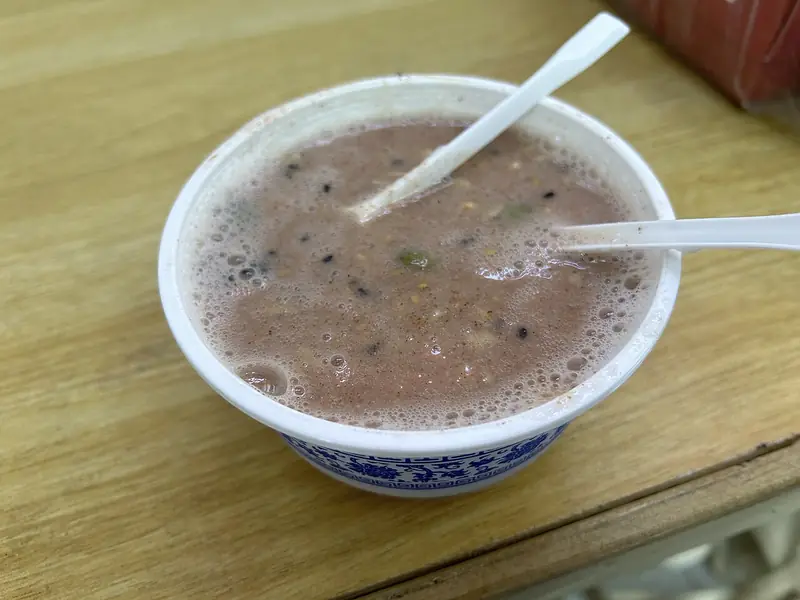

Photo adjustments
EXIF orientation normalized; resized without changing aspect ratio; converted to WebP. No subject edits.
Chatang Millet Flour Pudding (茶汤) is a heritage snack of Hohhot (呼和浩特), made from proso millet flour (糜子面) with boiling water poured from a copper kettle.
How it is made
The Huimin District (回民区) government gives the raw material as proso millet flour, made up with boiling water from a copper kettle inlaid with a dragon. The name means "tea soup", but the district lists only the flour and the water.
Where it comes from
The district presents Chatang Millet Flour Pudding as a traditional Chinese folk food and an item of intangible cultural heritage. In its account the dish first appeared in the Ming dynasty and spread among ordinary people in the Qing. As trade grew along the modern silk-and-tea camel route (丝茶驼道), it took root in the lives of the local peoples and became part of the area's customs and food culture.
In a 2023 report, district prosecutors recorded what the inheritor of Chen family tea soup (陈记茶汤) told them on a visit. The inheritor said the family's tea soup has more than a hundred years of history, and that chatang was once eaten only at certain festivals and only slowly became a common tea-time snack. The Chens moved from a street stall to their own shop, and their tea soup is now a municipal-level intangible cultural heritage representative project. When Kuan Xiang Zi (宽巷子) food street in Huimin District was upgraded, Chen family tea soup was one of the heritage foods given a place on the street, beside earth-oven beizi (土炉焙子) and Hui-style braised beef (回族酱牛肉).
Sources & reading
Written from the linked sources and checked sentence by sentence against quoted extracts by a separate reviewer on 2026-09-25. Recipes and servings vary between kitchens.