

Air-Dried Lamb Back 风干羊背子
Air-Dried Lamb Back is featured among the local specialties of Inner Mongolia.
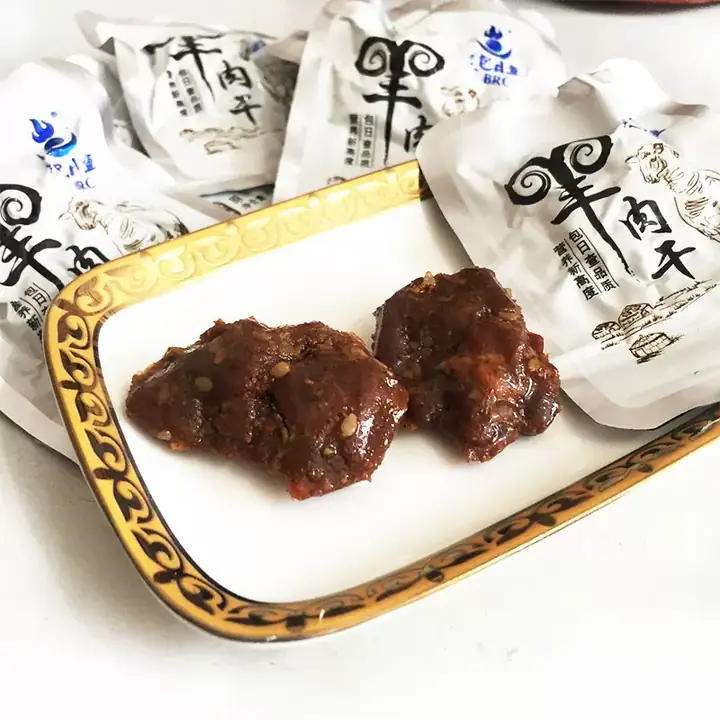
Image notes
Resized for the web; the photo itself has not been edited.
Air-Dried Lamb Back (风干羊背子) combines air-drying with the lamb back cut, so the name describes both how the meat is treated and which part of the animal it comes from.
Cure, dry, then cook
This is a two-stage preparation: the lamb back is cured with salt and dried in cold moving air, then cooked, usually by simmering or steaming, so that the dried meat rehydrates and becomes tender. Because the cut is thick, drying is slower than for thin strips, and the interior stays firmer than a strip would. Dried meat can also be cut smaller first, which speeds the process and gives a more even result.
Concentrated and firm
Expect a concentrated lamb flavour and a firm, slightly fibrous texture, saltier and drier than fresh meat. Simmering softens the fibres and pulls some of the salt into the cooking liquid, so the finished dish is usually milder than the dried piece tastes on its own. Where the meat was dried with fat attached, that fat carries the aroma; where it was not, the dish is leaner and a little harder to chew.
Two regional ideas joined
风干羊背子 is listed at province level for Inner Mongolia, so no single banner or league is attached to it. It joins two ideas already familiar in the region: air-drying as a way of keeping meat, and the back as a valued cut served on festive occasions. Read the name as a named regional preparation that combines both, rather than as a recipe that one place owns.
Salt, air and the back cut
Lamb back and salt are the base, with the drying air doing the rest. A spice rub or a smoke treatment may be added, and the cooking liquid can include aromatics or vegetables. Because the meat was salted for keeping, taste before adding more seasoning. Ask whether the piece is bone-in, since a dried back on the bone takes longer to cook and yields less meat per portion.
Buying and ordering it
Ask 带骨还是去骨 (bone-in or boneless), 怎么卖 (how is it sold) and 咸不咸 (how salty) if you are buying dried meat to cook at home. If you are ordering the cooked dish, ask 几个人吃 (how many people it serves) and 泡过吗 (has it been soaked), because soaking changes both texture and saltiness. For a large piece, ask whether the kitchen will cut it up.
Slicing and serving
Serve it hot, sliced across the grain, so the pieces are easier to chew, and pair it with a mild staple such as rice, noodles or steamed bread. The concentrated flavour means it works as one dish among several rather than as a large portion on its own. Any cooking liquid left in the pot is worth keeping, since it carries the salt and the aroma of the meat.
More dishes to compare
Explore related local specialties and compare their names, preparation notes and ordering guidance.
Whole Lamb Back 羊背子 →
Whole Lamb Back (羊背子) is the fresh form: the lamb back without the drying step, cooked and served at the table as a valued cut. Comparing the two shows what drying adds and takes away, more concentrated flavour and salt, and a firmer texture that has to be softened again in the pot.
Questions before you order
Is the meat hard to chew?
Dried meat is firm by nature, but slow simmering softens it. If a piece is still tough, it has not had long enough in liquid.
How salty is it?
It varies with the cure, so ask 咸不咸 (how salty) and taste the cooking liquid before seasoning it further.
Sources & reading
The supplied food list supports this name and regional association. The culinary terms below are explained as menu vocabulary; a local recipe, origin story and venue availability have not been independently verified.