

Hohhot Shaomai Dumplings 呼和浩特烧麦
Hohhot Shaomai Dumplings is featured among the local specialties of Inner Mongolia.
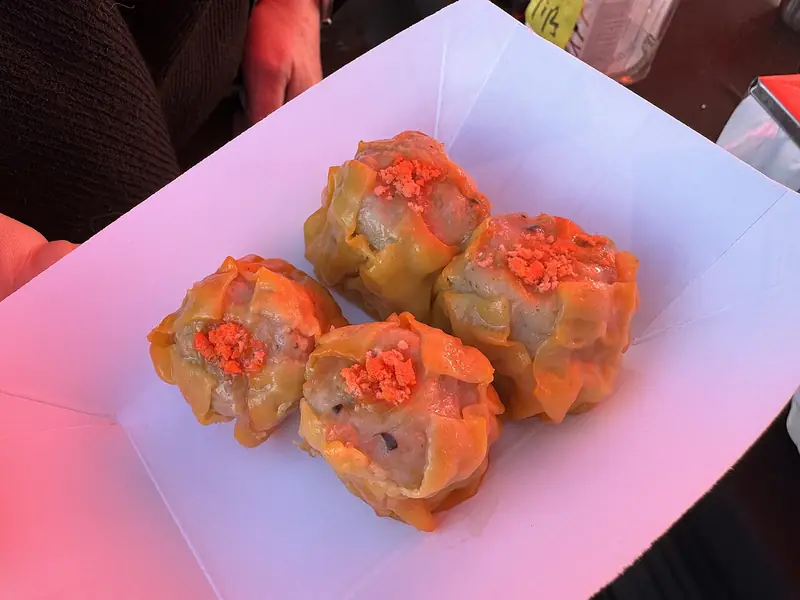

Photo adjustments
Full frame retained; EXIF orientation normalized, proportionally resized to at most 800 pixels and converted to WebP. No generated pixels or subject changes. Cards may crop the display.
Hohhot Shaomai Dumplings (呼和浩特烧麦) are dumplings of paper-thin wrapper, steamed or fried, around a filling of mutton and scallion, and a common breakfast in Hohhot (呼和浩特), Inner Mongolia. Xinhua describes them as shaped like a pomegranate, the wrapper gathered at the top like a pear blossom. The making of Hohhot shaomai was added to the Inner Mongolia Autonomous Region intangible cultural heritage list in 2011.
How it is made
The wrappers are pounded out with a traditional olive-shaped shaomai mallet, which spreads 40 at once into frilled, lotus-leaf rounds; one jin of flour makes about 80 wrappers. The classic filling is mutton with scallion. Xinhua names the ingredients as Hetao (河套) flour, Xilingol (锡林郭勒) mutton and Bikeqi (毕克齐) scallions, all national geographical-indication products.
The Inner Mongolia Cooking, Catering and Hotel Industry Association has set up a shaomai culture committee and published a group standard for Hohhot shaomai.
How it is eaten
Shaomai are ordered by the liang (两, 50 grams), and the weight counted is the wrapper, not the filling: a steamer basket of eight dumplings holds one liang of wrapper. A shaomai maker told Xinhua that her shop tells visitors one liang per person is enough. Diners call out orders such as "one liang fried, one liang steamed", and the usual pairing is a pot of brick tea (砖茶). Locals say "no shaomai, no Qingcheng (青城)", Qingcheng being another name for Hohhot.
Besides mutton and scallion, shops now offer vegetarian, shrimp and Spanish mackerel fillings, coloured shaomai and a children's version.
Where it comes from
Xinhua reports that shaomai began as mutton-filled snacks sold on the side in teahouses, called shaomai (捎卖, "sold along with"); the name was later written with other characters (烧麦, 烧卖, 稍麦). Wang Zhiqiang (王志强), secretary-general of the Inner Mongolia shaomai culture committee, traces it to the Yuan dynasty. In 2016 Yuquan District (玉泉区) named a run of lanes, including Wutasi Back Street (五塔寺后街) and Xiaozhao Front Street (小召前街), the city's first shaomai street, and the China Hotel Association named it a Chinese shaomai food street. The 1,100-metre street links the Five Pagoda Temple (五塔寺) and Dazhao Temple (大召), with old names such as Deshunyuan (德顺源) and Laosuiyuan (老绥元) among its shaomai houses.
Sources & reading
Written from the linked sources and checked sentence by sentence against quoted extracts by a separate reviewer on 2026-09-24. Recipes and servings vary between kitchens.