

Buckwheat Pressed Noodles 荞面饸饹
Buckwheat Pressed Noodles is featured among the local specialties of Inner Mongolia.
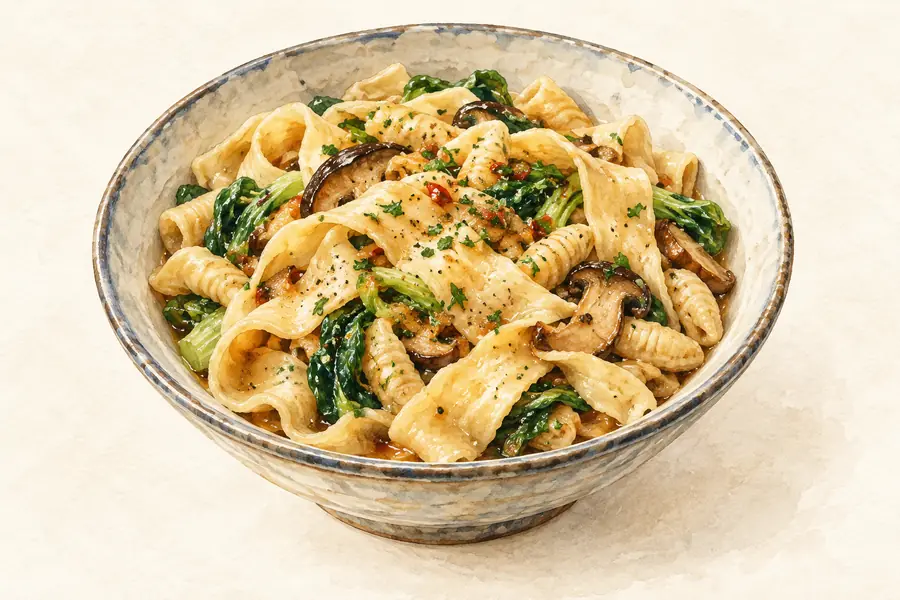
Buckwheat Pressed Noodles (荞面饸饹) is a buckwheat noodle dish listed for Chifeng, Inner Mongolia; 荞面 is buckwheat flour and 饸饹 names the press that forms the strands straight into the pot.
Pressed, not hand-pulled
Buckwheat flour contains no gluten, so it cannot be worked into a stretchy dough the way wheat can. Instead the flour is mixed with water, often with a proportion of wheat flour or another binder to hold it together, and kneaded into a firm mass. That mass is loaded into a press — a cylinder with a perforated base, worked by a lever or a screw — and pushed down so the dough extrudes in strands directly into boiling water. They cook in a minute or two, are lifted out and either drained or dropped straight into a waiting bowl of broth.
Earthy noodles, quick to soften
Buckwheat noodles are darker than wheat noodles and taste earthy, slightly nutty and a little bitter at the finish. The texture is softer and less springy than a hand-pulled wheat noodle, and it goes from firm to soft quickly, so the bowl is best eaten soon after it is served. In hot broth the noodles absorb the soup and thicken it a little; served cold and dressed with vinegar, chilli and garlic, they firm up and eat more like a salad. Either way the sauce should be sharp enough to answer the flour's weight.
A short-season grain
Buckwheat grows where the season is short and the soil is poor, which is why it belongs to the cooking of the northern uplands rather than to the wheat plains, and the entry is listed for Chifeng. Pressed noodles are the practical consequence: a grain without gluten needs a tool to become noodles. The same word describes the method wherever it turns up, and the local version is defined by the flour used and by what the bowl is served with rather than by the press itself.
Ingredients and dietary checks
Buckwheat flour is the base, with water and often a proportion of wheat flour or starch to bind it — so ask about the mix if you are avoiding gluten, because pure buckwheat noodles are not the default. Broth versions may contain meat stock, mutton, offal or a tomato base; cold versions are dressed with vinegar, soy, garlic, chilli oil and sesame. Ask 有面筋吗 (does it contain wheat gluten) and 什么汤 (what is the broth) if either matters, and confirm whether coriander is added by default.
How to order
Show 荞面饸饹 and decide the format first: 汤的还是凉的 (in soup or served cold) determines everything else about the bowl. Then ask 辣的还是清汤 (chilli or plain broth), 有大碗小碗吗 (are there different sizes) and 加什么 (what toppings can be added). If you are avoiding gluten, ask 是纯荞面吗 (is it pure buckwheat) and accept that many shops blend in wheat for texture. Ask 有香菜吗 (is coriander included) before the bowl is finished.
Eating it and building a meal
Eat it soon after it arrives, while the noodles still have some bite; they continue to soften in the bowl. Soup versions are a meal by themselves, and a cold version works as one course beside grilled meat or a plate of greens. If the broth is strongly flavoured, ask for less salt rather than adding anything. A small bowl alongside other dishes is a good way to try the noodles without committing to them as the main course.
More dishes to compare
Explore related local specialties and compare their names, preparation notes and ordering guidance.
Hure buckwheat noodles 库伦荞面 →
Hure buckwheat noodles (库伦荞面) take their name from the place where the flour is grown and milled, so the emphasis falls on the grain itself. 荞面饸饹 names the tool and the technique: the press that pushes the dough into strands. Eating them side by side is a lesson in how northern menus name food — sometimes by origin, sometimes by method, often by both.
Questions before you order
Why do these noodles need a press?
Buckwheat has no gluten, so the dough has no stretch and cannot be pulled or rolled into long strands by hand. The press forces it through holes straight into boiling water, which is what 饸饹 refers to.
Are the noodles gluten-free?
Not automatically. Many shops blend wheat flour or starch into the buckwheat so the dough holds together. Ask 是纯荞面吗 (is it pure buckwheat) if you need to know.
Sources & reading
The supplied food list supports this name and regional association. The culinary terms below are explained as menu vocabulary; a local recipe, origin story and venue availability have not been independently verified.