

Lamb with Broth-Soaked Roasted Millet 羊肉泡炒米
Lamb with Broth-Soaked Roasted Millet is featured among the local specialties of Inner Mongolia.
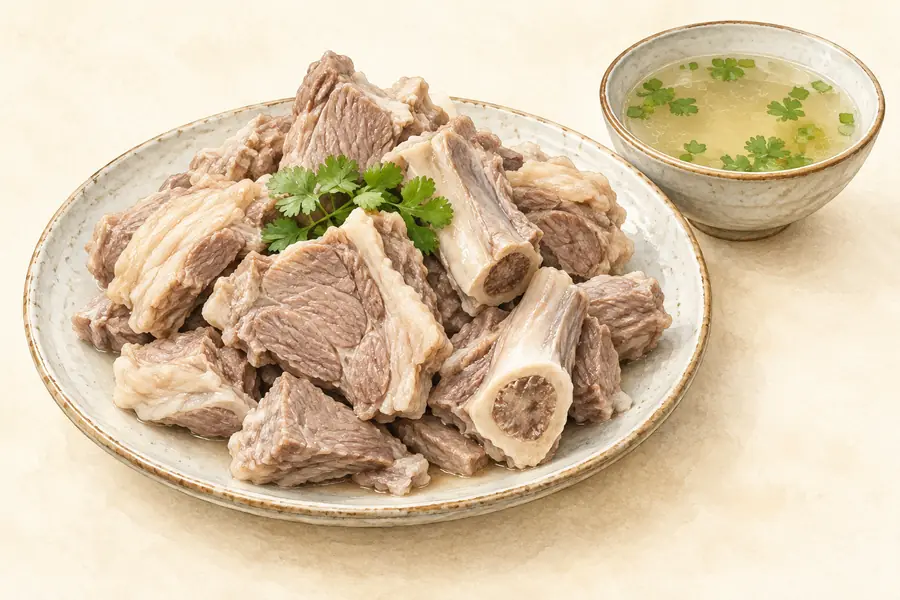
Lamb with Broth-Soaked Roasted Millet (羊肉泡炒米) is a Bayannur-listed Inner Mongolian dish that pairs lamb or mutton with 炒米, the roasted grain that is soaked or simmered in the meat's liquid.
How it is made
The grain carries the technique. 炒米 begins with millet, which is boiled in water until the grains split open, then dry-roasted in a large pan together with hot sand; the sand is sieved out with the bran while the pan is still hot, and the grain is ready to eat. Working with hot sand is what puffs and dries each grain quickly enough to keep it crisp rather than chewy.
On the plate, the grain meets liquid. Wikipedia describes 炒米 simmered into a porridge with meat broth or diced meat, and also soaked in milk tea, milk or yoghurt. A mutton version follows the same logic: the meat and its broth supply the moisture and fat, and the crisp grain softens as it sits.
Flavour and texture
Expect a direct contrast between soft, savoury mutton and grains that start crunchy and gradually soften. Wikipedia describes the finished 炒米 as yellow, hard-looking but crisp to eat, and not burnt, with its own aroma, so the bowl tastes of roasted grain as much as of meat. Because the grain is a filler as well as a flavour, the portion feels heavier than the volume of meat suggests.
Local roots and where it is eaten
炒米 is documented as an Inner Mongolian food with a practical history: Wikipedia calls it convenient, quick, hunger-resistant and a staple of Mongolian daily life, and notes that travellers traditionally carried 炒米 along with dried meat, milk tofu, milk skin and butter. That travel logic explains the pairing with meat and broth rather than with fresh vegetables.
Bayannur is where this entry belongs: the agricultural region along the Yellow River loop where both wheat and millet are grown. No founding story or fixed local recipe was documented, and none is invented here.
Ingredients and dietary needs
The two fixed components are mutton and roasted millet, with broth as the third. What else goes in is a kitchen choice: milk, butter, milk tofu or yoghurt appear in the broader 炒米 tradition, and a savoury version may use bone stock rather than plain water. If you avoid dairy, ask 有奶吗 (is there milk) or 放黄油吗 (is butter used).
Millet itself does not contain wheat, but the bowl may still pick up wheat from soy sauce, shared pots or a bread accompaniment. Ask 有面食吗 if you want to know what comes on the side, and ask 是什么汤 (what kind of broth) to check whether the base is mutton or a mixed stock.
How to order Lamb with Broth-Soaked Roasted Millet
Show 羊肉泡炒米, then ask 是汤还是干 (is it soupy or dry) and 炒米是泡在里面的吗 (is the grain already soaked in). Serving style changes the texture a great deal, and the answer tells you whether to eat immediately.
For the meat, ask 是羊肉吗 (is it mutton) and 带骨吗 (is it bone-in). If the kitchen offers a choice of cuts, 要瘦一点的 (a leaner piece) is a simple way to say what you want.
How to eat it and plan a meal
Eat it while the grain is still partly crisp and stop adding liquid once the texture suits you; the source's point about 炒米 is that it absorbs whatever it sits in. A bowl of grain with meat is a full meal rather than a side, so order one portion for two people if you are also having other dishes.
Ask 一锅够几个人吃 (how many does one pot serve) for a shared version, and keep a spoon handy — the grain sinks, and the last part of the bowl is porridge rather than a topping.
More dishes to compare
Explore related local specialties and compare their names, preparation notes and ordering guidance.
Hand-Held Boiled Mutton 手扒羊肉 →
Hand-Held Boiled Mutton (手扒羊肉) is a separate entry that names mutton on its own rather than a grain dish, so the difference is structural: the 泡炒米 bowl mixes meat and cereal so the grain soaks up the liquid, while a 手扒 meat entry is served for the meat itself.
Questions before you order
What exactly is 炒米?
It is roasted millet, not fried rice. Wikipedia describes boiling the grain until it splits, then roasting it with hot sand and sieving the sand out; the result looks hard but eats crisp and is used as a portable staple.
Should I eat it immediately?
Yes if you want texture. The grain softens as it absorbs broth or tea, which is intended, but the contrast with the mutton disappears once the bowl stands, so eat the crisp part first or order it in the soupy style deliberately.
Source introduction: Wikipedia contributors: 炒米 · CC BY-SA 4.0. English guide adapted from the cited material, with additional preparation and ordering guidance.
Sources & reading
The supplied food list supports this name and regional association. The culinary terms below are explained as menu vocabulary; a local recipe, origin story and venue availability have not been independently verified.