

Osmanthus Salted Duck 桂花鸭
Osmanthus Salted Duck is featured among the local specialties of Jiangsu.
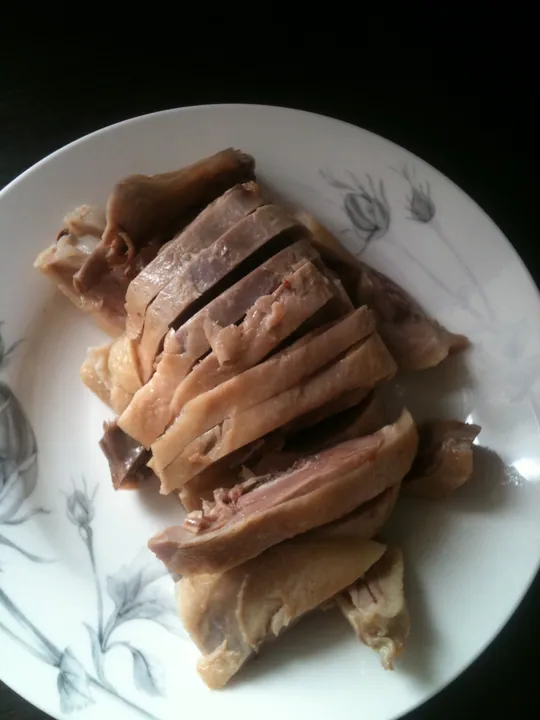
Osmanthus Salted Duck (桂花鸭) is the name Nanjing (南京) gives to its salted duck (盐水鸭) when it is made in the eighth lunar month, the osmanthus season, which is reckoned the best time of year for it.
Where it comes from
Salted duck is a traditional brined duck dish and a speciality of Nanjing. It can be made all year, but the batches made around the Mid-Autumn Festival, when the osmanthus is in flower, are counted the best, and the story goes that the meat then carries the scent of osmanthus. The Republican-era writer Zhang Tongzhi (张通之) put it this way in his Nanjing food book, the Baimen Shipu (白门食谱): in the eighth month salted duck is at its most famous, and everyone thinks the meat smells of osmanthus. The Chinese Wikipedia article on osmanthus adds that in Nanjing the flowers are added while the duck is processed, to raise the fragrance.
Nanjing has records of eating duck going back more than a thousand years, and salted duck had become popular in the city by the end of the Qing dynasty. Its traditional method has been recommended for Jiangsu's provincial intangible cultural heritage list.
How it is made
The method is summed up in a four-part rhyme: "rub with hot salt, cure again in clear brine, dry it well, poach it fully" (热盐擦、清卤复、烘得干、焐得足). A lake duck from the Gaoyou (高邮) area is dry-cured with salt that has been heated in a wok with star anise and Sichuan pepper, then soaked in a brine seasoned with star anise, spring onion, ginger and yellow rice wine. The skin is dried in a warm room or by hanging, and the duck is finally cooked in liquid kept between 85 and 95°C, never allowed to boil and never covered, for about 50 to 55 minutes.
Flavour and texture
The finished duck has white skin and tender, faintly pink meat. It tastes light and slightly salty, rich without being greasy, with a clean fragrance.
How it is eaten
Once completely cold, the duck is cut into small pieces and dressed with some of its cooking brine seasoned with a little salt. It is cured only briefly and does not keep, so it is made to be eaten fresh. That separates it from Nanjing's pressed duck, banya (板鸭), which is cured far longer, keeps for a long time and was the duck visitors carried home before vacuum packing.
More dishes to compare
Explore related local specialties and compare their names, preparation notes and ordering guidance.
Nanjing salted duck 南京盐水鸭 →
The same Nanjing salted duck under its everyday name; Osmanthus Salted Duck is the name for the batches made in the osmanthus season.
Sources & reading
Written from the linked sources and fact-checked against them on 2026-09-25. Recipes and servings vary between kitchens.
Image credits & notes (1)
- Gui hua ya (salted duck), sliced and served cold, the Nanjing specialty · 桂花鸭(盐水鸭),南京特产,切片冷食Photo: NNU10.24100114 · CC BY-SA 3.0 · taken 2011-12-04Resized for the web; the photo itself has not been edited. Thumbnails may show a cropped view.
