

Nanjing Salted Duck 金陵盐水鸭
Nanjing Salted Duck is featured among the local specialties of Jiangsu.
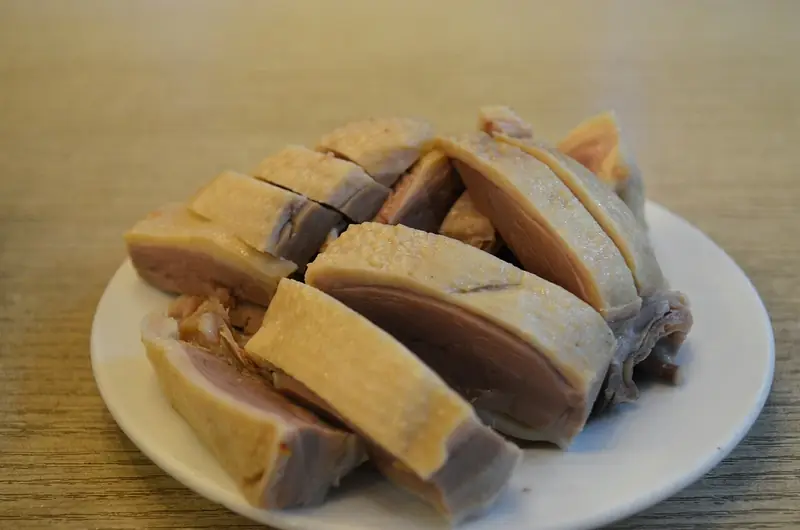
Nanjing Salted Duck (金陵盐水鸭) is a Nanjing (南京) speciality of the Jing-Su (京苏) kitchen: a whole duck dry-salted, brine-cured, dried and gently poached, then eaten cold, with a light, slightly salty taste and tender meat that is rich without being greasy.
How it is made
The method is summed up in a four-part rhyme: rub with hot salt, cure again in clear brine, dry it well, poach it fully. The traditional recipe calls for a lake duck from the Gaoyou (高邮) area. Refined salt, about 6 to 6.25 per cent of the duck's weight, is heated in a wok with star anise and Sichuan pepper until it turns faintly yellow and fragrant, cooled, and rubbed inside and out; the duck then rests for three to four hours somewhere cool, below 12°C.
Next comes the wet cure in a clear, over-saturated brine made from the blood-tinged liquor of earlier ducks, boiled, skimmed and flavoured with star anise, spring onion, ginger and yellow wine. The brine is reused, and the older it is, the cleaner and mellower the duck tastes. After curing, the skin is dried, usually in a drying room at about 55°C for some 45 minutes.
Finally the duck is lowered into water with ginger and spring onion that has just stopped boiling and is kept at 85 to 95°C, never boiling and uncovered, for about 50 to 55 minutes, until the deepest part of the thigh is no longer red. Once completely cold it is cut into small pieces and sprinkled with a little of the cooking liquor seasoned with salt.
Where it comes from
Nanjing has records of eating duck going back more than a thousand years, and salted duck was already popular in the city by the end of the Qing dynasty. It can be made in any season, but the duck made in the eighth lunar month, when the osmanthus flowers, is held to be the best, and the legend that its meat then smells of osmanthus gives it a second name, osmanthus duck (桂花鸭). The Republican-era writer Zhang Tongzhi (张通之) recorded that in Nanjing's eighth month salted duck is at its most famous. Its traditional processing craft is a recommended item for Jiangsu's intangible cultural heritage list.
Flavour and texture
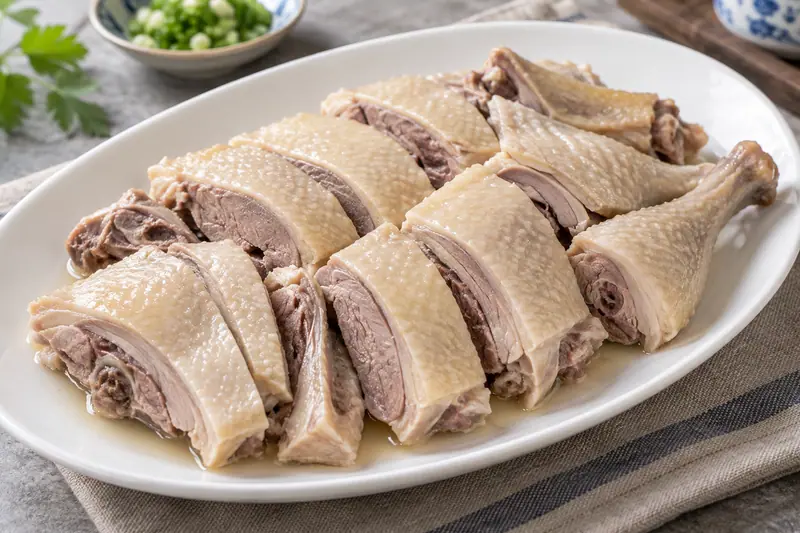
The duck used should not be too large or too fat. Finished, it has white skin and tender, faintly pink meat with a clean aroma. It is often confused with Nanjing pressed duck (板鸭), but the two differ: salted duck is cured only briefly, does not keep and is made to be eaten fresh, while pressed duck is cured far longer, is made raw and keeps well.
Questions before you order
Why is Nanjing Salted Duck also called osmanthus duck?
The duck made in the eighth lunar month, when osmanthus flowers, is held to be the best, and by legend its meat then carries an osmanthus fragrance.
Sources & reading
Written from the linked sources and fact-checked against them on 2026-09-25. Recipes and servings vary between kitchens.
Image credits & notes (1)
- Reference photo of a similar dish · 同类菜品参考照片A similar preparation is pictured; the local version may differ. 同类菜品参考照片,当地做法可能不同。Photo: AddisWang · CC BY-SA 3.0Resized for the web; the photo itself has not been edited. Thumbnails may show a cropped view.
