

Dingnan Sour Wine Duck 定南酸酒鸭
Dingnan Sour Wine Duck is featured among the local specialties of Jiangxi.
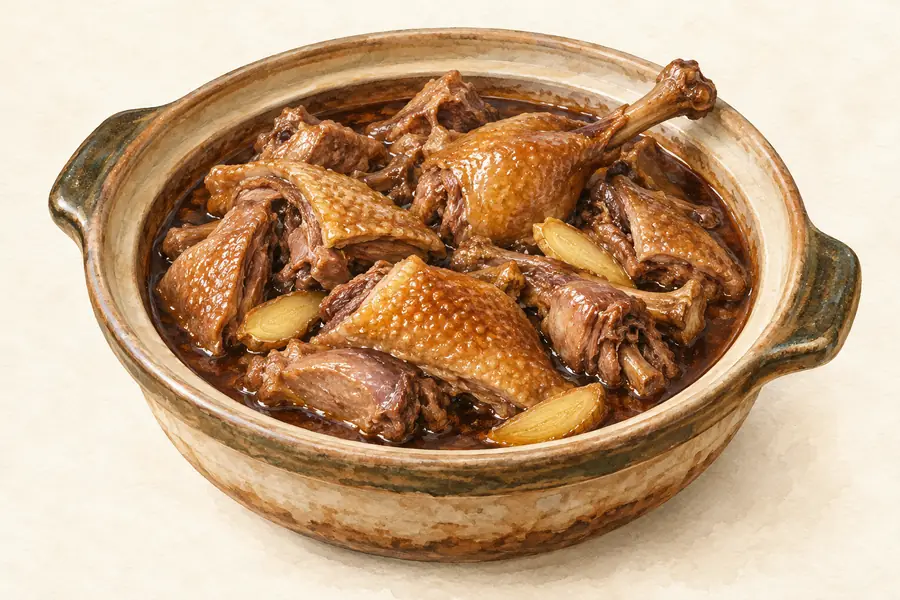
Dingnan Sour Wine Duck (定南酸酒鸭) is a traditional Hakka (客家) dish of Dingnan county (定南县) in Ganzhou (赣州), Jiangxi: a whole duck poached, cut up and dressed with a sour, hot sauce of rice vinegar, ginger and chilli.
How it is made
The method published by the Dingnan county government has two steps. A ma duck (麻鸭), a duck with speckled plumage, of about 2 kilograms goes into boiling water and cooks until just done, then rests off the heat in the water for about 30 minutes before it is lifted out and drained. Peeled ginger is minced, facing-heaven chillies (朝天椒) are cut into rings, and both are mixed with rice vinegar into a sour-hot sauce. The duck is cut into pieces, laid on a plate and the sauce poured over it.
Flavour and texture
The county government sums up the flavour in three parts: an appetising sourness, a satisfying heat and an appealing wine aroma.
Where it comes from
Dingnan dates the technique to the Southern Song dynasty. In the county's account, Hakka ancestors who had fled war in the north found the south damp and rainy and still felt chilled after drinking ginger tea, until someone began taking local wild chilli and minced ginger with their home-brewed rice vinegar. From then on Hakka cooks seasoned food with sour and hot flavourings, ginger and camellia oil, and the duck dish grew out of that habit. It is now a dish that Dingnan Hakka households set out at every festival.
The Dingnan Hakka sour wine duck technique entered Jiangxi's third batch of provincial intangible cultural heritage in 2010. The dish is also rated a Jiangxi famous dish and one of the ten famous dishes of southern Jiangxi (赣南), and it won a special gold award at Ganzhou's first Hakka famous-dishes chef contest.
More dishes to compare
Explore related local specialties and compare their names, preparation notes and ordering guidance.
Lianhua duck with blood sauce 莲花血鸭 →
Another Jiangxi county duck dish defined by its sauce: duck blood in Lianhua, rice vinegar, ginger and chilli in Dingnan.