

Steamed Pork with Rice Meal 米粉蒸肉
Steamed Pork with Rice Meal is featured among the local specialties of Jiangxi.
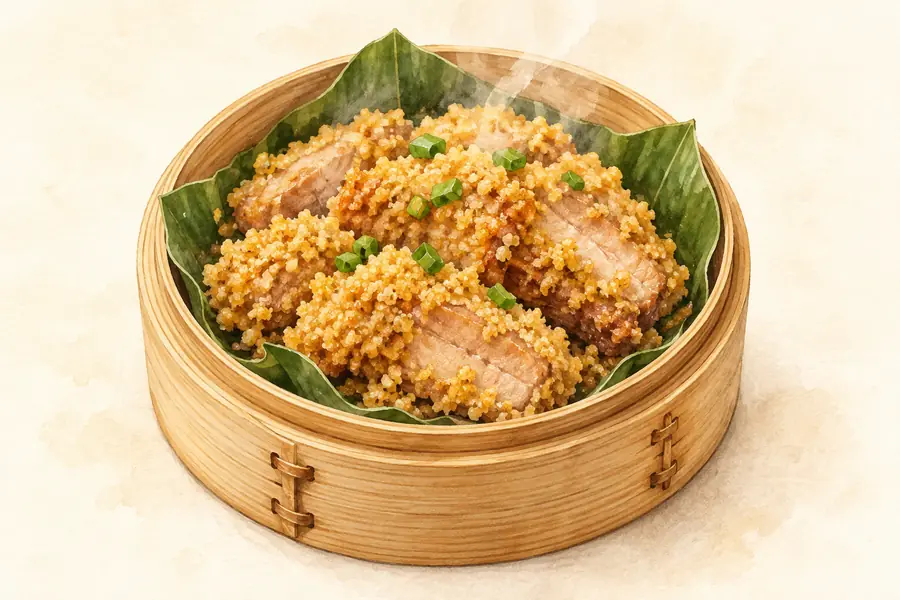
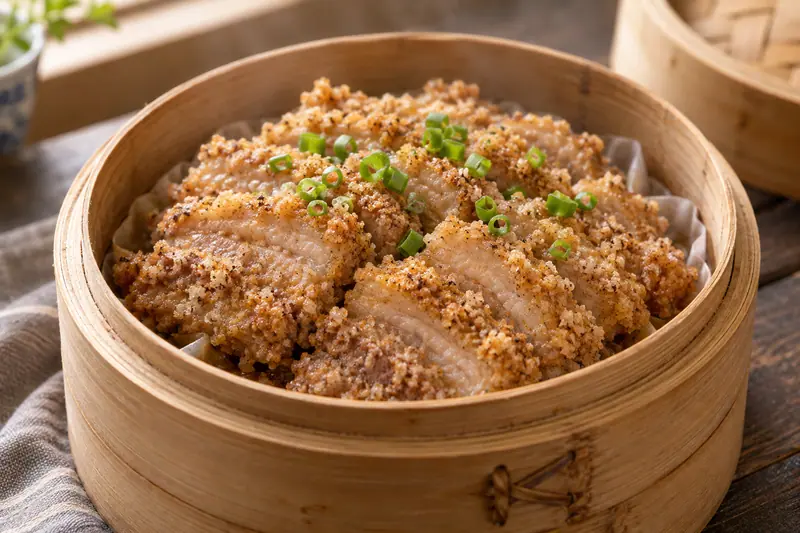
Steamed Pork with Rice Meal (米粉蒸肉) is skin-on pork belly coated in spiced, toasted ground rice and steamed, a home and banquet dish of Jiangxi. Chinese Wikipedia counts it among the most representative dishes of Gan cuisine (赣菜). In 2018 it was one of ten Jiangxi dishes on the China Cuisine Association's (中国烹饪协会) first published list of classic regional dishes, as reported by the government news account Nanchang Release (南昌发布).
How it is made
Contemporary Jiangxi (当代江西), describing the Nanchang (南昌) version, calls the rice meal the most important part. In the traditional method, rice is mixed with star anise and cassia bark and dry-fried over a low flame until the grains turn pale yellow, then the toasted rice is ground into meal.
The cook picks a good piece of pork belly with fat and lean in layers and cuts it, skin on, into wide thin slices. The meal and pork are mixed with water and light soy sauce and stirred patiently; once the meal has soaked up the liquid, the pork goes into a steamer basket. Heat control matters: too fierce and the meat dries out, too gentle and the aroma does not come through. Home cooks have their own methods; one is to lay pumpkin in the bottom, put the pork on top, and steam first over high heat and then over low heat.
Flavour and texture
Done well, the meat is soft and yielding, the rice meal is moist with fat and the dish is strongly fragrant. The pumpkin-lined version is described as rich without being greasy.
Where it comes from
The Qing-dynasty writer Yuan Mei (袁枚) described the dish in his food book Suiyuan Shidan (随园食单): pork of half lean and half fat, rice meal fried yellow and a flour-based sauce (面酱), steamed on a bed of cabbage so that the cabbage tastes good too. He called it 'a Jiangxi people's dish' (江西人菜也). Contemporary Jiangxi retells one of the many Nanchang stories about it: a Ming-dynasty scholar from Yuzhang (豫章) left for the imperial examinations carrying a pot of it cooked by his wife and, after forgetting her once he had passed, was moved to return home when she sent him the same dish.
How it is eaten
It is served both at celebration banquets in restaurants and as everyday home cooking, and in Nanchang it is a fixture of the winter menu. Variants include bamboo-tube, pea and taro versions. Nanchang Release says Jiangxi people like to steam a bowl around Lixia (立夏), the start of summer in the traditional calendar, and that eating it is said to ward off prickly heat.
Sources & reading
Written from the linked sources and fact-checked against them on 2026-09-24. Recipes and servings vary between kitchens.