

Shanggao Pork Trotters 上高蹄花
Shanggao Pork Trotters is featured among the local specialties of Jiangxi.
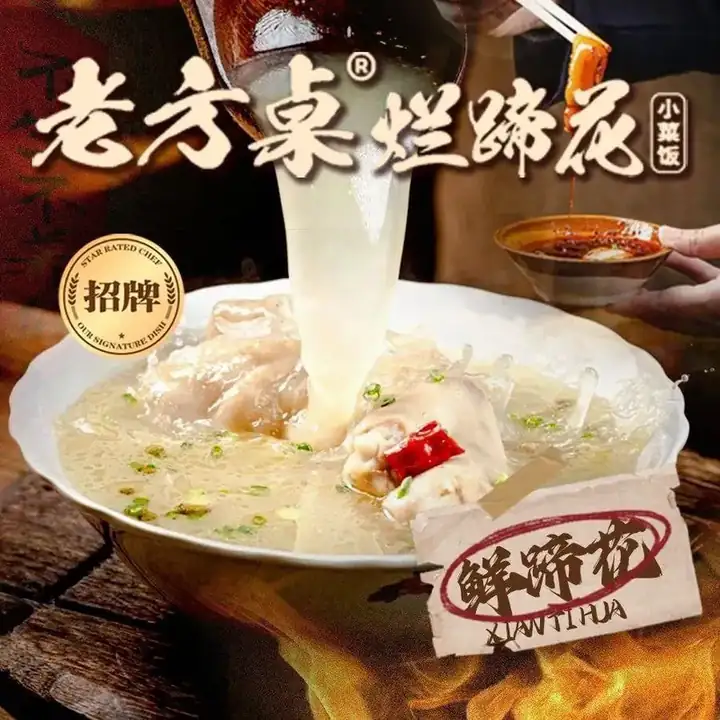
Photo adjustments
EXIF orientation normalized; resized without changing aspect ratio; converted to WebP. No subject edits.
上高蹄花 (Shanggao Pork Trotters) is a trotter dish from Shanggao in Yichun, western Jiangxi, where the second character names the cut rather than the seasoning.
One county, one cut
上高 is a place name inside Yichun, and 蹄 identifies a trotter or foot cut, so the name already tells you what part of the animal is on the plate. Yichun sits in western Jiangxi, and dishes built on long-cooked cuts are part of the everyday table there, appearing among meat dishes rather than in the soup or vegetable sections.
Read the place name as the origin of the style. Similar trotter dishes appear across the province under other names, and the kitchen's own braising habits will shape the plate more than the place label does.
Slow cooking is the whole technique
A cut like this is mostly skin and connective tissue, so it needs long, gentle heat before it turns soft. Typical steps are blanching to clean the cut, then braising or stewing with soy, wine, ginger, star anise and dried chilli until the meat loosens and the liquid thickens. Chilling the braise is another route, which sets the gelatin into a sliceable block.
Ask which style the kitchen follows, because the same name can produce a hot, saucy plate or a cold, firm one. That single answer decides how you eat it.
Gelatinous, rich and lightly hot
Expect a soft, slippery texture with a deep savoury taste and a gloss that comes from the cut itself rather than from added starch. Chilli and vinegar often appear in Jiangxi versions to cut the richness, and the salt level is usually firm. It is a heavy plate, so it works best with something plain alongside it.
What is in the braise
The cut is named; the braise is not. Soy sauce, rice wine, sugar, ginger, garlic, dried chilli and star anise are all common, and some kitchens add fermented bean paste or a chilli paste of their own. Ask whether wine is used if you avoid alcohol, and ask about soy and wheat-based pastes if gluten matters to you.
A dish built on this cut is not suitable for vegetarian diners, and shared serving spoons matter when the plate is sticky. If the kitchen serves it chilled as a set block, ask whether that version is made with the same braise so you know what you are eating.
Ordering for a table
One order usually serves two to three people as one of several dishes. Ask whether the kitchen serves it hot or chilled, and whether the price covers a whole cut or a portion. Because it is rich, most tables order one, not several, and pair it with greens and rice.
Hands, spoons and rice
If the cut comes in pieces on the bone, keep a spare plate for what you set aside and use the serving spoon rather than your own chopsticks. Spoon the sauce over rice; a little goes a long way. Look for wet wipes at the table, and ask for warm water if you would rather not use your hands.
More dishes to compare
Explore related local specialties and compare their names, preparation notes and ordering guidance.
Ningdu three-cup chicken 宁都三杯鸡 →
Ningdu three-cup chicken is a Jiangxi classic named for the three liquids in its braise, with a place name in front. The trotter dish works the same way on the menu but differs on the plate: one is built around poultry and a famously simple sauce, the other around gelatin-rich cuts that need longer cooking and give a heavier, stickier texture.
Questions before you order
What part of the animal is 上高蹄花 made from?
The 蹄 character indicates a trotter or foot cut. Ask whether it is served hot as a braise or chilled as a set block, because both styles are made from the same cut.
Is it very spicy?
Jiangxi cooking often includes chilli in braises like this, but the level varies by kitchen. Say what you prefer when ordering, before the dish is plated.
Sources & reading
The supplied food list supports this name and regional association. The culinary terms below are explained as menu vocabulary; a local recipe, origin story and venue availability have not been independently verified.