

Wannian Tribute Rice Steamed Pork 万年贡米蒸肉
Wannian Tribute Rice Steamed Pork is featured among the local specialties of Jiangxi.
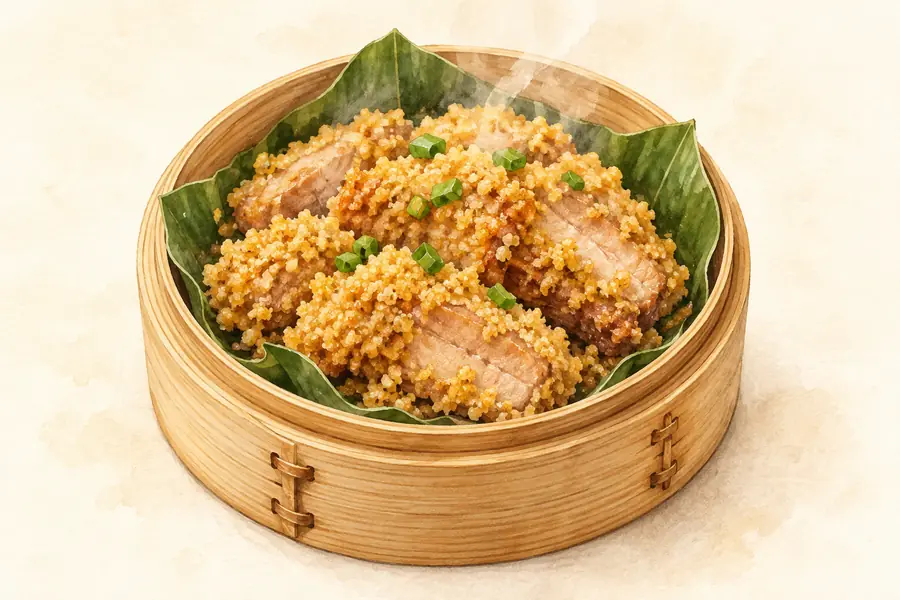
Wannian Tribute Rice Steamed Pork (万年贡米蒸肉) is a steamed pork dish from Wannian county in Jiangxi's Shangrao area; the name puts the county's tribute rice first, and the rice is what carries the dish rather than the meat.
Rice on the outside of the pork
In this family of dishes the pork is coated and steamed rather than fried. Sliced belly pork is seasoned, tossed with rice, and steamed until the fat renders into the grain and the grain softens around the meat. The rice may be used whole or ground coarse, and the dish is normally steamed in a bowl or wrapped, so nothing is lost. Because the grain takes on the pork fat, the choice of rice matters more here than in a plain bowl of rice.
Soft grain, rich pork
The texture is the point: the rice should be tender but still separate, and the pork should give way without turning to paste. The Wannian grain is described on the county's own page as white, fragrant and soft without being sticky, which is the quality this dish wants, because a very sticky rice would clump into a solid block. The seasoning is usually soy, ginger and a little chilli, so the dish is savoury and rich rather than sharp.
A grain with a court history
The rice in the name is not a marketing flourish. The Wannian county page records it as a grain grown around Heqiao and Longgang in Peimei town, described as the only traditional production area, with mineral-bearing water and a mountain-valley climate. The same page records a tradition that it was ordered to be sent to the court each year, and that it later became known as 国米, which is why the grain is put in front of the dish's name.
What is in the bowl
Pork belly, rice, soy-based seasoning and usually ginger and chilli are the working parts. Because belly pork is the usual cut, the dish is fatty and salty, and it is not suitable for anyone avoiding pork. Rice is the base, so the gluten risk comes from the soy sauce rather than the grain; ask 有酱油吗 if that matters. Ask 什么米 if you want to know whether the kitchen is using the local grain that gives the dish its name.
Ordering it
Say 蒸肉 or 贡米蒸肉 and ask 什么米, because the whole claim of the dish rests on the rice. Ask 辣不辣 for the chilli level and 一份多少 for the portion, which is normally shared. It is served as a rich dish in the middle of a table rather than as an individual bowl, and it goes with plain rice and a clean vegetable rather than with more pork.
Eating it
Serve it hot, straight from the steamer, and spoon some of the juices over the rice. The grain is the best part once it has taken on the pork fat, so it is worth eating the coating rather than scraping it off. Because it is rich, one shared bowl goes a long way at a table, and a plain soup or a plate of greens is the natural counterweight.
More dishes to compare
Explore related local specialties and compare their names, preparation notes and ordering guidance.
Steamed Pork with Rice Meal 米粉蒸肉 →
Steamed Pork with Rice Meal (米粉蒸肉) is the general Jiangxi name for pork steamed in a rice coating, with ground rice used as the coating. 万年贡米蒸肉 is the same idea tied to one county's named grain, so the difference a diner will notice is the rice itself and the texture it gives rather than a different cooking method.
Questions before you order
Is the rice in the dish ground or whole?
Practice varies. The dish belongs to the steamed-pork family where the grain may be used whole or ground coarse, and the source used here documents the rice rather than a single assembly, so ask 什么米 and 是米粉还是整米.
What makes the local rice special?
The Wannian county page describes it as a late indica grain from a single traditional production area, white and fragrant, soft without being sticky, and records that it was historically sent to the court.
Sources & reading
The supplied food list supports this name and regional association. The culinary terms below are explained as menu vocabulary; a local recipe, origin story and venue availability have not been independently verified.