

Baicheng Oat Noodles 白城燕麦面
Baicheng Oat Noodles is featured among the local specialties of Jilin.
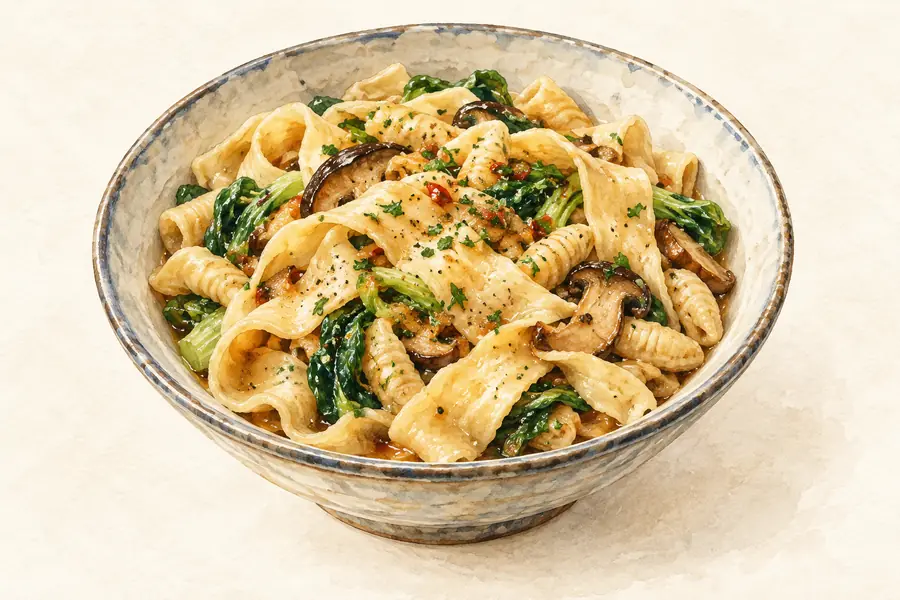
Baicheng Oat Noodles (白城燕麦面) is an oat-noodle speciality recorded for Baicheng in Jilin; 燕麦 is oats and 面 points to noodles, so the name is a grain plus a noodle form.
Why oat dough behaves differently
Oats contain no gluten, so an all-oat dough has nothing to hold it together when it is rolled thin. Cooks work around this in one of two ways: blending oat flour with wheat flour so the dough can be kneaded and cut, or pressing a stiffer oat dough straight into boiling water so the strands set before they can break. Either way the dough is softer and more fragile than a wheat one, and the noodles come out shorter and thicker than the machine noodles you may be used to.
What the noodles taste like
Oat noodles are grey-brown rather than white, with a dull surface and a chew that is softer and more grainy than wheat. The flavour is nutty and slightly sweet, and it stands up to strong broth in a way plain wheat noodles do not. In a hot bowl they release starch and thicken the soup a little, so the last spoonful is heavier than the first.
Grain country in the name
Baicheng sits in western Jilin on the Songnen plain, where dryland grain farming rather than rice defines the table, and oats are a crop of that setting. Noodles made from the local grain are farm and town cooking — filling, cheap and built for cold mornings — rather than a banquet dish. The name ties the noodle to the place and the grain, not to a fixed recipe or a particular shop.
Ingredients and dietary questions
Oats are the base; wheat flour, salt and water are common additions, and the broth may be meat-based or vegetable. That matters for two groups: anyone avoiding gluten should ask 是纯燕麦吗 (is it pure oat) because a blend is usual, and anyone avoiding meat should ask 是什么汤 (what is the broth). Useful questions are 辣不辣 (how spicy), 有肉吗 (does it contain meat) and 可以少放盐吗 (less salt, please).
How to order 白城燕麦面
Order 一碗燕麦面 (one bowl of oat noodles), then adjust: 多放菜 for more vegetables, 少辣 for less chilli, 不要香菜 if you dislike coriander. Ask 是汤面还是拌面 (soup or dressed) to find out which form the kitchen serves, 多少钱一碗 for the price, and 有素的吗 if you want a vegetarian bowl, since the default broth is often meat-based.
Eating it
Eat it hot, while the noodles still separate; oat strands soften and clump as the bowl cools. Lift noodles and broth together rather than draining them, because the starchy liquid is part of the dish. One bowl is a full meal for most people, and it is a good choice on a cold day or before a long walk rather than a light snack between meals.
More dishes to compare
Explore related local specialties and compare their names, preparation notes and ordering guidance.
Buckwheat Pressed Noodles 荞面饸饹 →
Buckwheat Pressed Noodles (荞面饸饹) is made from buckwheat, usually pressed through a sieve into the pot, and has a stronger, faintly bitter flavour with a firm, springy bite. Bai Cheng Yan Mai Mian uses oats instead, giving a milder, nuttier, softer noodle, and it is usually served in a hot broth rather than dressed cold or with a sharp sauce.
Questions before you order
Are the noodles gluten-free?
Not necessarily. Oats have no gluten, but the dough is usually blended with wheat flour to hold together. Ask 是纯燕麦吗 before ordering.
Is it served as a soup?
It is most often a hot broth noodle. Ask 是汤面还是拌面 to find out how that kitchen serves it.
Sources & reading
The supplied food list supports this name and regional association. The culinary terms below are explained as menu vocabulary; a local recipe, origin story and venue availability have not been independently verified.