

Boiled Pork with Blood Sausage 白肉血肠
Boiled Pork with Blood Sausage is featured among the local specialties of Jilin.
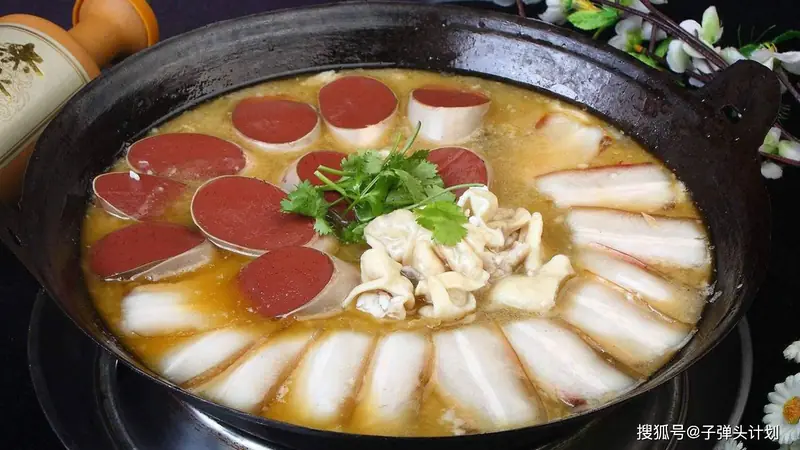
Photo adjustments
EXIF orientation normalized; resized without changing aspect ratio; converted to WebP. No subject edits.
Boiled Pork with Blood Sausage (白肉血肠) combines thin slices of plain pork with blood sausage, a dish rooted in the food customs of the Manchu (满族). The Jilin Department of Commerce lists it among Jilin's ten classic dishes, and China Jilin Net (中国吉林网) calls a poached version one of the most representative dishes of Jilin cuisine (吉菜).
How it is made
In the version described by the Department of Commerce, the two main ingredients are pork that has been roasted until the skin is scorched, and carefully chosen blood sausage.
China Jilin Net printed a recipe for a poached version with sour cabbage, cuan bairou xuechang (汆白肉血肠), in a feature on the Jilin cuisine restaurant of the Changbaishan Hotel (长白山宾馆), whose head chef is Li Changlong (李长龙). The sour cabbage (酸菜) is washed and squeezed dry. The blood sausage and the pork are blanched in boiling water for two minutes, and the pork belly is sliced. Spring onion and ginger are fried in oil, the cabbage and pork are stir-fried, then water and a little light soy sauce go in and the pot simmers, covered, for half an hour. The blood sausage is added last, with salt.
Flavour and texture
According to the Department of Commerce, the pork is cut into long, thin slices with brownish-yellow skin and a loose, soft texture; the fat is not greasy and the lean is not dry. The blood sausage is smooth, fine-grained and greyish-white, soft, tender and delicately fragrant.
Where it comes from
The Jilin City Manchu Museum (吉林市满族博物馆) traces the dish to Manchu sacrifice. At the New Year offering to the spirit pole (索罗杆), blood sausage was always made, and this later became boiled pork with blood sausage. Pork from these rites was called "福肉" ("fortune meat") and shared out afterwards. The museum notes that when Manchu households killed a pig and invited guests, they spoke of eating blood sausage rather than eating pork, and that this dish was one of the two favourite ways of eating the pig killed for the Spring Festival. The pork is traditionally "white-sliced": a square piece is boiled, then cut into thin slices while hot, with no seasoning, and pork belly is considered best. A folk rhyme from the late Qing and early Republic, quoted by the museum, ends "四个盘子,先吃血肠" ("four plates on the table, blood sausage first").
Li Changlong calls boiled pork and blood sausage with sour cabbage the dish northern Manchu people eat most often, and in the same breath speaks of families sitting round hot stews in the depth of winter, which no New Year's Eve dinner goes without.

Sources & reading
Written from the linked sources and checked sentence by sentence against quoted extracts by a separate reviewer on 2026-09-24. Recipes and servings vary between kitchens.