

Buckwheat Pressed Noodles 荞面饸饹
Buckwheat Pressed Noodles is featured among the local specialties of Jilin.
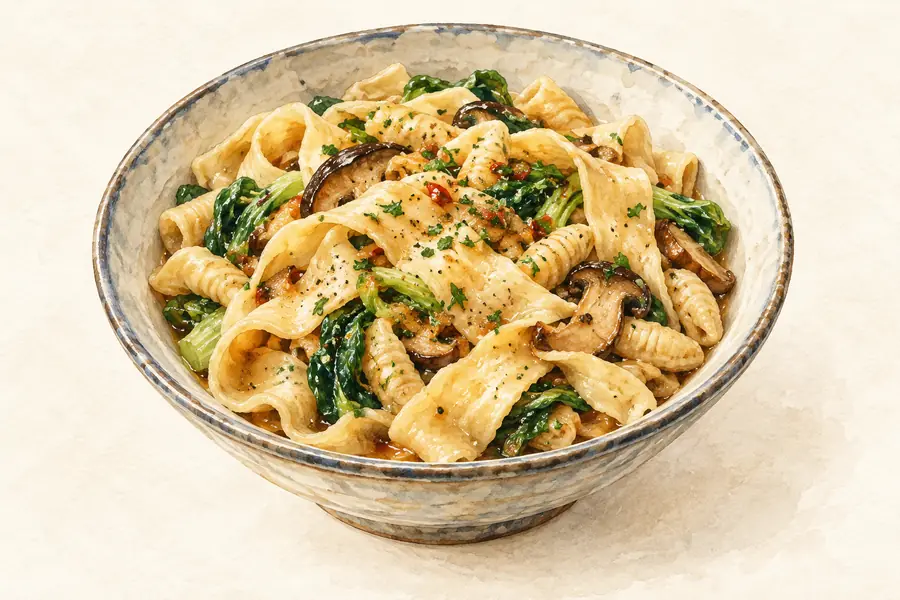
Buckwheat Pressed Noodles (荞面饸饹) is a buckwheat noodle dish listed among the specialities of Baicheng, Jilin, and the name describes both the flour and the way the noodles are made.
How the noodles are made
饸饹 refers to noodles pressed through a perforated mould rather than rolled and cut. The dough is packed into the device and extruded straight into boiling water, which sets the strands and keeps them firm. Buckwheat flour has little gluten, so it is usually blended with wheat flour or another binder to stop the strands from breaking apart. The noodles are then drained and served hot in broth, or dressed and eaten cool. Ask the kitchen which style you are getting before you order.
What it tastes like
Buckwheat brings an earthy, faintly nutty flavour and a slightly coarse, springy bite that is quite different from wheat noodles. Because there is no gluten to stretch, the strands feel shorter and denser, and they hold a sauce or broth rather than sliding through it. A bowl is usually savoury rather than rich, with the aroma of the grain at the front. If you like soba, the profile will feel familiar, though 饸饹 is typically served warm and more heavily seasoned.
The Baicheng setting
The dish is listed with Baicheng, in the dry northwest of Jilin near the Inner Mongolian border, where grain farming and grassland cooking shape the everyday menu. The same pressed-noodle family is eaten right across northern China and appears under different names from Shaanxi to Inner Mongolia, so the bowl you meet will carry very different toppings depending on where you are. In Baicheng it belongs with the plain, filling staples of the region rather than with banquet cooking, which is why it is a lunch order more often than a dinner set piece.
Ingredients and dietary questions
Buckwheat flour is the defining ingredient, and it is almost always mixed with something else to make the dough workable, with water and salt alongside. The rest depends on how the bowl is finished: braised meat or a spoonful of its sauce, chilli oil, vinegar, garlic, spring onion and coriander are all common, and vegetables such as cucumber or radish appear in the cold versions. If gluten is a problem, ask carefully, because most 饸饹 dough is not made from buckwheat alone.
Ordering it
Order it as a noodle bowl, the way you would order any noodle soup, and start by asking whether the house serves it hot or cold. Portions are generally generous and inexpensive, so one bowl is enough for a light meal and extra dishes are rarely needed. If the toppings are assembled at the counter, point at what you want and keep the chilli oil light on the first visit. Say so if you would prefer the broth on the side, which gives you control over how soft the noodles become.
At the table
Eat 荞面饸饹 soon after it arrives, because the strands keep absorbing liquid and lose their spring the longer they sit. Lift a small tangle at a time rather than a large forkful, and mix the toppings through the noodles instead of eating them off the top. With a cold version, stir before the first bite so the dressing reaches every strand. A cup of plain broth or tea on the side is the usual northern habit and helps balance the seasoning.
More dishes to compare
Explore related local specialties and compare their names, preparation notes and ordering guidance.
Baicheng Oat Noodles 白城燕麦面 →
Baicheng Oat Noodles (白城燕麦面) is the other grain-noodle order to compare: oat flour in place of buckwheat, with a softer and creamier bite.
Questions before you order
Is 荞面饸饹 gluten-free?
Usually not. Buckwheat itself has no gluten, but the dough is normally blended with wheat flour so that it can be pressed, so ask before ordering.
What does the word 饸饹 tell you?
It names the pressing method: the dough is extruded through a mould straight into boiling water instead of being rolled and cut.
Sources & reading
The supplied food list supports this name and regional association. The culinary terms below are explained as menu vocabulary; a local recipe, origin story and venue availability have not been independently verified.