

Wild Greens Rice Wraps 山野菜包饭
Wild Greens Rice Wraps is featured among the local specialties of Jilin.
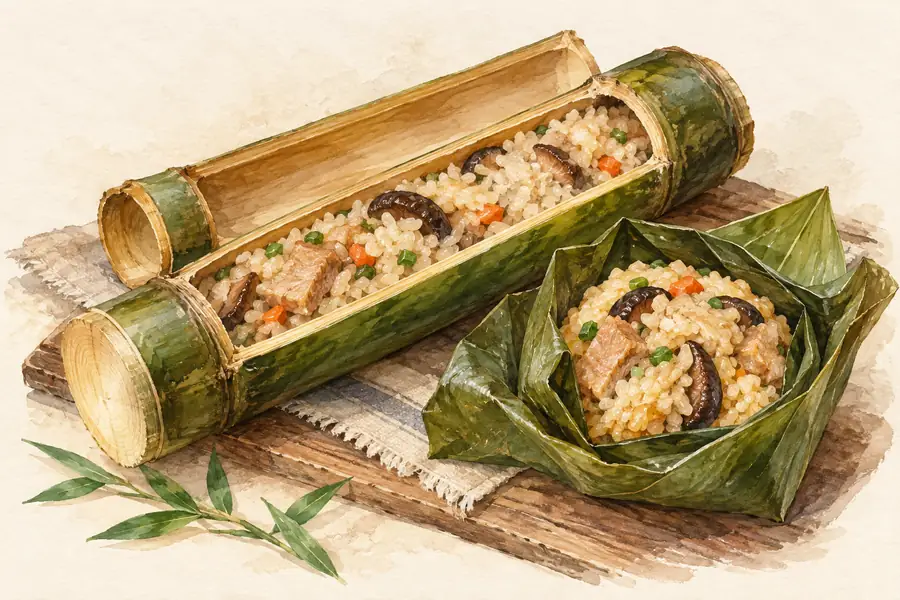
Wild Greens Rice Wraps (山野菜包饭) is a rice dish listed for Tonghua, in Jilin, and the name lays out the whole idea: wild greens, wrapped around rice, eaten by hand.
Blanching the greens, folding the wrap
Wild greens are washed and usually blanched briefly in salted water, which softens the tougher leaves and takes the edge off any bitterness. They are then squeezed dry and dressed with garlic, sesame oil, salt or a fermented paste, and laid out with the leaves that will act as wrappers. Cooked rice is spread on a leaf, the seasoned greens go on top, and the whole thing is folded into a bundle small enough to eat in one or two bites. The work is in the preparation of the greens rather than in any long cooking.
Fresh, slightly bitter and clean
The flavour depends on which greens are in season, but the profile is usually fresh and faintly bitter, with a savoury note from the dressing. Rice softens the bitterness and gives the bundle substance, and the leaf wrapper adds a mild vegetal taste of its own. Because so little cooking is involved, the dish tastes light next to the braises and stews that make up the rest of the regional menu. If the greens taste harsh, they were not blanched long enough.
Tonghua and a foraging tradition
通化 sits in the mountains of southern Jilin, where the growing season is short and wild plants are gathered in spring and early summer. 山野菜包饭 belongs to that pattern: the greens are the seasonal part and the rice is the everyday base. Other entries from the same province work with pickled cabbage, river fish and mushrooms instead, so the dish is best understood as one reading of what the land offers at a particular time of year.
Ingredients and dietary checks
The base is cooked rice, leaves and blanched wild greens, with a dressing that may include garlic, sesame, soy-based paste or chilli. Fermented pastes and soy sauce may contain wheat, so ask 有酱油吗 (is soy sauce used) or 有大酱吗 (is there fermented bean paste) if gluten matters. Ask 什么菜 (which greens) if you have allergies to specific plants, and 有肉吗 (is there meat) since some versions add a little pork or a fried egg.
How to order
Show the characters 山野菜包饭 and ask 什么菜 (which greens are used today) and 什么酱 (what sauce comes with it), because both change with the season and the kitchen. Ask 辣不辣 (how spicy) if a chilli paste is served, and 一份多少 for the portion size. If you would rather not assemble the wraps yourself, ask 可以帮我包吗 (can you wrap it for me); some kitchens will do it, and others expect you to build each one at the table.
Eating it and building a meal
Take a leaf, add rice and greens, fold it into a bundle and eat it in one or two bites so it does not fall apart. Because the dish is light and fresh, it works well beside a rich stew or a grilled meat dish rather than as the main course. Build each wrap as you go instead of making a plateful in advance, since the leaf softens once the rice sits on it.
More dishes to compare
Explore related local specialties and compare their names, preparation notes and ordering guidance.
Rice Wraps 包饭 →
Rice Wraps (包饭) is the neighbouring entry: the same wrapped-rice idea under the simple general name, without the wild greens that define 山野菜包饭. Reading the two together shows how a regional habit becomes a specific dish once a distinctive ingredient is named in front of it.
Questions before you order
Is the wrapper edible?
Yes. The wrap is a leaf, usually blanched or fresh, and it is eaten together with the rice and greens rather than discarded.
Are the greens the same all year?
No. 山野菜 means wild-collected greens, so the selection follows the season. Ask 什么菜 (which greens) rather than expecting a fixed list.
Sources & reading
The supplied food list supports this name and regional association. The culinary terms below are explained as menu vocabulary; a local recipe, origin story and venue availability have not been independently verified.