

Chicken Stewed with Matsutake 松茸炖鸡
Chicken Stewed with Matsutake is featured among the local specialties of Jilin.
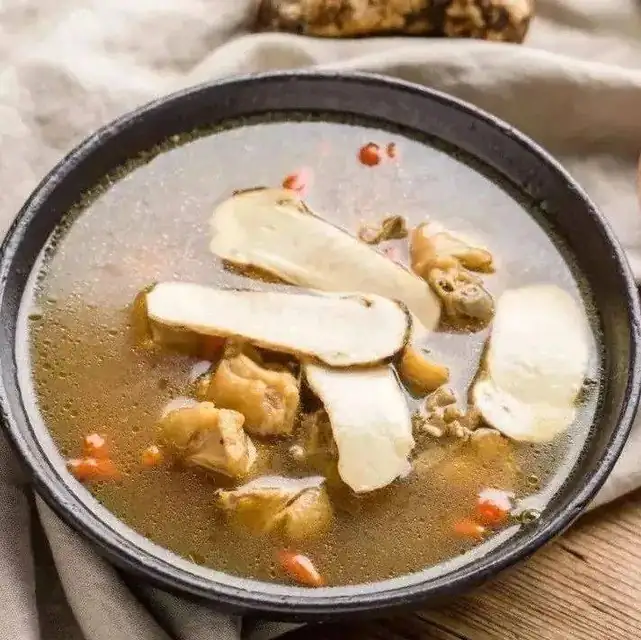
Image notes
Resized for the web; the photo itself has not been edited.
Chicken Stewed with Matsutake (松茸炖鸡) is a slow-simmered chicken dish listed for Baishan, in Jilin, and its two main ingredients are stated in the name: 松茸 mushrooms and 鸡, chicken, cooked by 炖.
A long simmer, with the mushrooms timed
The chicken is cut into pieces and usually blanched briefly first, which clears the liquid of impurities and gives a cleaner broth. It then goes into a pot with water, ginger, spring onion and often a little wine, and simmers gently for a long time rather than boiling hard, because a rolling boil makes the broth cloudy and the meat stringy. Mushrooms are added according to how much aroma they can take: dried ones go in early so they soften and flavour the liquid, while delicate fresh ones are added nearer the end so their perfume is not cooked away.
Aromatic and clean rather than heavy
The dish tastes of the mushroom first and the chicken second. A good version has a clear, savoury broth with a distinctive pine-and-earth aroma from the mushrooms, and the meat stays tender enough to fall from the bone. Because little seasoning is needed, salt is usually added at the end or left to the diner. If the broth tastes flat or greasy, the pot was boiled too hard or the fat was never skimmed.
Mountain Jilin and a famous mushroom
白山 sits in the mountainous southeast of Jilin, near the Korean border, where short summers and forest cover shape what the local kitchen uses. Mushroom-and-chicken stews belong to that setting: a long, plain pot that makes the most of an ingredient rather than hiding it under sauce. The same pairing appears in other mountain regions of China, so treat 松茸炖鸡 as a local reading of a widespread idea rather than a dish unique to one kitchen.
Ingredients and dietary checks
The base is chicken, mushrooms, water and aromatics, with salt added near the end and sometimes a little wine or a few goji berries. Chicken and mushroom are both common allergens for some people, and the pot is not suitable for vegetarians unless a vegetable version is offered. Ask 什么菇 (which mushrooms) and 是鲜的还是干的 (fresh or dried), since dried and fresh mushrooms produce quite different broths. Ask 有料酒吗 (is cooking wine used) if you avoid alcohol.
How to order
Show the characters 松茸炖鸡 and ask 什么菇 (which mushrooms) and 一只还是半只 (a whole chicken or half), because the pot is usually sold by the bird and sized for sharing. Ask 有汤吗 (does it come with broth), though a 炖 dish almost always does, and 要等多久 (how long is the wait), because a proper simmer cannot be rushed. For a small party, ask whether a half portion is possible rather than ordering a whole pot.
Eating it and building a meal
Start with the broth, which is the part that carries the aroma, then eat the chicken and mushrooms with rice. Because the dish is light and clean, add a vegetable and perhaps a cold plate rather than another heavy braise. If the pot is large, keep it warm on a burner and add plain vegetables later, since the broth keeps improving as the meal goes on.
More dishes to compare
Explore related local specialties and compare their names, preparation notes and ordering guidance.
Forest Frog Stewed with Potatoes 林蛙炖土豆 →
Forest Frog Stewed with Potatoes (林蛙炖土豆) is the neighbouring entry: another Jilin 炖 pot, built on a different main ingredient with potato to thicken and absorb the broth. 松茸炖鸡 stays clean and aromatic rather than starchy, so the two show the same slow-simmering technique pointed at very different results.
Questions before you order
Does 炖 mean the dish is fried first?
No. 炖 is a long, gentle simmer, so the chicken is cooked in liquid rather than browned in a wok.
Are the mushrooms always fresh?
No. Dried mushrooms are common and are added earlier, while fresh ones go in later to keep their aroma. Ask 是鲜的还是干的 (fresh or dried).
Sources & reading
The supplied food list supports this name and regional association. The culinary terms below are explained as menu vocabulary; a local recipe, origin story and venue availability have not been independently verified.