

Kaifeng nested poultry stew 套四宝
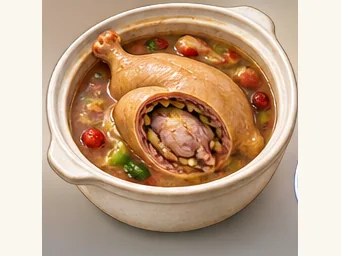
A Kaifeng-associated formal dish in which a duck, chicken, pigeon and quail are deboned, nested from largest to smallest and steamed together; its appeal is the careful reveal of four tender layers, not a single fixed restaurant recipe.
Tap any red Chinese text to hear it in Mandarin.
套四宝 (Tao Sibao) is a labor-intensive Kaifeng dish associated with formal Yu cuisine. The official Kaifeng city-level intangible heritage list includes 套四宝制作技艺 Tào Sì Bǎo Zhì Zuò Jì Yì (“the craft of making Tao Sibao”), while published descriptions place the dish in Kaifeng’s traditional formal cooking rather than in the city’s everyday snack category.
What makes it different
The nesting order is the key: a duck forms the outside, with a chicken inside it, then a pigeon, then a quail at the centre. Each bird is prepared so its shape and skin remain intact while the bones are removed. The finished dish is presented as one rounded bird, then reveals the next layer as it is served. That construction—not four separate poultry dishes placed on one plate—is what the name and technique describe.
A published preparation account describes the quail being filled first, then inserted into the pigeon, chicken and duck in turn. The joints are secured and the layers are briefly blanched between stages. The nested birds are then placed in a basin with stock and seasonings and steamed until tender. The difficult work is the deboning: the skin must not tear, and the meat should remain with the birds rather than on the removed skeleton.
Flavour, fillings and variation
Expect soft poultry and a rich, savoury broth rather than a crisp roast. The outer duck and the smaller birds contribute different textures as the dish is opened layer by layer. Descriptions of the centre filling include sea cucumber, mushrooms and bamboo shoots; a separate published formula also lists ingredients such as ham, dried seafood, green peas and glutinous rice. These are documented versions, not a universal recipe. Ask what the kitchen uses today before ordering.
The dish is a poor choice for anyone avoiding poultry or animal products. Published versions may include seafood, soy-based seasoning and stock, so ask about the exact filling, broth and kitchen cross-contact if you have seafood, soy or other allergies. Do not infer that the dish is halal, vegetarian or allergen-free from its appearance.
How to look for it in Kaifeng
Keep the exact Chinese name 套四宝 Tào Sì Bǎo ready to copy. In Meituan (美团) or Amap/Gaode Maps (高德地图), search that name near your current location rather than searching only for an English translation. Open several current listings without treating platform order as a recommendation. Check the menu or recent customer photos for the dish itself, read recent reviews for evidence that it was actually served, and confirm that the listing is open on your date.
Before travelling across the city, message or call the chosen listing to ask whether 套四宝 Tào Sì Bǎo is available that day, whether it requires advance ordering, how many diners it serves, how long preparation takes, and which four birds and fillings are used. A listing, an old review or a promotional photograph does not prove current supply. No single restaurant, brand or address is recommended here; availability belongs to the individual kitchen and can change.
There is no single visitor entrance, ticket, opening timetable, metro stop or bus route for this dish. Treat the restaurant listing you independently verify as the destination, and confirm the return route in Amap after choosing it. The dish itself has no fixed location or season in the sources checked, so do not plan around a future festival or assume same-day service.
More dishes to compare
Explore related local specialties and compare their names, preparation notes and ordering guidance.
Bufan soup 不翻汤 →
Thin mung-bean pancakes are prepared and placed in a savory soup with assorted additions. The pancakes give the dish its identity, while the broth and toppings vary by shop. The pancake pieces soften in the liquid, creating a tender, layered bite. Vinegar, pepper or other seasonings can make the soup tangy and aromatic.
Luoyang water banquet 洛阳水席 →
Luoyang water banquet is a sequence of dishes emphasizing soups and sauced preparations, rather than a single bowl. Courses are selected and served in an arranged progression. The meal offers changing textures and flavor balances, from light broths to richer or tangier dishes, so there is no single water-banquet taste.
Sources & reading
Recipes and servings vary between kitchens.