

Kaifeng soup-filled buns 开封灌汤包
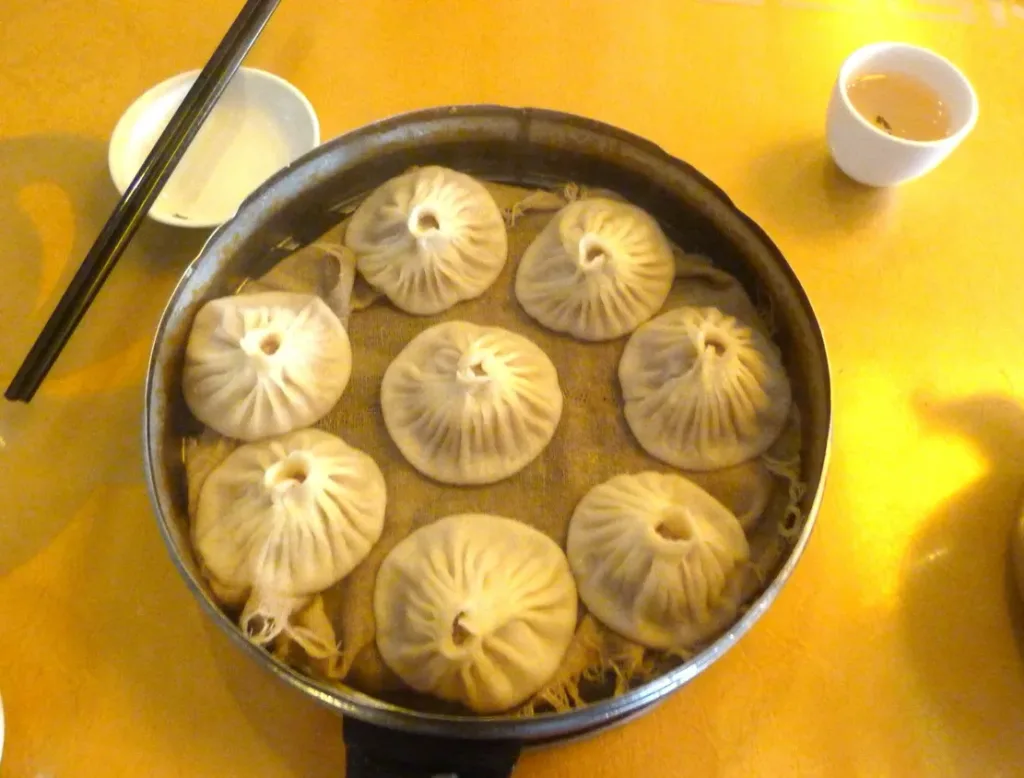
Kaifeng soup-filled buns are delicate steamed wheat buns built around a savory pocket of broth. Their thin, resilient skin, fine pleats and careful “open the window, sip the soup, then eat” ritual make them a distinctly Kaifeng way to encounter Henan’s food culture.
Tap any red Chinese text to hear it in Mandarin.
Why this bun belongs to Kaifeng
开封灌汤包 (Kaifeng guantang bao) is not simply a generic English “soup dumpling.” Kaifeng municipal information connects the city’s tradition with the Northern Song capital Bianjing (today’s Kaifeng), where a famous 山洞梅花包子 Shān Dòng Méi Huā Bāozi was sold at Wanglou. The same account records a later Kaifeng change from large-basket steaming to small-basket steaming and identifies the named “Kaifeng First Floor Xiaolong Soup-Filled Bun” craft as a Henan provincial intangible-cultural-heritage item in 2007.
That heritage listing belongs to the named craft and should not be read as a single compulsory recipe for every bun sold in Kaifeng. What visitors can taste today is a city food tradition with recognizable techniques, while fillings, seasoning and service still vary between kitchens.
What is inside and what to notice
A published account of a Kaifeng preparation describes an unleavened wheat wrapper worked until it is thin, pale and still strong enough to hold liquid. It uses fresh pork from the hind leg in a “water filling” (水馅) mixed in stages until the mixture becomes loose and pulls into long strands. The buns are shaped with many small, even pleats—around twenty in that documented preparation—and steamed quickly in a small basket. Lifted, the bun is compared with a little lantern; set down, its pleats resemble a chrysanthemum.
Look first at the wrapper and the closure rather than judging by size alone. The skin should feel delicate but not collapse immediately, and the basket should hold broth without turning the base into a wet lump. The first taste is the savory liquid; the wrapper and filling follow with a softer, meatier texture. The reported Kaifeng menu landscape also includes fresh-meat, shrimp and vegetarian variations, so “Kaifeng soup-filled bun” does not guarantee one universal filling.
How to eat it without losing the soup
The local instruction is 轻轻提,慢慢移,先开窗,后喝汤 Qīng Qīng Tí, Màn Màn Yí, Xiān Kāi Chuāng, Hòu Hē Tāng: lift gently, move slowly, make a small “window,” then drink the soup. Put the bun onto a spoon or otherwise support it before opening the skin. Let the steam and liquid cool enough to avoid a burn, sip through the opening, and then eat the remaining wrapper and filling. Kaifeng’s own city information describes this “open the window, then drink the soup” sequence as a characteristic way to eat the dish.
Finding a current serving
This is a dish rather than a single venue, so this guide does not designate a restaurant, brand, branch or address. Copy and paste the exact Chinese name 开封灌汤包 Kāi Fēng Guàn Tāngbāo into Meituan (美团) or Amap/Gaode Maps (高德地图) and inspect options near where you are staying or visiting. Before choosing, check that the current menu actually lists 灌汤包, read recent reviews for present-day supply and quality, confirm opening information, and ask whether a batch is being steamed that day. Map ranking is a search aid, not proof that one listing is the most authentic.
If you avoid pork, wheat or shellfish, ask about the wrapper, filling and broth separately. A “vegetarian” label still deserves a question about the soup base and seasonings; the appearance of a bun cannot establish that it is vegetarian or free from allergens.
More dishes to compare
Explore related local specialties and compare their names, preparation notes and ordering guidance.
Hua County layered silk-thread buns 滑县缠丝火烧 →
The dough is folded or coiled to create fine layers before cooking. Separating those layers is part of the eating experience. The surface is toasted and crisp, while the inside breaks into finer strands and layers rather than a uniform bread crumb.
Puyang rolled cold starch sheets 濮阳裹凉皮 →
A large cooked starch sheet is spread with seasoned vegetables, wheat gluten and other fillings, then rolled into a handheld parcel. The dressing is added before the wrapper is folded. The wrapper is smooth and elastic, contrasting with crunchy vegetables and spongy gluten. Chili, vinegar and sesame-based sauces may dominate the flavor.
Sources & reading
Recipes and servings vary between kitchens.
Image credits & notes (1)
- Kaifeng First Floor soup-filled buns arranged in a small metal steamer, photographed in Kaifeng; the pleated tops and serving basket are visible. Photo: GislingPhoto: CC BY-SA 3.0