

Lhasa meat-filled momo 拉萨藏包子
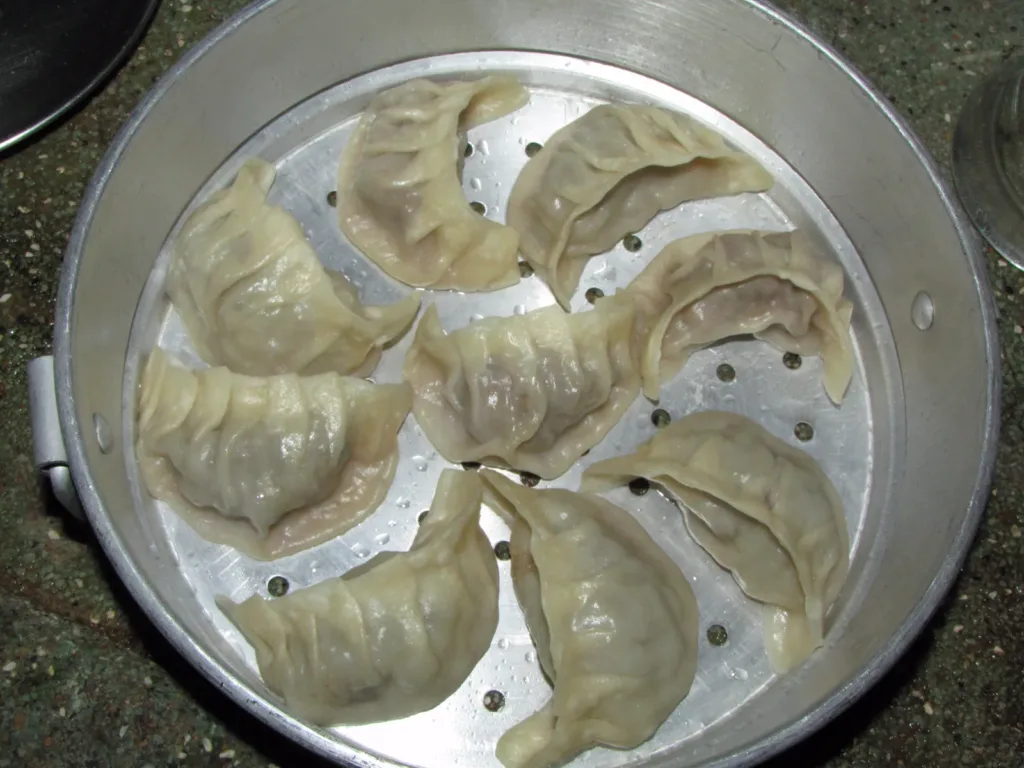
Lhasa meat-filled momo, known locally as Xia momo (夏馍馍) or zang bao, are Tibetan steamed dumplings with an unleavened wheat wrapper and a juicy meat filling. In Lhasa, they are a practical way to taste Tibetan home-style food: ask what meat is used, then try the first dumpling before adding chilli sauce.
Tap any red Chinese text to hear it in Mandarin.
A Tibetan dumpling, not a fixed recipe
“拉萨藏包子” is a useful name for visitors, but the food belongs to a wider Tibetan tradition rather than a single patented Lhasa formula. Chinese Tibet Media describes the dish as 夏莫莫 (Xia momo), while a Tibet tourism article lists Lhasa meat-filled momo among a wider group of local Tibetan foods. The same regional reporting does not claim that every kitchen uses one identical recipe.
The English word momo can make the dish sound like a standard dumpling found across the Himalayas. In Lhasa, look for the Chinese names 拉萨藏包子 Lāsà Zàng Bāozi, 藏包 Zàng Bāo, or 夏馍馍 Xià Mómo, and treat the filling, wrapper thickness and shape as kitchen-level variations rather than fixed rules.
What goes inside and how it is made
One government account contrasts an older version made with highland-barley flour and beef or mutton with a now common version using white wheat flour and yak meat. It describes onion and ginger chopped into the meat while water is added, then a thin wrapper folded around the filling. The join is left with a small opening before the dumplings are steamed.
A filmed preparation observed by Chinese Tibet Media uses fresh beef seasoned with scallion, salt and Sichuan pepper. The wrapper is an unleavened dough; the maker pinches it into a small swirl at the top and steams the dumplings. They are eaten hot, often with a specially made chilli sauce.
These descriptions explain the style, not a universal ingredient list. Other Tibetan food traditions also include dairy-curd, potato and vegetable-filled dumplings. A curd filling is not vegan, and a vegetarian label does not by itself answer questions about butter, stock or shared cooking surfaces. Ask the kitchen what is in the filling if you have an allergy or dietary restriction.
Taste and ordering
Expect a wrapper with more bite than a fluffy, yeast-raised baozi in the documented versions. The steamed filling should be moist, and the meat may be yak, beef or mutton depending on the menu and kitchen. Chilli sauce adds heat and aroma, so taste one dumpling first and request the sauce separately if that is how the kitchen serves it.
The wheat wrapper means that documented versions contain wheat. Confirm the meat species, any added onion, ginger, pepper, dairy or stock, and the possibility of cross-contact before ordering. “Meat-filled momo” is not a vegetarian dish; a different menu item must be confirmed rather than inferred from its appearance.
Practical tips
Ask a Tibetan restaurant or local food counter for 拉萨藏包子 Lāsà Zàng Bāozi or 夏馍馍 Xià Mómo, confirm whether the dumplings are steamed, and ask what meat is available that day. Do not treat the name as proof that every restaurant makes the same version.
Where to eat it
You can find Lhasa meat-filled momo all over Tibet (Xizang), so there is no need to seek out one particular restaurant. To find one near you, search for “拉萨藏包子” in Meituan (美团) or Amap (高德地图) and check recent reviews, distance and opening hours.
More dishes to compare
Explore related local specialties and compare their names, preparation notes and ordering guidance.
Dried yak meat 风干牦牛肉 →
Yak meat is salted or seasoned and dried to reduce moisture; commercial products may include additional cooking stages. Thickness, drying time and spice mixtures vary. The result is concentrated in meat flavor, with a firm chew that can range from pliable to very hard. Fat content changes the texture substantially.
Tibetan broth noodles 藏面 →
Prepared wheat noodles are served in a savory meat broth, commonly with yak or beef components and small toppings. The noodle-making and cooking method can give them a firmer texture than many Chinese soup noodles. The broth is meaty and warming, with relatively straightforward seasoning. The noodles may retain a firm center as part of the style.
Sources & reading
Recipes and servings vary between kitchens.
Image credits & notes (1)
- Tibetan-style steamed meat momos, shown as a regional illustrative example rather than a Lhasa-specific restaurant dish. Photo: SwingingUvulaPhoto: CC BY-SA 4.0