

Jellyfish Tossed with Chinese Cabbage 海蜇拌白菜
Jellyfish Tossed with Chinese Cabbage is featured among the local specialties of Liaoning.
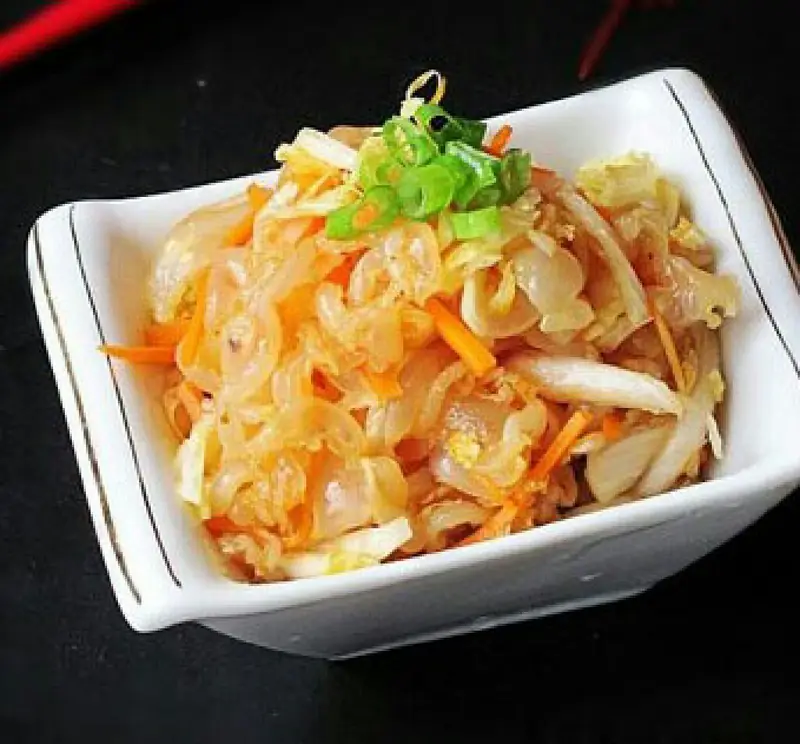
Image notes
Resized for the web; the photo itself has not been edited.
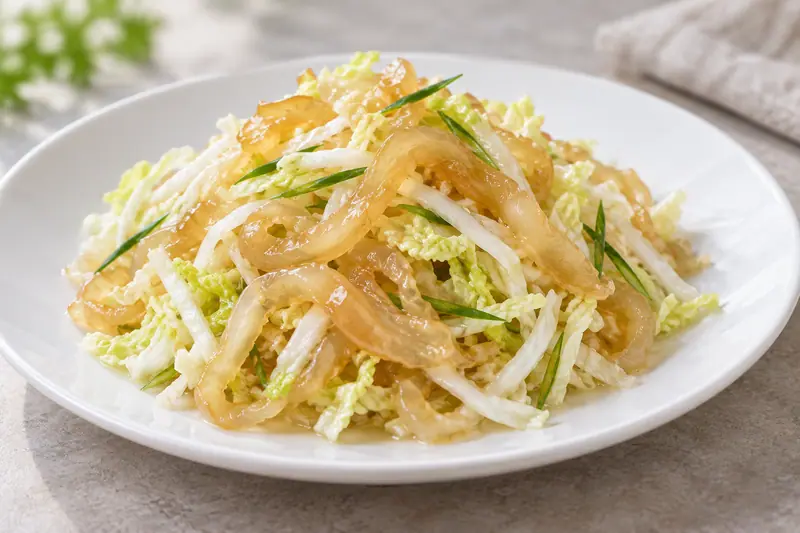
海蜇拌白菜 (Jellyfish Tossed with Chinese Cabbage) names both of its parts and its method: jellyfish and Chinese cabbage, tossed together as a cold dressed dish from Yingkou.
A dish you can read off the sign
海蜇 is jellyfish, 白菜 is Chinese cabbage, and 拌 is the tossing of a dressed cold dish. Yingkou sits on the Liaoning coast at the top of the Bohai Gulf, where jellyfish is a familiar seasonal ingredient rather than an exotic one, and shops and kitchens there treat it as everyday food.
Jellyfish dishes appear along the whole coast in different pairings, and the cabbage version is a northern habit. The name tells you exactly what is in the bowl, which is unusual among the region's regional labels.
Desalting is most of the work
Jellyfish is sold salted or dried and has to be rinsed and soaked before use, with the soaking time controlling how salty and how firm the final pieces are. It is usually blanched briefly or simply refreshed in cold water, then cut into strips and tossed with finely shredded cabbage and a dressing.
Ask how long the jellyfish was soaked. Over-soaked pieces lose their snap, while under-soaked ones stay salty, and that balance is the difference between a good bowl and a tired one.
Crunch against snap
The appeal is entirely textural. Cabbage brings a crisp, watery crunch and jellyfish brings a firm, slightly rubbery snap, and the dressing ties them together. Vinegar and sesame usually lead, with garlic, soy, sugar and chilli oil in support. Expect a cool, refreshing bowl rather than a rich one.
Dressing and allergens
Vinegar, sesame oil or paste, soy sauce, sugar, garlic and chilli oil are the usual components, and coriander or carrot may be added for colour. Ask what is in the dressing if you avoid sesame, soy or wheat, since these are the ingredients most likely to be present.
Jellyfish is a seafood product and is not suitable for anyone with a fish or shellfish allergy, and some diners avoid it for religious reasons. Ask how the kitchen prepares and stores it before deciding.
Start the meal with it
Order one bowl for the table as a cold opener, before the heavier dishes arrive. Ask whether the kitchen can adjust the vinegar and chilli, since the dressing is mixed to order in most kitchens. If you are ordering several cold plates, keep this one and one other rather than three dressed dishes at once.
Keep it cold
Serve it straight from the bowl and eat it early in the meal, while the cabbage is still crisp. Toss once before taking a portion so the dressing reaches the bottom, and use the serving spoon rather than chopsticks. Left out on a warm table it softens quickly, which is a sign to finish it rather than let it stand.
More dishes to compare
Explore related local specialties and compare their names, preparation notes and ordering guidance.
Benxi Tofu Skin 本溪豆皮 →
Benxi Tofu Skin uses a lifted bean-curd skin that can be dressed cold or fried, so it shares the dressed-cold role on a Liaoning table. The jellyfish bowl goes further in that direction: there is no cooking at the end, and the whole point is the snap of the seafood against crisp cabbage. Both are light openers, and neither is filling.
Questions before you order
Is 海蜇 raw?
It is salted or dried and then rinsed and soaked before use, and may be blanched briefly. Ask the kitchen how it prepared the pieces, since the process decides both saltiness and texture.
How sour is the dressing?
Vinegar usually leads, with sesame, garlic and a little sugar behind it. Levels vary between kitchens, so ask for a milder version if you prefer less acidity.
Sources & reading
The supplied food list supports this name and regional association. The culinary terms below are explained as menu vocabulary; a local recipe, origin story and venue availability have not been independently verified.