

Jinzhou Pickled Vegetables 锦州小菜
Jinzhou Pickled Vegetables is featured among the local specialties of Liaoning.
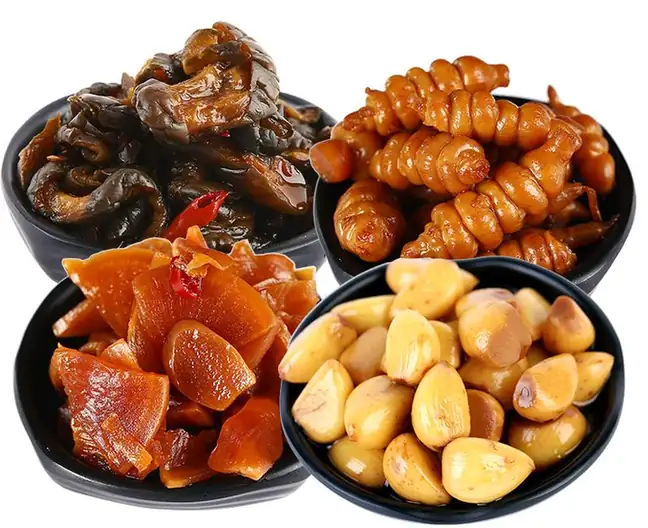
Photo adjustments
EXIF orientation normalized; resized without changing aspect ratio; converted to WebP. No subject edits.
Jinzhou Pickled Vegetables (锦州小菜) are the traditional fermented pickles of Jinzhou (锦州), Liaoning. Researchers from Shenyang Agricultural University (沈阳农业大学) describe them as a local speciality dating from the early Qing dynasty, over 300 years old, and the craft of making them, listed as "Jinzhou xiaocai making technique" (锦州小菜制作技艺), appears on Liaoning's provincial list of intangible cultural heritage.
Where it comes from
A 2009 report on the China Condiment Association (中国调味品协会) website cites the book Jinzhou Chunqiu Jishi (《锦州春秋纪事》, a Jinzhou chronicle) for the pickles' earliest name and tells the story behind it. In the early Kangxi years a Li family of shrimp fishers lived in Xiaoyanguo (硝盐锅), a village near the Bohai Gulf south of Jinzhou. They salted unsold shrimp from Erjiegou (二界沟) into a shrimp paste that became a tribute item in 1670. The family then drew off the shrimp oil and soaked cucumber strips, celery and small cucumbers in it; the small cucumbers kept their flowers and spines and stayed green and crisp. The pickles were first called shrimp-oil salted vegetables and later shrimp-oil xiaocai. In the same story the Kangxi Emperor tasted them at Zhong'anbao (中安堡) in Guangning (广宁县, today Beizhen) on a journey to the ancestral tombs.
Later, more than a dozen pickle shops and sauce workshops in the city merged into the Jinzhou Pickle Factory (锦州酱菜厂), which added varieties, set standard proportions and quality standards, and renamed the product "shijin xiaocai" (什锦小菜, assorted pickles).
How it is made
The Shenyang researchers divide the pickles into a shrimp-oil group, such as shrimp-oil cucumbers, assorted pickles and shrimp-paste vegetables, and a salted group such as salted cowpeas. Traditional versions use fresh cucumbers, round green peppers, small aubergines and cowpeas, pickled with salt, soy sauce, vinegar and sugar. Li Guangchun (李广春), a later member of the Li family, is credited with soaking the fresh vegetables in brine before marinating them. When the researchers sampled pickles from morning markets and supermarkets in three city districts, they found shredded mustard, spicy radish, spicy cabbage and pickled garlic alongside the cucumbers, with Lactobacillus plantarum and Weissella cibaria as the main bacteria.
Flavour and texture
The pickles are crisp and tender, and the researchers credit Jinzhou's climate and water with giving them their particular flavour. The China Condiment Association report describes visitors buying them in baskets, bottles or bags, in sweet, sour, savoury and spicy versions.
Sources & reading
Written from the linked sources and checked sentence by sentence against quoted extracts by a separate reviewer on 2026-09-24. Recipes and servings vary between kitchens.