

Sweet and Sour Crispy Pork with Nanguo Pear 南果梨锅包肉
Sweet and Sour Crispy Pork with Nanguo Pear is featured among the local specialties of Liaoning.
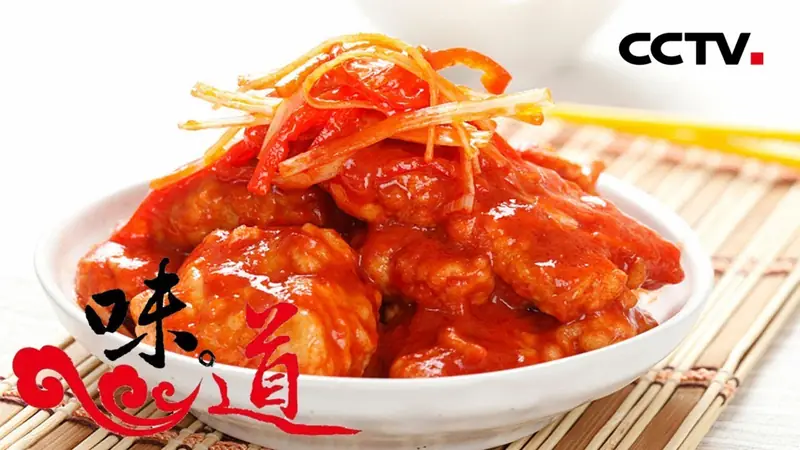
Photo adjustments
EXIF orientation normalized; resized without changing aspect ratio; converted to WebP. No subject edits.
Sweet and Sour Crispy Pork with Nanguo Pear (南果梨锅包肉) joins Anshan's small aromatic pear with 锅包肉, the northeastern plate of crisp-fried pork slices tossed in a sweet-and-sour sauce. The name names the fruit, not its role.
Cooking in two stages
锅包肉 is built in stages: pork is sliced, coated in a starch batter, fried once to set the coating and again to crisp it, then turned through a sauce at the last moment. The pear in this version is the variable. It may be folded into the sauce, sliced over the top, or used mainly for fragrance. Ask which one you are getting, because each gives a different texture.
The sauce decides whether the plate works. It should cling to the crust rather than pool underneath it, and the kitchen usually keeps it sharp with vinegar so the sugar does not take over. If the pear is cooked in the sauce it softens and tastes mild; added at the end, it stays crisp and aromatic.
What it tastes like
Expect a brittle, airy crust, a sauce that is sweet first and sour behind it, and a soft piece of pear cutting through both. Because the coating is thin and the sauce is wet, the crispness peaks in the first minutes. Floral, faintly nutty notes from the pear show up best when the fruit is fresh rather than stewed.
The Anshan setting
Anshan is an industrial city in central Liaoning, and 锅包肉 is a fixture of northeastern menus rather than a rare speciality. What makes this version local is the fruit: 南果梨 is a small, aromatic pear that Liaoning markets treat as a regional asset, and cooks fold it into sweet-sour dishes when the fruit is in season.
What goes into it
The plate is built from pork, a starch batter, sugar, vinegar and the pear. Starch rather than flour gives the crust its glassy crunch, and the sauce is usually made with vinegar, sugar and a little soy. If you avoid pork, gluten or refined sugar, or you eat halal, ask about all four before ordering, since both batter and sauce are prepared in advance.
How to order
Order it by its full Chinese name, 南果梨锅包肉, and ask whether the kitchen makes it 甜口, sweeter, or 酸口, more sour; the balance varies from kitchen to kitchen. It is a shared plate rather than an individual portion. If the pear is the reason you are ordering it, confirm that the fruit is actually in stock that day.
At the table
Eat this one first. Once the sauce sits, the crust softens and the dish becomes a gentler thing altogether. Use the serving spoon to lift the pieces so the sauce at the bottom of the plate does not drown them, and keep plain rice or a light soup alongside so the sweetness does not build up.
More dishes to compare
Explore related local specialties and compare their names, preparation notes and ordering guidance.
Anshan Date-Shaped Sausages 鞍山肉枣 →
Anshan Date-Shaped Sausages (鞍山肉枣) appears beside this dish in Anshan's own speciality list; its name joins 肉, meat, with 枣, jujube. Ordering both gives a sense of how wide the city's pork repertoire runs — one plate crisp and sweet-sour, the other built around a name that borrows a fruit.
Questions before you order
Is 南果梨锅包肉 always sweet?
Not necessarily. Kitchens balance vinegar and sugar differently, so ask whether theirs is 甜口 or 酸口 before ordering.
Is the pear cooked or raw?
That depends on where you order it. Ask whether the fruit is folded into the sauce or added at the end, because the texture changes completely.
Sources & reading
The supplied food list supports this name and regional association. The culinary terms below are explained as menu vocabulary; a local recipe, origin story and venue availability have not been independently verified.