

Buckwheat Pressed Noodles 荞面饸饹
Buckwheat Pressed Noodles is featured among the local specialties of Liaoning.
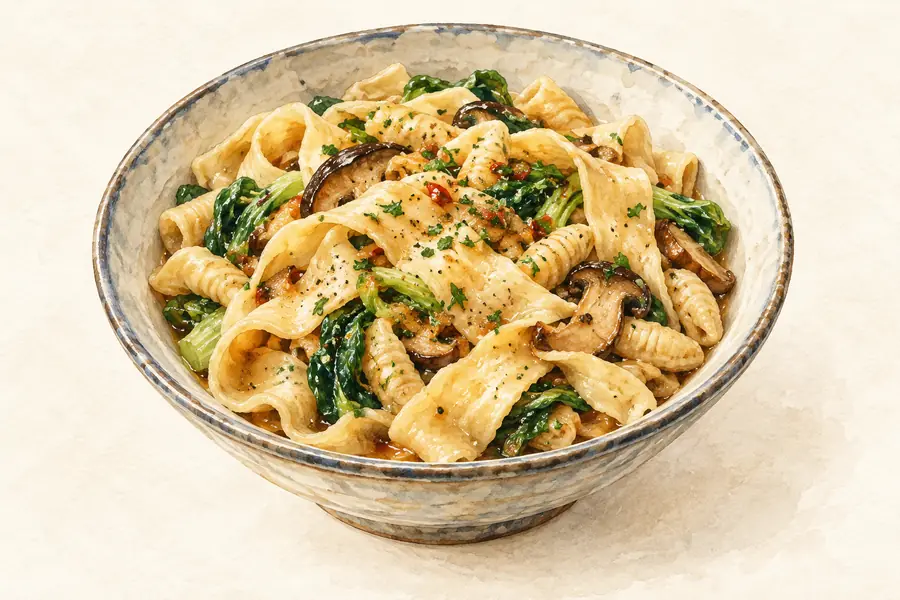
Buckwheat Pressed Noodles (荞面饸饹) is a buckwheat noodle dish listed for Chaoyang in western Liaoning, where the noodles are pressed straight into boiling water rather than rolled and cut.
Pressed, not cut
A firm dough is loaded into a press and forced through small holes directly over the pot, so each strand drops into boiling water and sets before it can stick. That is what gives 饸饹 its round, slightly rough surface. The dough is rarely pure buckwheat, because buckwheat has no gluten to hold it together; a proportion of wheat or another binder is usually worked in. Ask how much of each goes into the mix if the flavour matters to you.
Noodles pressed into fast-boiling water cook in a minute or two. Lift them too late and they turn soft and pasty, which is why a busy kitchen usually cooks them to order.
What it tastes like
Buckwheat is nutty and faintly bitter in the way that dark bread is, and the noodles have a short, firm bite rather than the springiness of wheat. The flavour stands up to strong toppings, so the broth or dressing tends to be the louder half of the bowl. If you have only eaten white-flour noodles, order a small bowl first.
Some shops loosen the bowl with a spoonful of the cooking water, which spreads the dressing without diluting the nutty flavour. That also keeps the strands from clumping while you eat.
The western Liaoning setting
Chaoyang sits in the drier uplands of western Liaoning, where buckwheat has long been a practical crop for thin soils and short seasons. Noodles made from it are everyday food rather than a plated speciality, and the places that serve them usually keep the menu short: one noodle, one or two broths, a few side dishes.
What goes into it
The noodles are buckwheat plus a binding flour, water and salt. What arrives with them is the variable: a hot broth, a cold dressing of vinegar, garlic and chilli oil, or a topping of sliced meat. If you avoid wheat or gluten, ask whether the dough is pure buckwheat that day, because the answer changes from kitchen to kitchen.
How to order
Ask for 荞面饸饹 and then choose between a hot bowl, usually described as 热汤, and a cold dressed one, 凉拌. Both are ordinary orders, and the cold version is the better choice in hot weather. 不要辣 keeps the chilli oil out; if you want the topping left off, say so before the bowl is assembled.
At the table
Eat the noodles as soon as they arrive. Buckwheat strands keep absorbing liquid, so a bowl left standing thickens and loses its bite. Lift them with chopsticks and a spoon together, and add vinegar a little at a time rather than all at once, since the noodle itself is mild and easy to overpower.
If the bowl is dressed cold, toss it from the bottom so the oil and the vinegar reach every strand. In a hot bowl, add the chilli gradually, because heat carries further through broth than it does through a cold sauce.
More dishes to compare
Explore related local specialties and compare their names, preparation notes and ordering guidance.
Fuxin Buckwheat Donkey Meat Dumplings 阜新荞面驴肉蒸饺 →
Fuxin Buckwheat Donkey Meat Dumplings (阜新荞面驴肉蒸饺) is a western Liaoning speciality whose name joins 荞面, buckwheat flour, with 驴肉, donkey meat, in a steamed dumpling. Ordered with the noodles, it shows one flour used two ways: pressed into strands, and rolled around a filling.
Questions before you order
Is 荞面饸饹 gluten free?
Not reliably. Buckwheat itself has no gluten, but most doughs include a binding flour, so ask what the kitchen mixes in before ordering.
Should I order it hot or cold?
Both are normal. 热汤 is the hot-broth version and 凉拌 the cold dressed one; the cold bowl shows off the nutty flavour more clearly.
Sources & reading
The supplied food list supports this name and regional association. The culinary terms below are explained as menu vocabulary; a local recipe, origin story and venue availability have not been independently verified.