

Little White Flaky Pastries 小白皮酥
Little White Flaky Pastries is featured among the local specialties of Liaoning.
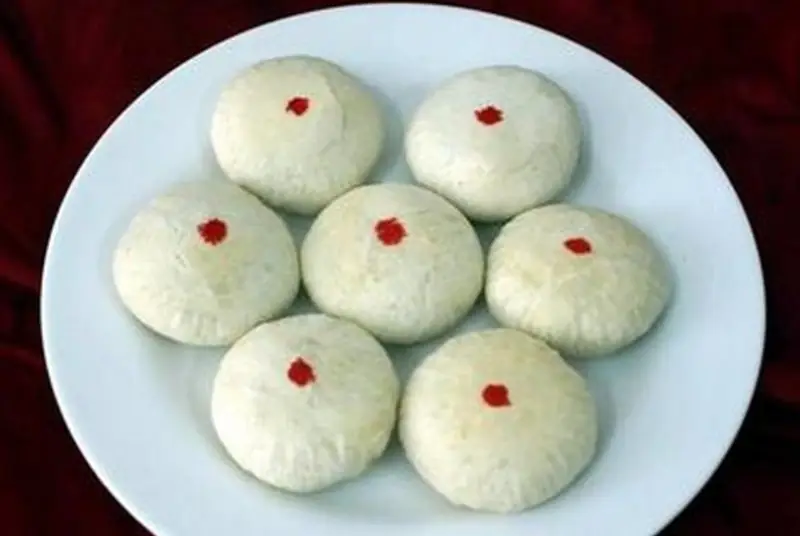
Photo adjustments
EXIF orientation normalized; resized without changing aspect ratio; converted to WebP. No subject edits.
小白皮酥 is a small flaky pastry whose name describes its texture. The final character, 酥, points to a crumbly, layered crust that breaks apart easily rather than a soft or chewy one.
How the layers are made
The flakiness comes from folding fat into the dough again and again, building thin alternating layers. Once baked, the moisture in each layer turns to steam and pushes the sheets apart, which is what makes the pastry shatter rather than bend.
Getting that structure right takes patience rather than heat. Too much handling warms the fat and collapses the layers, so the dough is usually rested between folds and handled as little as possible before it goes into the oven.
How it eats
The first sensation is texture: a light crunch followed by a dry, fine crumb. Because the crust is made from laminated dough, the pastry itself tastes of flour and fat rather than of sugar.
Any sweetness comes from a filling or a dusting rather than from the whole piece. That makes the pastry feel lighter than a frosted cake or a heavy bun, and it also means it can sit closer to the savoury end of a tea table.
Where the name belongs
小白皮酥 is tied to Anshan in central Liaoning, where it appears among the city's listed local foods. The name is descriptive rather than fanciful: 小白 gives the pale colour, 皮 the crust, and 酥 the crumbly bite.
Flaky pastries of this family are widely made across northern China, usually as small baked goods rather than restaurant desserts. Reading 小白皮酥 in Anshan places the piece in that bakery tradition instead of an elaborate pastry kitchen.
Ingredients and dietary questions
Flour, water and a laminating fat are the essentials, with sugar or a sweet filling added according to the version. Because the fat is folded through the dough rather than mixed into it, it is a significant part of what you are eating.
Gluten, dairy and animal fats can all appear, so ask what the dough is made with if any of them are a concern. Shops making this kind of pastry usually know exactly which fat they use and can say so quickly.
Buying it
Ask to buy 小白皮酥 by weight rather than by the piece, since these are small, inexpensive items usually sold from a counter or a tray. Two or three pieces make a reasonable first purchase to judge whether you like the style.
Look at the surface before choosing. A good piece has visible layers and a dry, matte top; one that looks shiny or damp has often picked up moisture and lost the crunch that defines it.
Serving and eating
Eat it with tea rather than with a wet dessert, holding a piece over a plate or napkin because the layers shed crumbs generously. The dry texture is designed to work against a drink, not to be softened by one.
If you are serving several, keep them in a paper bag or a loosely covered tin instead of a sealed container. Trapped steam softens the crust within hours, and the pastry loses the quality named in its own title.
More dishes to compare
Explore related local specialties and compare their names, preparation notes and ordering guidance.
Niuzhuang stuffed pancakes 牛庄馅饼 →
牛庄馅饼 is a Liaoning wheat-flour preparation, pan-cooked with a savoury filling rather than baked into delicate layers. Compared with 小白皮酥, the pair shows two very different uses of the same basic dough in one province: a soft filled pancake and a crisp flaky pastry.
Questions before you order
Is 小白皮酥 sweet or savoury?
It varies. The name describes the flaky crust rather than the filling, so some versions are sweet and others are closer to plain.
How long does 小白皮酥 keep?
Not long at its best. The layered texture softens once moisture gets in, so it is usually eaten within a day of buying.
Sources & reading
The supplied food list supports this name and regional association. The culinary terms below are explained as menu vocabulary; a local recipe, origin story and venue availability have not been independently verified.