

Luoyang beef soup 洛阳牛肉汤
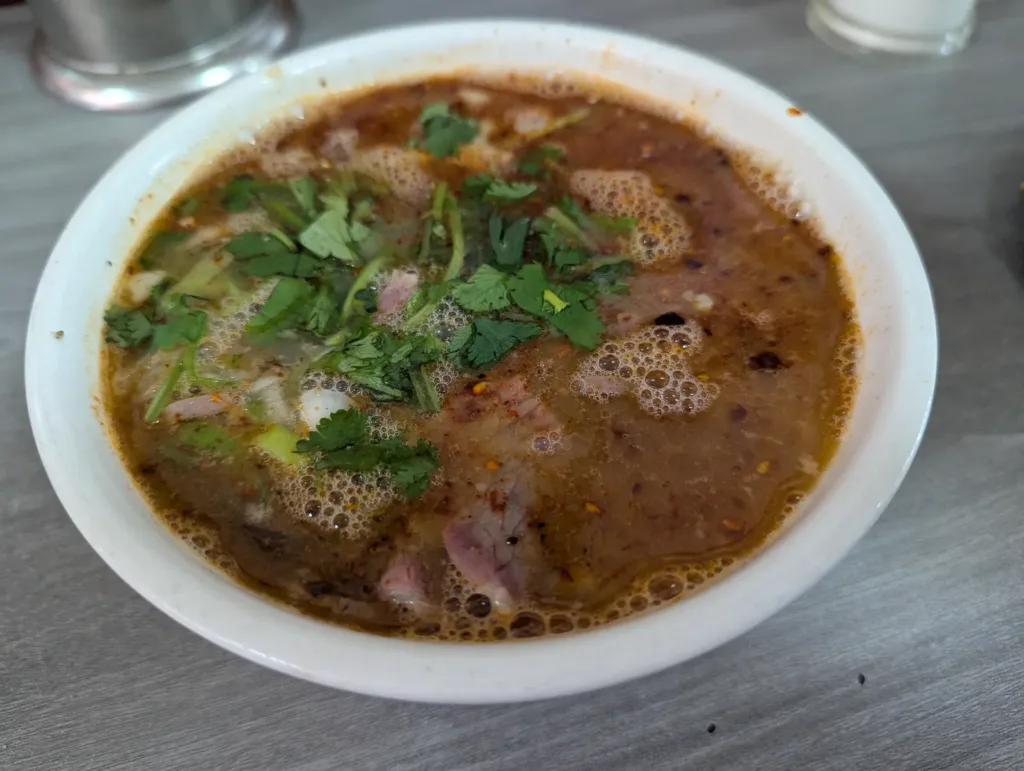
Luoyang beef soup (洛阳牛肉汤) is a city breakfast built around sliced beef, beef-bone broth and a choice of local breads. Its appeal is as much the early-morning soup-shop ritual as the bowl itself: hot broth is poured over the meat, while makers and diners vary the seasoning and bread pairing. It is best understood as a Luoyang soup tradition, not one fixed recipe.
Tap any red Chinese text to hear it in Mandarin.
A Luoyang breakfast tradition
Luoyang is known locally as a city of breakfast soups. A Henan cultural-and-tourism feature lists beef soup alongside mutton, offal, meatball and tofu soups as part of Luoyang’s broad “soup” culture, and notes that serious soup customers start early for the first pots of the day. China Central Television likewise describes a century-old Luoyang beef-soup shop as a place where beef is fragrant and the broth is fine-textured.
The dish also has a specific local craft lineage. Luoyang’s municipal intangible-heritage list records Ma Jieshan beef-soup making technique under Chanhe District. That entry identifies a recognised local tradition; it does not mean every shop uses the same recipe or that one shop represents the whole city.
What is in the bowl
A documented traditional maker uses fresh beef hind leg and cleaned marrow bones, with a house spice blend. The report describes an early start, long simmering and a three-pot sequence: the first pot removes blood and tightens the meat, the second adds seasoning as the meat cooks, and the third is kept at the serving stage. The shop’s stated aim is to sell the broth fresh rather than keep adding water or carrying it over.
The serving is simple but precise. Thin slices of beef are placed in a large bowl and covered with boiling broth. In Luoyang, the soup is commonly eaten with bread: the local report mentions bread shreds, yóuxuán and firm guōkuī, which soften as they absorb the broth. Another local breakfast account describes chopped beef with scallion, coriander and garlic shoots, followed by the hot pour; these garnishes and toppings should be treated as shop-level choices rather than a universal formula.
How to order and taste it
Show the name 洛阳牛肉汤 Luòyáng Niúròu Tāng when ordering. If the counter offers options, ask how much beef comes with the standard bowl and choose a bread separately if you want something to soak up the broth. Taste a few spoonfuls before adding chilli or other condiments so you can judge the maker’s broth on its own. Toppings, spice level, meat portions and bread choices vary, so do not assume that a bowl photographed elsewhere will look identical.
If you need halal assurance, have an allergy, or avoid particular seasonings, ask the individual shop directly. The documented Ma Jieshan account specifies halal-slaughtered beef, but that source describes that maker’s practice, not every shop in Luoyang.
Where to eat it
You can find Luoyang beef soup all over Henan, so there is no need to seek out one particular restaurant. To find one near you, search for “洛阳牛肉汤” in Meituan (美团) or Amap (高德地图) and check recent reviews, distance and opening hours.
More dishes to compare
Explore related local specialties and compare their names, preparation notes and ordering guidance.
Hulatang 胡辣汤 →
A pepper-forward broth is thickened and cooked with ingredients such as meat, wheat gluten, vegetables and starch noodles. Regional Henan styles differ in the mix and the balance of spices. The soup is dense and coating, with warm pepper heat and a variety of chewy or tender pieces. It need not taste like a chili-only soup.
Anyang fermented-bean congee 安阳粉浆饭 →
Fermented bean liquid is cooked with grain and other ingredients into a thick, tangy bowl. Vegetables and final seasonings vary between Anyang makers. The fermentation gives a noticeable sour aroma, while the grains provide a soft, filling texture. It is savory rather than a sweet rice porridge.
Sources & reading
Recipes and servings vary between kitchens.
- Luoyang Municipal Government: Second batch of municipal intangible cultural heritage list
- Henan TV: Ma Jieshan beef soup, a bowl of soup in Luoyang people’s hearts
- Henan Department of Culture and Tourism: Henan breakfast traditions
- CCTV: A century-old Luoyang beef-soup shop
- China Radio International: Luoyang’s characteristic breakfasts
- Local food reference
Image credits & notes (1)
- A bowl of Luoyang beef soup with sliced beef, hot broth and coriander, photographed in Luoyang in April 2025. Photo: Jeremy Thompson (Flickr username: Roller Coaster Philosophy)Photo: CC BY 2.0