

Ningxia stir-braised flatbread strips 宁夏炒糊饽
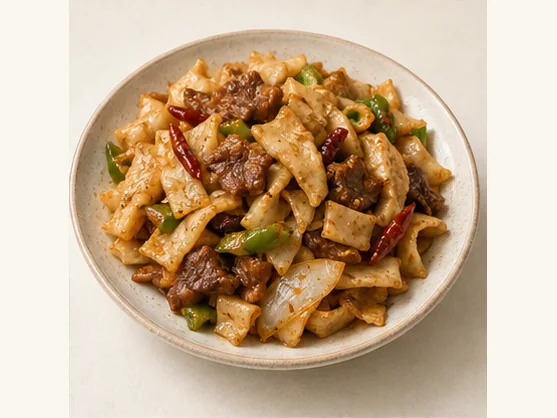
Ningxia chao hubo is a Ningxia wheat dish made from a partly cooked flatbread cut into strips, then finished in a covered pan with savoury liquid, meat and changing vegetables. It is associated with Ningxia, especially Yinchuan and Wuzhong, but it is not one fixed recipe: the chew of the bread and the broth it absorbs are the useful clues when you order.
Tap any red Chinese text to hear it in Mandarin.
What you are eating
Here, 糊饽 (hubo) means a baked flatbread cut into strips, also called 糊饽子 Húbōzi. The strips are stir-braised rather than simply tossed dry, and they are not served as a conventional noodle soup. Liquid is added during cooking, so the bread takes on the savoury flavour while keeping a distinct bite.
How it is made
A documented lamb version begins with a firm flour-and-alkali dough. It is rested, rolled thin, cooked only until partly done, and cut into strips. In the pan, hot oil carries the aroma of scallion, ginger and garlic; lamb, dried chilli, potato, tofu, tomato paste and a little lamb broth may follow. The strips are then covered and cooked gently until tender and the liquid has reduced, with garlic sprouts added at the end.
That sequence is a guide, not a single legal recipe. Another home-style version uses onion, tomato, green pepper, garlic sprouts and zucchini, with chilli powder, soy sauce and a little hot water. A Yinchuan food listing likewise describes lamb, tofu, vegetables, broth and seasonings, while noting that kitchens can add different vegetables.
Flavour and texture
Expect a wheat aroma, a tender outside and some resilience inside rather than the spring of raw noodles. The strips absorb the cooking liquid, so a lamb version can taste savoury and rich; tomato, vinegar or chilli can push it toward a gently sour or spicy finish. The balance depends on the pan in front of you, not just on the dish name.
Local range and everyday context
Chao hubo is a Ningxia food rather than a dish that should be presented as Yinchuan’s exclusive invention. Sources place it in Ningxia and specifically mention Yinchuan and Wuzhong; the name and preparation also appear in descriptions of food from nearby parts of the region. One local explanation links the name to flatbread that was over-browned in a household stove and later cut up and stir-cooked. Treat that as a folk story about the name, not as a guarantee that your serving will taste burnt.
How to order
Keep 宁夏炒糊饽 Níngxià Chǎo Húbō on your phone and show it when ordering. Ask which meat is used, whether the pan contains lamb broth, how spicy it is, and whether the serving is a bowl or a shared plate. If you prefer less chilli, say so before cooking starts.
The dish name does not guarantee a particular meat, cooking fat, broth, halal certification or allergen-free preparation. It contains wheat, and common versions may also contain lamb or beef, tofu, soy seasoning, chilli and animal broth. If you have an allergy or a religious or dietary requirement, ask about the actual pan and shared utensils rather than relying on the name or appearance.
Where to eat it
You can find Ningxia stir-braised flatbread strips all over Ningxia, so there is no need to seek out one particular restaurant. To find one near you, search for “宁夏炒糊饽” in Meituan (美团) or Amap (高德地图) and check recent reviews, distance and opening hours.
More dishes to compare
Explore related local specialties and compare their names, preparation notes and ordering guidance.
Ningxia mixed savoury soup bowl 宁夏烩小吃 →
The individual components are prepared first, then combined and heated in broth. Softer ingredients absorb the liquid while firmer pieces retain their shape, producing a mixed bowl rather than a puréed soup. The appeal lies in changing textures: soft tofu, springy noodles, vegetables and savoury meat. Chilli or vinegar may be offered separately, which allows a gentler first taste of the broth.
Guyuan nine-bowl feast 固原九碗十三花 →
Several preparations are cooked separately and arranged as a formal shared meal, rather than one mixed stew. The meal alternates richer and lighter dishes, with its variety more important than a single dominant flavour.
Sources & reading
Recipes and servings vary between kitchens.