

Roast Lamb Ribs 烤羊排
Roast Lamb Ribs (烤羊排, kǎo yángpái) is a lamb-rib dish found in Ningxia’s wider roast-lamb culture and mentioned in visitor accounts of Yinchuan. Treat it as a cut-and-cooking method rather than one fixed recipe: the seasoning, fire, portion size and lamb provenance can vary by venue, so ask before ordering.
Tap any red Chinese text to hear it in Mandarin.
What you are looking for
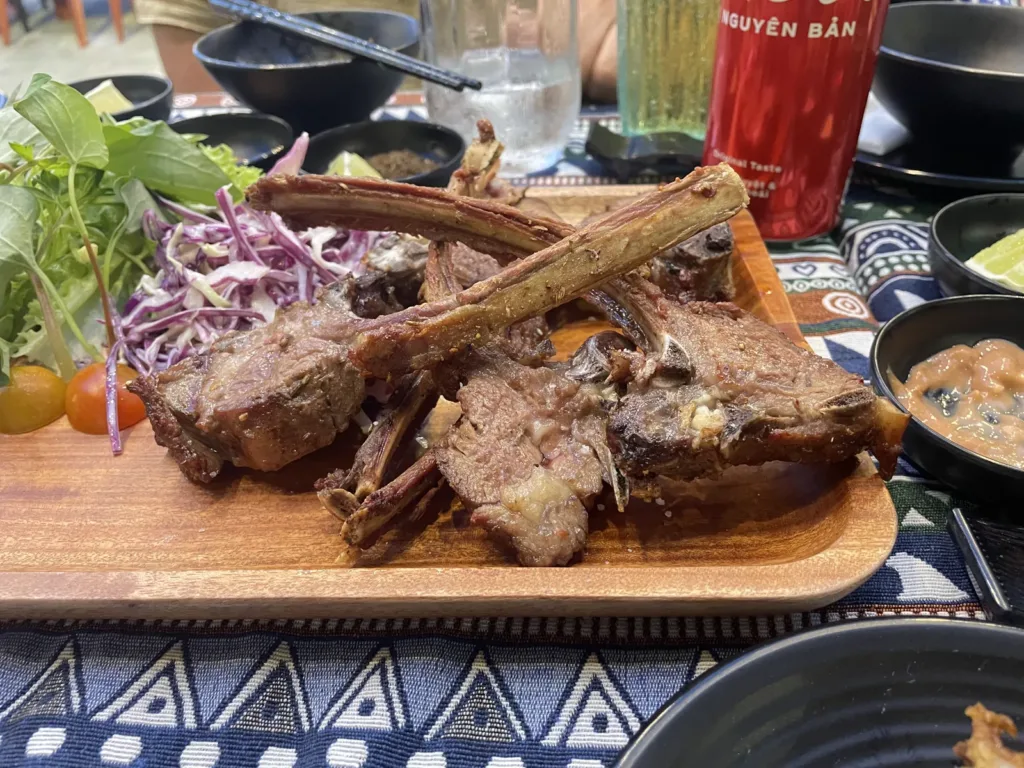
The Chinese name is deliberately straightforward: 烤 means roasting or grilling, 羊 means lamb or mutton, and 排 means ribs. A serving may be a short rack, separated ribs, or a larger cut finished for sharing. The appeal is the meeting point of bone, meat and rendered fat, with browning from direct heat or a hot oven. The dish should be read as a menu option, not as a claim that every restaurant follows one Ningxia recipe.
Roast lamb sits inside a much larger Ningxia food culture. Regional descriptions place roast, simmered, steamed and stir-fried lamb alongside hand-grabbed lamb and lamb noodles, rather than treating one preparation as the only local form. A government-hosted account of Ningxia barbecue says that a light salt base is often used to bring out the meat; it also describes cumin, chilli and garlic-vinegar dips with other roast-lamb preparations. Those details are useful clues for the flavour family, but they do not prove that every plate of 烤羊排 uses all of them.
Cooking and flavour
Ask how the ribs are prepared before you order. A kitchen may cook the rack through and brown it over charcoal, roast it in an oven, or combine a tenderising first stage with a final high-heat finish. The source material confirms the regional presence of roasting and barbecue, but does not establish a single cooking sequence for this dish.
A good first bite should let you compare the browned outside with the softer meat close to the bone. Fat carries seasoning and can make the surface taste richer than the centre. Depending on the kitchen, the plate may be lightly salted, dusted with cumin or chilli, served with a dip, or seasoned in another house style. If you want to taste the lamb more plainly, request less chilli and ask whether cumin is added after cooking.
Ningxia lamb and what the name does not guarantee
Ningxia is strongly associated with lamb, but “烤羊排” alone does not identify the breed or farm. The Ministry of Agriculture and Rural Affairs describes Salt Lake Tan Sheep (盐池滩羊) as a protected geographical-indication agricultural product from Yanchi County, in eastern Ningxia; its protection and traceability rules are tied to that production area. A Yinchuan menu may use lamb from the wider region, but you should not assume that a dish carries the 盐池滩羊 name unless the menu or staff says so.
This distinction matters because “Ningxia lamb” is often used broadly in visitor-facing food writing, while a protected product name has a more specific geographic meaning. If provenance is important to you, ask: 是盐池滩羊吗? (Shì Yánchí tānyáng ma? — Is it Yanchi Tan Sheep?) A clear answer is more useful than judging origin from colour, smell or tenderness alone.
Practical tips
Keep the Chinese name ready on your phone and ask a few practical questions:
- 烤羊排怎么做?炭烤还是烤箱? Kǎo yángpái zěnme zuò? Tànkǎo háishi kǎoxiāng? — How is it cooked: charcoal or oven?
- 这一份有几根?按份还是按斤? Zhè yí fèn yǒu jǐ gēn? Àn fèn háishi àn jīn? — How many ribs are in this serving? Is it by portion or by weight?
- 放孜然和辣椒吗?可以少辣吗? Fàng zīrán hé làjiāo ma? Kěyǐ shǎo là ma? — Does it use cumin and chilli? Can you make it less spicy?
- 是盐池滩羊吗? Shì Yánchí tānyáng ma? — Is it Yanchi Tan Sheep?
Confirm the portion and price before the cooking starts, especially if the menu describes a rack or a weight rather than an individual chop.
Dietary and ordering notes
Lamb ribs are not vegetarian, and the name does not guarantee a particular marinade or the absence of allergens. Salt, cumin, chilli, onion, garlic or a prepared sauce may be used, but the exact ingredients belong to the individual kitchen. If you have an allergy, ask what is in both the meat and the dipping sauce, and ask about shared cooking surfaces. Do not infer that a dish is safe for a dietary restriction from its appearance or from the word “lamb.”
Where to eat it
You can find Roast Lamb Ribs all over Ningxia, so there is no need to seek out one particular restaurant. To find one near you, search for “烤羊排” in Meituan (美团) or Amap (高德地图) and check recent reviews, distance and opening hours.
More dishes to compare
Explore related local specialties and compare their names, preparation notes and ordering guidance.
Ning Xia Kao Quan Yang 宁夏烤全羊 →
Ning Xia Kao Quan Yang (宁夏烤全羊) roasts a whole animal, which makes it a table-sized order for a group, carved after it comes off the fire. 烤羊排 takes one rack instead: the same dry heat, but a cut you can order for two or three people, with more surface exposed to the rub and less meat to keep moist.
Sources & reading
Image credits & notes (1)
- Grilled lamb ribs served on a restaurant table; a regional dish illustration for Yinchuan, not a photograph of a Yinchuan or Ningxia venue. Photo: BaoothersksPhoto: CC BY-SA 4.0