

Peking duck 北京烤鸭
Peking duck (北京烤鸭) is Beijing’s signature roast-duck meal: carefully prepared duck is roasted for lacquered, crisp skin and tender meat, then carved and usually eaten with thin wheat pancakes, sweet fermented sauce, scallion and cucumber. Hanging-oven and enclosed-oven traditions create different textures, so the dish is not one fixed recipe.
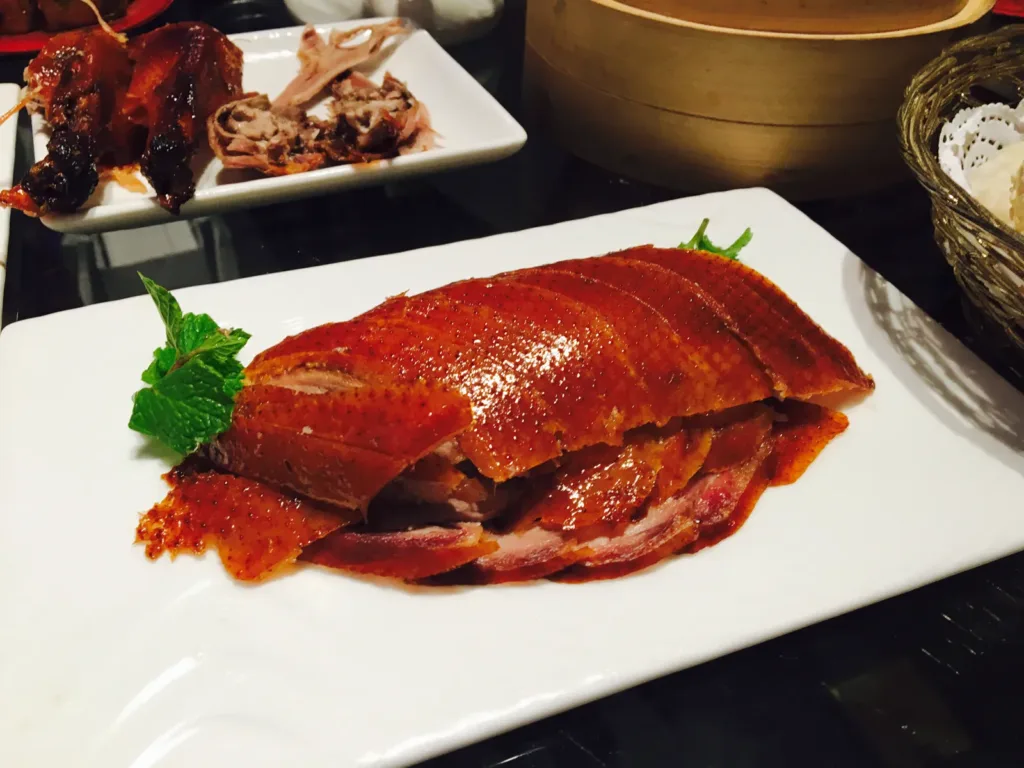
What makes Beijing roast duck distinctive
Peking duck is a Beijing-associated roast, not a single unchanging formula. The national intangible-heritage register describes several oven traditions, including guàlú (hanging-oven, exposed to flame) and mènlú (enclosed-oven, heated by the hot oven walls). It identifies specially raised, fattened duck as a traditional raw material and notes that preparation includes shaping the bird, drying its skin, applying syrup and roasting.
The craft matters because the goal is more than cooked duck: a thin, glossy, crisp skin should sit against succulent meat. At Quanjude, the hanging-oven tradition uses fruitwood and direct flame. The duck is turned as it roasts; rendered fat helps crisp the skin, while the wood contributes a fragrant, lightly smoky note. The restaurant describes its finished skin as crisp and its meat as tender, with a rich reddish-brown colour.
The contrasting enclosed-oven style, associated with Bianyifang, uses an oven heated first and then closed around the duck. The bird cooks from the retained heat rather than being turned in direct flame. A Beijing cultural-food account describes this version as especially tender and juicy, while hanging-oven duck is known for crisper skin and fruitwood aroma. These are useful tendencies, not guarantees for every restaurant or every roast.
How it is prepared and served
The preparation begins well before the oven: the duck is cleaned and shaped, its skin is dried, and syrup is applied to help produce an even, glossy colour during roasting. In the hanging-oven method, the cook controls heat and turns the bird so it cooks and browns evenly; the formal craft description records a sequence of preparation, roasting and carving rather than one universal household recipe.
A server may carve the duck at the table or bring it sliced. The most familiar assembly uses a thin, soft wheat pancake, a little sweet fermented sauce, strips of scallion and cucumber, and a few pieces of duck. Fold the pancake around them into a small parcel. The savoury-sweet sauce and sharp scallion balance the fatty richness; cucumber adds a cool crunch, while the pancake is tender rather than crisp.
Some restaurants also offer sesame-seed buns with duck and scallion. A piece of skin may be served separately to taste its crispness before adding sauce or vegetables. These are serving choices, not rules every restaurant follows. Ask what comes with the duck and whether pancakes, sauce or additional courses are included; portions and accompaniments vary by menu.
What to expect in the first bite
Look for glossy, amber to deep reddish-brown skin, a clean roasted aroma, and the contrast between brittle skin and soft, juicy meat. A hanging-oven roast can carry a distinct fruitwood fragrance. The enclosed-oven version tends toward a gentler, juicier bite. In a pancake, crisp skin, tender meat, fermented sauce, fresh scallion and cucumber meet in one mouthful; eaten separately, the skin’s crackle and roast flavour are easier to notice.
The wrappers are ordinarily wheat-based, and sauces and side dishes differ between kitchens. If ingredients matter for dietary reasons, ask the restaurant about the actual pancakes, glaze, sauce and accompaniments rather than assuming one standard recipe.
Where to eat it
You can find Peking duck all over Beijing, so there is no need to seek out one particular restaurant. To find one near you, search for “北京烤鸭” in Meituan (美团) or Amap (高德地图) and check recent reviews, distance and opening hours.
More dishes to compare
Explore related local specialties and compare their names, preparation notes and ordering guidance.
Zhajiangmian 炸酱面 →
Wheat noodles are boiled separately while diced pork is fried with fermented soybean paste into a thick sauce. Cucumber and other finely cut vegetables are arranged on top for mixing. The sauce is salty, deeply savory and oily; fresh vegetables lighten the mouthful while firm noodles supply chew.
Luzhu bread-and-offal stew 卤煮火烧 →
Pork intestine and other offal simmer in a seasoned broth with firm wheat bread and fried tofu. The bread is cut so its interior can soak up the cooking liquid. Expect a full-bodied, offal-forward bowl: soft bread, porous tofu and chewy meat contrast with the salty broth.
Sources & reading
Recipes and servings vary between kitchens.
Image credits & notes (1)
- Sliced Beijing roast duck photographed in Beijing. Photo: Zheng ZhouPhoto: CC BY-SA 4.0