

Pingyao cured beef 平遥牛肉
Pingyao cured beef is a local beef product made by curing and simmering beef, then cooling it for neat slices. Its distinctive identity comes from Pingyao’s traditional processing culture and a documented geographical link to the county, so it is best approached as both a cold dish and a practical takeaway rather than one fixed restaurant recipe.
Tap any red Chinese text to hear it in Mandarin.
What makes it Pingyao beef?
The useful distinction is between a dish sold in Pingyao and the protected geographical product. The China National Intellectual Property Administration defines Pingyao Beef as a beef product made with high-quality cattle and groundwater from Gutao Town, Hongshan Town, Yuebi Township and Nanzheng Township in Pingyao County, then cured and simmered using traditional processing. A sliced serving at a shop may be local-style food without proving that it follows every part of that geographical-product specification.
The official description gives a good idea of what to look for: a flat cut, deep rose colour, slightly yellow fat, a close texture and a slice that is resilient but not dry. The flavour is concentrated and savoury, with a light saltiness and a lingering beef aroma. These are the product’s stated sensory characteristics, not a guarantee that every batch or packaged variant will taste identical.
How it is made
The craft is more than simply boiling meat. A 2024 account of production in Pingyao describes cured beef going into the pot for a rapid boil, a slower simmer and a final covered rest, with the cooking taking many hours. It also records the traditional sequence as “inspect, butcher, cure, simmer and trim” (相、屠、腌、卤、修). Another report reduces the old workshop vocabulary to a piece of meat, a knife, salt, a crock and a pot, while noting that modern factories now use equipment alongside the traditional method.
The Guanyun Pingyao beef traditional processing technique is listed by China’s official intangible-heritage centre as Beef and mutton cooking techniques (Guanyun Pingyao beef traditional processing technique), a 2008 second-batch national project under traditional crafts. That heritage listing belongs to the named technique and its transmission; it does not mean that every beef product sold in Pingyao is made by one identical recipe or at one particular workshop.
How to order and take it home
Show the Chinese name 平遥牛肉 Píngyáo Niúròu when ordering. For a first taste, freshly sliced plain or original beef is the clearest way to notice the compact texture and salt-balanced flavour. Shops may also offer versions described as five-spice or spicy.
If you buy a packaged portion, ask the seller how it should be stored and when it should be eaten; do not infer those instructions from how it is displayed.
Pingyao cured beef is beef, not a vegetarian dish. Seasonings and processing details vary between makers, so travellers with allergies or strict dietary requirements should ask what has been added and whether the seller can prevent cross-contact.
Where to eat it
You can find Pingyao cured beef all over Shanxi, so there is no need to seek out one particular restaurant. To find one near you, search for “平遥牛肉” in Meituan (美团) or Amap (高德地图) and check recent reviews, distance and opening hours.
More dishes to compare
Explore related local specialties and compare their names, preparation notes and ordering guidance.
Oat-dough kaolaolao 莜面栲栳栳 →
Oat dough is worked with hot water, rolled into very thin pieces and curled into upright cylinders. These are packed closely in a steamer, creating the characteristic honeycomb-like arrangement. The rolls are soft but substantial, with a nutty grain flavor and enough structure to hold a dip. Their taste depends heavily on the accompanying sauce.
Guoyourou 过油肉 →
Thin meat slices are coated, briefly passed through hot oil and then stir-fried with vegetables and seasoning. Shanxi versions commonly use pork, with garlic and vinegar contributing to the final aroma. The meat stays tender under a glossy coating, contrasting with crisp vegetables or wood-ear fungus. The flavor is savory with a light tang.
Sources & reading
Recipes and servings vary between kitchens.
Image credits & notes (1)
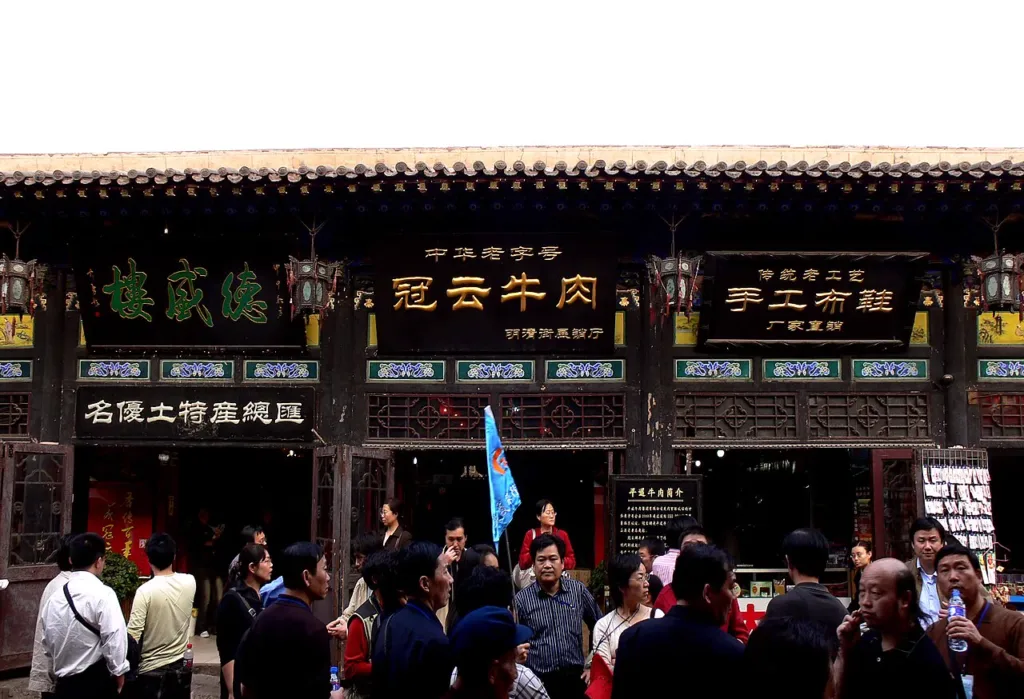
- A Pingyao beef shop bearing the Guanyun beef brand in Pingyao Ancient City, Shanxi, China. Photo: GislingPhoto: CC BY-SA 3.0