

Pork with fresh peppers 辣椒炒肉
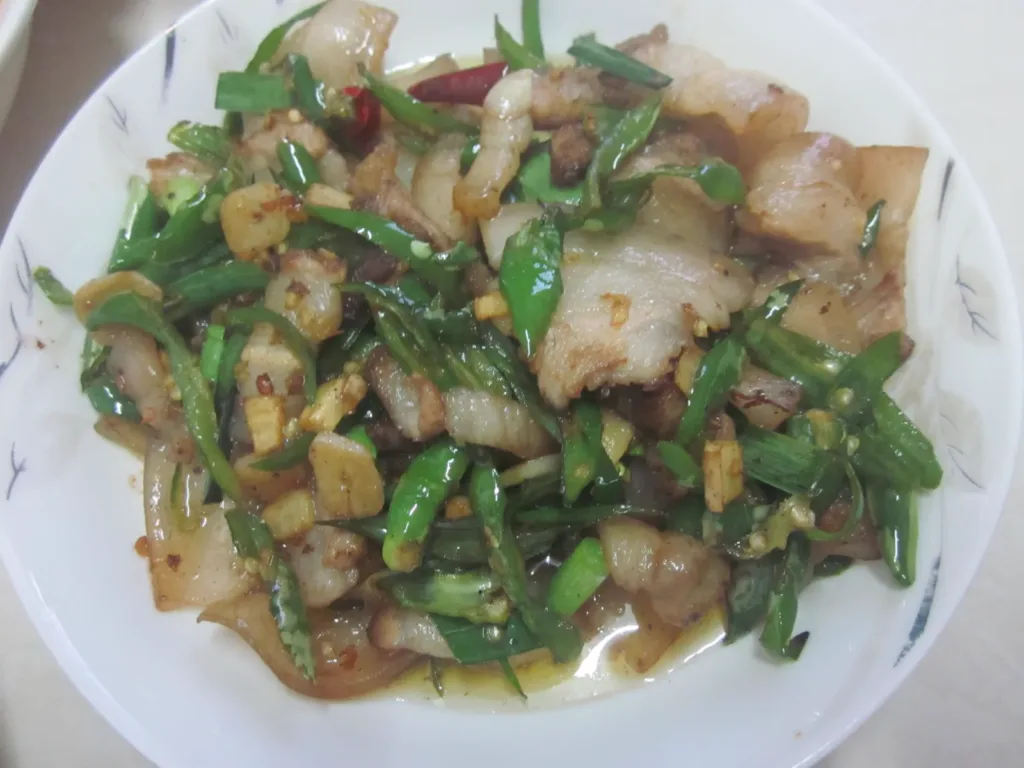
Pork with fresh peppers (辣椒炒肉) is a Hunan home-style stir-fry closely associated with Changsha. Thin-sliced pork and fresh chillies meet a hot wok; the appeal is the contrast between savoury meat, fragrant heat and peppers that can retain a little bite. It is a rice dish rather than a fixed recipe, and the choice of pork cut, chilli and seasoning matters.
Tap any red Chinese text to hear it in Mandarin.
What makes it worth ordering
Hunan’s provincial government lists stir-fried pork and pepper among Changsha’s characteristic offerings, alongside the city’s better-known noodles, stinky tofu and spicy crayfish. The dish’s appeal is its ordinariness: pork and fresh chillies become a complete, strongly flavoured meal through timing rather than elaborate presentation. A typical Changsha-style description uses sliced pork with green or red chillies, garlic and sometimes a little fermented black bean; it is wok-tossed and served with steamed rice.
The cooking is fast. Thin pieces of pork are wok-tossed with the chillies while they soften and release their aroma. What to notice is the contrast between tender meat and the fresh, lively heat of the pepper. The exact balance is not universal: a Hunan report describes the dish as a classic home-style food made with pork and fresh spiral peppers, while noting that different households produce noticeably different flavours from similar ingredients.
How to order it
Show the Chinese name 辣椒炒肉 Làjiāo Chǎoròu when ordering. Ask how hot the chillies are before the dish arrives, and order plain steamed rice alongside it. If you need less heat, you can ask whether a milder version is possible, but the result will still depend on the kitchen’s peppers and seasoning.
Do not assume that a green-and-red stir-fry is vegetarian or safe for a particular allergy. Pork is central to the dish, and garlic or fermented black bean may be included; tell the server clearly about any ingredients you avoid. The dish has no single mandated recipe, so ask about the actual preparation when that matters.
Practical tips
The strongest evidence supports a real Changsha and Hunan association, not a claim that every version is identical or that Changsha is the dish’s exclusive place of origin.
Where to eat it
You can find Pork with fresh peppers all over Hunan, so there is no need to seek out one particular restaurant. To find one near you, search for “辣椒炒肉” in Meituan (美团) or Amap (高德地图) and check recent reviews, distance and opening hours.
More dishes to compare
Explore related local specialties and compare their names, preparation notes and ordering guidance.
Western Hunan cured meat 湘西腊肉 →
Pork is salted and cured, then commonly smoked or dried before later cooking. In western Hunan meals it is sliced and steamed, stir-fried or cooked with vegetables rather than necessarily eaten uncooked. The flavor is concentrated, salty and often smoky, with fat becoming translucent and rich when heated. Texture varies with the cut and length of curing.
Fish head with chopped chilies 剁椒鱼头 →
A large fish head is split, covered with chopped salted chilies and steamed so the fish juices mingle with the topping. Some kitchens use more than one type of chili. The tender cheeks and skin contrast with the coarse chili mixture, producing a salty, spicy sauce. The head contains bones and cartilage throughout.
Sources & reading
Recipes and servings vary between kitchens.
Image credits & notes (1)
- Hunan-style pork stir-fried with fresh green and red peppers; a general Hunan food reference, not a claim that this photograph was taken in Changsha. Photo: Huangdan2060Photo: CC BY 3.0