

Qingbuliang 清补凉
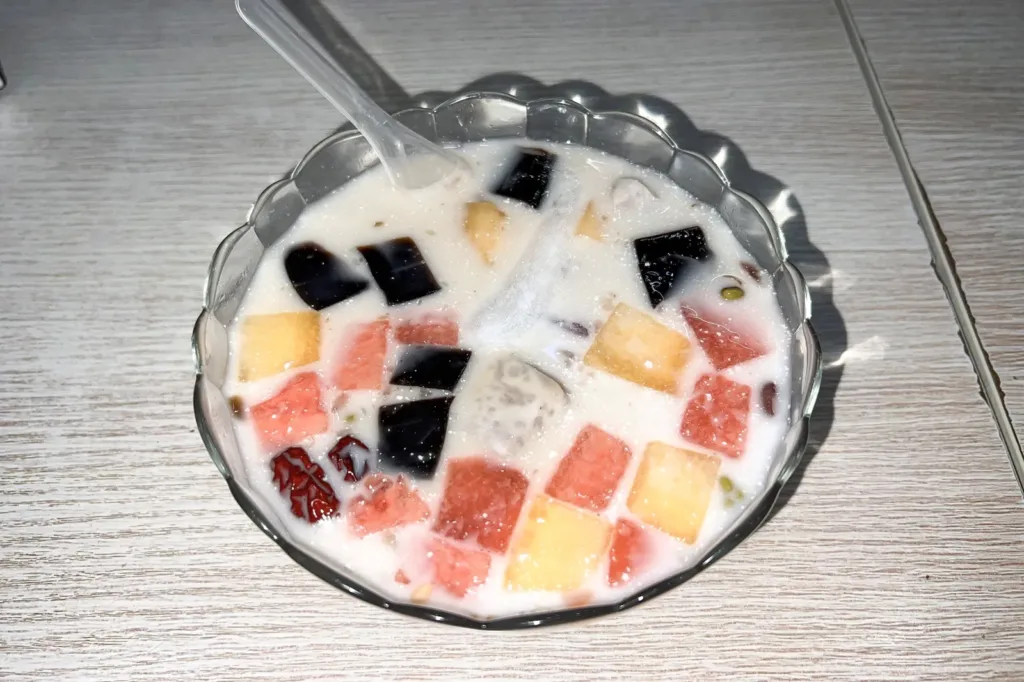
Qingbuliang is Hainan’s chilled, build-your-own dessert: coconut milk or coconut water poured over cooked beans, grains, jellies, taro, fruit and other toppings. Its appeal is the contrast between a cold sweet base and a changing mix of soft, chewy and crisp textures.
Tap any red Chinese text to hear it in Mandarin.
What it is
Qingbuliang is a cold Hainan dessert and evening snack rather than a fixed recipe. A bowl may be built around fresh coconut water, coconut milk, brown-sugar or ginger syrup, or shaved ice; the base and topping mix vary from stall to stall. Hainan’s provincial food reference describes it as a multi-ingredient sweet with fresh coconut flesh and coconut juice, while a Hainan government English guide calls it a cold dessert soup enriched with coconut milk.
What goes in it
Common components include cooked mung beans and red beans, pearl barley, sago or vermicelli, taro, grass jelly, fresh coconut meat, seasonal fruit such as watermelon and pineapple, and sometimes peanuts, red dates, quail eggs or milk. The point is not a fixed checklist: ingredients are cooked or prepared separately, cooled, then assembled with ice and a liquid base. Expect soft beans, tender grains, springy noodles or jelly, juicy fruit and coconut chew in one bowl.
How to order in Haikou
Look for 清补凉 Qīngbǔliáng on a dessert-stall or night-market menu.
Show the Chinese name 清补凉 Qīngbǔliáng when ordering. Choose the liquid base and toppings before the bowl is assembled, then ask about sweetness and ice. Coconut milk gives a fuller, creamier bowl; coconut water or a sugar-based liquid is lighter and clearer. The exact choices depend on the stall.
Before you eat
Do not infer that a bowl is vegetarian or allergen-safe from its clear appearance. Peanuts, milk, quail egg and other add-ons appear in documented versions, so ask what is in the base and topping tray if you have allergies or dietary restrictions. Recipes and service vary by stall, and no single ingredient list is required.
Where to eat it
You can find Qingbuliang all over Hainan, so there is no need to seek out one particular restaurant. To find one near you, search for “清补凉” in Meituan (美团) or Amap (高德地图) and check recent reviews, distance and opening hours.
More dishes to compare
Explore related local specialties and compare their names, preparation notes and ordering guidance.
Hainan herbal rice-dough sweet soup 鸡屎藤粑仔 →
The prepared plant is combined with rice flour to make a coloured dough, which is formed into small pieces and cooked. These pieces are served with a sweet liquid; shape and soup thickness differ by maker. Expect a chewy rice texture and a herbal aroma, softened by the sweet broth. Ginger adds warmth when included, while coconut milk makes the soup richer and changes the flavour substantially.
Yibua coconut rice cakes 椰子粑 →
A soft glutinous-rice wrapper is shaped around a sweet filling and steamed, often in a small leaf support. Coconut, peanut and brown sugar are familiar filling components. The exterior is sticky and tender, while grated coconut or crushed nuts add a more textured center. The sweetness can be quite concentrated.
Sources & reading
Recipes and servings vary between kitchens.
Image credits & notes (1)
- A bowl of coconut-milk Qingbuliang at a restaurant in Sanya, photographed on 24 March 2023; a Hainan dish illustration rather than a Haikou vendor claim. Photo: N509FZPhoto: CC BY-SA 4.0