

Tibetan Steamed Buns 藏包
Tibetan Steamed Buns is featured among the local specialties of Qinghai.
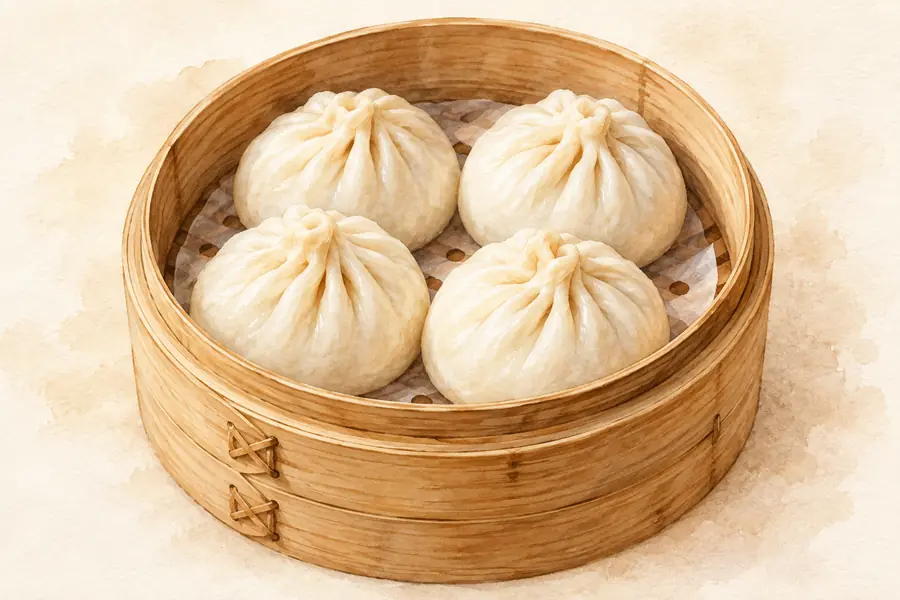
Tibetan Steamed Buns (藏包) is a filled parcel rather than a fixed recipe: on a Qinghai menu, 藏 marks it as Tibetan-style and 包 means a wrapped or filled bun, usually steamed.
How it is made
A wheat wrapper is rolled, filled with minced and seasoned meat, pleated closed and steamed rather than fried or baked. Steaming is what keeps the filling juicy, because the wrapper traps the moisture as the meat cooks.
Tibetan cooking is built on yak, mutton, dumplings, cheese, butter, yogurt and soups, with filled momo variants named among them — so parcels of this kind sit squarely inside that repertory even though 藏包 itself is not documented.
Flavour and texture
Expect a soft, slightly elastic wrapper and a moist, strongly seasoned filling; the juices are part of what you are eating, so the bun should be handled carefully when it is hot. Because the meat is usually simply seasoned, the flavour comes from the filling rather than from a sauce.
Local roots and menu reading
Tibetan cuisine is the culinary tradition of the Tibetan people in the Tibet region, and 藏包 belongs to Qinghai, which sits within that plateau area. The cuisine is background here; the local attribution is the name's own.
Ingredients and dietary needs
Wheat, water and a minced meat filling are the essentials, with onion, garlic, salt and sometimes chilli or Sichuan pepper in the seasoning. Ask 什么肉 (which meat) and 有葱蒜吗 if either matters, and note that a steamed parcel with a meat filling is not suitable for a vegetarian table.
How to order Tibetan Steamed Buns
Show 藏包 and ask 什么肉 (which meat), 一笼几个 (how many in a steamer) and 辣不辣 (is it spicy). If you want the seasoning separate, ask 醋和辣椒分开 for the vinegar and chilli to come on the side.
How to eat it and plan a meal
Eat them hot and straight from the steamer, biting a small opening first so the juice does not run out over the plate. They work as a snack or as part of a shared table with butter tea; a bowl of soup alongside is enough for a light meal, and they lose their texture quickly once they cool.
More dishes to compare
Explore related local specialties and compare their names, preparation notes and ordering guidance.
Tongren Tibetan Steamed Buns 同仁藏包 →
Tongren Tibetan Steamed Buns (同仁藏包) is the same family of steamed filled bun attributed to another place in Qinghai, which is how a shared Tibetan technique becomes two local specialities. 藏包 names the style rather than a place, so the difference between the two orders lies in the filling, the size and the seasoning rather than in the method.
Questions before you order
Is 藏包 the same thing as a momo?
They belong to the same family of steamed filled parcels, and Tibetan cooking names momo variants rather than this dish. Ask 什么肉 and look at the size when they arrive; this record does not claim the two names are interchangeable.
What is inside?
Usually a minced meat filling, because the cuisine is centred on yak, mutton and dumplings. Ask 什么肉 to confirm which meat is used in the version on the menu.
Source introduction: Wikipedia contributors: Tibetan cuisine · CC BY-SA 4.0. English guide adapted from the cited material, with additional preparation and ordering guidance.
Sources & reading
The supplied food list supports this name and regional association. The culinary terms below are explained as menu vocabulary; a local recipe, origin story and venue availability have not been independently verified.