

Huzhu Hand-Grabbed Mutton 互助手抓羊肉
Huzhu Hand-Grabbed Mutton is featured among the local specialties of Qinghai.
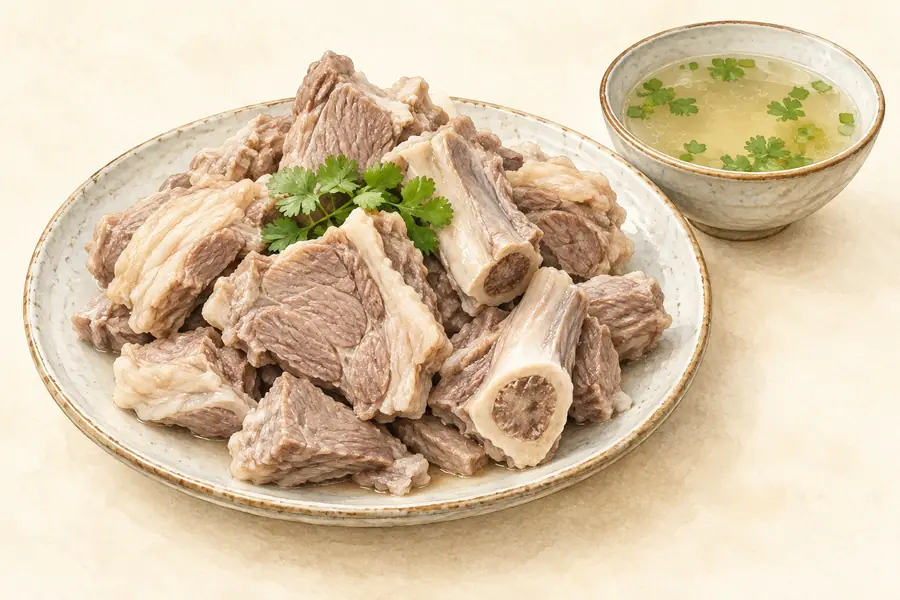
Huzhu Hand-Grabbed Mutton (互助手抓羊肉) is hand-served mutton from Huzhu Tu Autonomous County in Haidong, Qinghai, the county of the Tu people east of Xining.
How it is cooked
The mutton is boiled in salted water in large pieces and served on the bone, with the broth kept for drinking afterwards. The county’s description of a Tu-style banquet puts whole-lamb dishes — 全羊系列 — at the end of the meal, as the third course of the old 圈圈席, which is the form this plate belongs to.
Boiling is the whole technique: a shoulder or rack goes in, the water comes back to a bare simmer, and the meat stays there until it releases from the bone. Because nothing is added that would hide the flavour, the cut and the animal carry the dish.
What it tastes like
Eaten this way the mutton is mild and slightly sweet, with the fat softened rather than rendered, and the salt dip is what sharpens it. The taste is of the animal and the broth, not of spice — which is why the plain version, rather than a sauce-heavy one, is the plate people use to judge the meat.
Where it belongs
Huzhu is the Tu Autonomous County of Haidong, east of Xining, and its own tourism pages present the food as part of a larger Tu reception: 圈圈席 seating, wine offered at the door, a hada, songs and the 安召 dance. The county describes 圈圈席 as an old form of banquet that concentrates the essence of Tu food culture.
Within that meal 手抓羊肉 sits on the Tu-style menu alongside 甜醅, 酿皮, 萱麻饼 and 清汤面片, and the third course of the 圈圈席 is 全羊系列或熬饭 — whole-lamb dishes or a mixed stew. The province, for its part, lists 手抓羊肉 among the 50 dishes of the 青海家宴 menu.
Ingredients and dietary questions
Mutton, water and salt are the base, with pepper, Sichuan pepper, onion or garlic optional and chilli served as a dip. The broth is meat-based. The wider Tu meal includes wheat and barley items such as 焜锅馍 and 甜醅, so if you avoid gluten or alcohol, ask specifically about the bread and the fermented dishes rather than only about the meat.
Ordering it
Ask for 手抓羊肉 or 手把肉; portions come by weight or as a platter, so ask 多少钱一斤 and how many people it serves. If you are ordering the wider Tu meal, ask what comes with the third-course lamb — a whole-lamb series or 熬饭, a mixed stew — because the two are very different in size.
How it is eaten
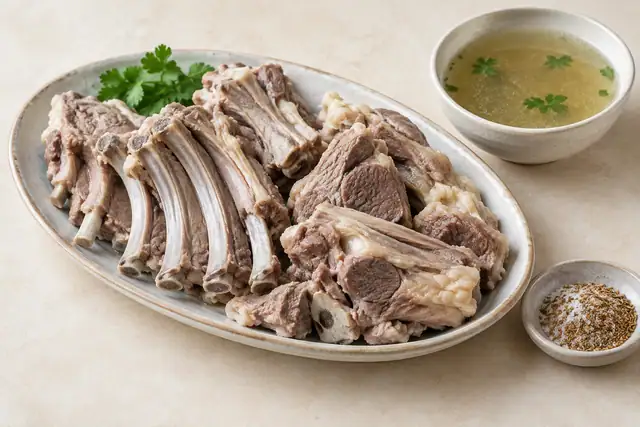
The meat arrives on a board or a wide plate and is eaten by hand with salt or chilli, followed by bowls of the cooking broth and tea. In the banquet setting described by the county, meat is one course in a sequence that runs from bread and milk tea through steamed and fried items to the lamb, so it is worth leaving room for the courses after it.
More dishes to compare
Explore related local specialties and compare their names, preparation notes and ordering guidance.
Darlag Hand-Grabbed Mutton 达日手抓羊肉 →
Darlag Hand-Grabbed Mutton (达日手抓羊肉) carries the name of Dari County in Golog Prefecture, while 互助手抓羊肉 belongs to Huzhu Tu Autonomous County in Haidong. Both are mutton boiled in pieces and eaten by hand; the difference is the district behind the label and, in Huzhu, the place the dish takes inside a Tu banquet.
Questions before you order
What is 圈圈席?
An old Tu banquet form the county describes as circle seating, with courses served in a set order: bread and milk tea first, then steamed and fried items, and whole-lamb dishes or a mixed stew as the third course. 手抓羊肉 belongs to that Tu-style table.
Is Huzhu mutton a particular breed?
That is not what the sources read here say. The county page documents the banquet and the menu that includes 手抓羊肉, not a registered breed or product label, so treat the county name as the place of the table rather than as a certified product claim.
Sources & reading
The supplied food list supports this name and regional association. The culinary terms below are explained as menu vocabulary; a local recipe, origin story and venue availability have not been independently verified.