

Mixed Offal Soup 杂碎汤
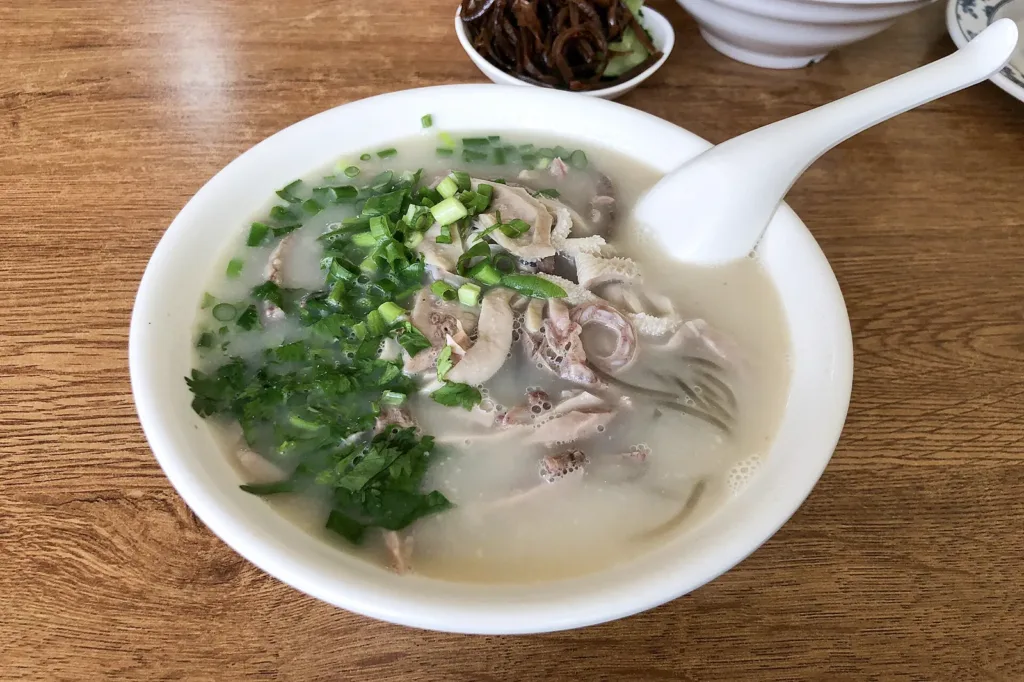
Mixed Offal Soup (杂碎汤, zásuì tāng) is a Xining breakfast of cooked beef and sheep offal in hot broth. Its appeal is the bowl’s range of textures—from head meat and tongue to tripe and intestines—usually served with a plain flatbread, while the exact mix varies between kitchens.
Tap any red Chinese text to hear it in Mandarin.
Xining’s 杂碎汤 is best understood as a morning bowl rather than a single fixed recipe. The Huangzhong District government describes it as a famous Xining snack made from cattle and sheep offal and identifies it as a traditional Hui food. That is a useful local description, but it does not mean every shop uses the same combination of parts or seasoning.
What is in the bowl?
A beef-offal version may include beef head meat, tongue, tripe and intestines. A sheep-offal version, often called 羊杂汤, is described by the Xining Evening News with sheep head, heart, liver, intestines and blood. These examples explain why one bowl can move from tender meat to springy tripe and chewy intestine; they are examples of local versions, not a universal ingredient list.
The dish is served hot, often alongside a soft white flatbread. A Qinghai government food feature places hot 牛杂汤 and flatbread at the start of a Xining morning, while a local newspaper describes 羊杂汤 as a long-standing comfort food whose place in local eating culture is difficult to replace.
How it is made and eaten
The basic preparation is practical and slow: the offal is washed, cooked until done, cut into pieces and returned to hot soup. The sheep-offal description names spring onion, chilli and salt as seasonings. Garnishes and the balance of broth, meat and tripe can change from one kitchen to another, so the interesting part is the contrast between pieces rather than a promise of one exact flavour.
Try it early in the day, when the dish fits the breakfast rhythm described by local sources. Keep the Chinese name 杂碎汤 Zásui Tāng handy when ordering. A menu may instead lead with 牛杂汤 Niúzá Tāng for a beef-offal bowl or 羊杂汤 Yángzá Tāng for a sheep-focused one; ask what parts are included if that distinction matters to you. The food is associated with Xining’s wider Hehuang eating culture, where 羊杂碎汤 appears among the dishes in a day-long local food itinerary.
Dietary and practical notes
This is not a vegetarian dish. The documented versions contain animal offal, and the sheep version may include blood. If you avoid a particular organ, blood or animal product, ask before ordering; do not judge the contents from the broth’s appearance. The accompanying flatbread is part of the documented local presentation, so visitors with food allergies should confirm the side dish as well.
Where to eat it
You can find Mixed Offal Soup all over Qinghai, so there is no need to seek out one particular restaurant. To find one near you, search for “杂碎汤” in Meituan (美团) or Amap (高德地图) and check recent reviews, distance and opening hours.
Sources & reading
Image credits & notes (1)
- A bowl of lamb offal soup photographed in Beijing, used here as a regional visual reference for Xining’s broader 杂碎汤 category; it is not a photograph of a named Xining vendor. Photo: N509FZPhoto: CC BY-SA 4.0