

Rice with salted pork and greens 咸肉菜饭
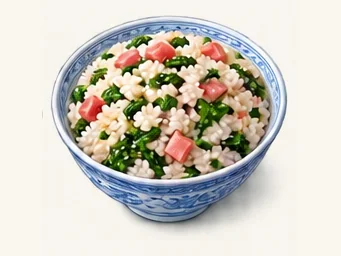
Rice with salted pork and greens, 咸肉菜饭 (cài fàn), is a Shanghai-associated home-style rice dish that brings leafy greens and salted pork together with rice. Expect savory, gently salty meat, tender greens, and rice that can turn glossy when cooked with pork fat; the ingredients and cooking sequence vary by household and shop.
Tap any red Chinese text to hear it in Mandarin.
What the name means
The name cài fàn means “vegetable rice.” A familiar version combines rice, leafy greens and salted or cured pork in one substantial bowl. Shanghai accounts also remember the older nickname 咸酸饭 (xián suān fàn). Here “咸酸” is a dialect expression for food with flavor or savoriness, not an instruction to add vinegar and not a claim that the rice should taste sour.
That local association is well established in the sources, but they do not prove that the dish was invented in Shanghai or that every household follows one canonical recipe. An account of older Shanghai cooking recalls lettuce-stem leaves as one traditional green; contemporary recipes often use bok choy. Treat those as documented versions, not a fixed ingredient rule.
What goes into the bowl
The core is cooked rice, chopped leafy greens and 咸肉 (xiánròu), salted pork. One documented home recipe uses diced cured pork with rice and chopped baby bok choy. Some cooks add pork lard or another cooking oil; ginger appears in that recipe too. The balance of rice, greens and meat, and whether to add aromatics or fat, is a matter of the cook rather than a universal Shanghai standard.
The look is simple: pale rice flecked with green leaves and small pink-to-brown pieces of pork. When a cook uses pork fat, it can give the grains a light sheen and a fuller aroma. The pork supplies the strongest salty, cured-meat savor; rice softens that intensity, while the greens bring a mild vegetal taste and a more tender or slightly firm bite depending on when they are added.
How it is cooked—and why versions differ
A representative method starts the rice with water and diced salted pork so the rice cooks alongside the meat. The greens may be stir-fried separately until just wilted, then placed over the nearly cooked rice and steamed through. That later addition preserves more of their shape and color than cooking them for the full rice cycle. Other household or shop methods combine the greens and rice earlier, so the vegetables become softer and their flavor is more thoroughly mixed through the grains.
Pork fat is a traditional choice in some accounts, but it is not the only way to cook the dish: the recipe source also gives ordinary oil as an alternative. Salted pork itself varies in saltiness, so a cook may adjust water or seasoning rather than treat one measurement as standard. The result is usually more like seasoned rice than a sauced rice bowl; it should not be assumed to have the same ingredients or texture at every restaurant.
Ordering and dietary questions
Show the characters 咸肉菜饭 xiánròu càifàn when ordering. If you want to know how a particular serving is made, ask 用什么青菜? (Yòng shénme qīngcài? — “What greens do you use?”) or 菜饭里放猪油吗? (Cài fàn lǐ fàng zhūyóu ma? — “Does the rice contain lard?”). These are questions for that kitchen, not a guarantee about its ingredients or preparation.
Salted pork is part of the named dish, and lard may also be used. If you avoid pork, ask whether the rice contains pork fat or meat stock as well as visible pork; a green-looking bowl is not necessarily meat-free. Recipes and individual kitchens differ, so do not assume the serving meets a dietary or allergy requirement without a clear answer.
More dishes to compare
Explore related local specialties and compare their names, preparation notes and ordering guidance.
Red-braised pork belly 红烧肉 →
Pork belly is cut into chunks and slowly braised with soy sauce, sugar and aromatics until the sauce reduces. Shanghai-style versions often give noticeable weight to sweetness and a glossy finish. The lean meat becomes tender while the fat turns soft and yielding. Sweetness, salt and rich pork flavor should remain in balance.
Pork chop with rice cakes 排骨年糕 →
A seasoned pork chop is cooked, often with a fried coating, and served with soft rice cakes and a savory-sweet sauce. Both elements are prepared to retain their distinct textures. The meat offers browned edges and a firm bite, while the rice cakes are sticky, elastic and good at holding sauce.
Sources & reading
Recipes and servings vary between kitchens.