

Roast Tibetan pork 烤藏香猪
`烤藏香猪` is a Nyingchi-area way to roast Tibetan fragrant pork: block-cut meat is cooked over charcoal or a brazier so skin, fat and lean meat meet in one bite, while Gongbu-style seasonings vary by kitchen.
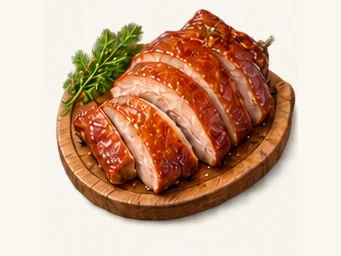
烤藏香猪 is best understood as a Nyingchi-area serving of Tibetan fragrant pork, not a dish with one codified recipe or a claim of city-only invention. The regional government describes Tibetan fragrant pork as one of Nyingchi’s specialty agricultural products, while local tourism material places the roast within the food culture of the Gongbu area.
What to look for
The appeal is the contrast between the browned skin, rendered fat and firmer lean meat. CCTV’s Nyingchi food segment describes the ingredient as having thin skin and fine meat that needs only slow roasting. That makes the cut worth noticing: a piece with skin, a little fat and lean meat gives a more useful sense of the dish than a dry lean slice alone.
Local descriptions show why the name does not guarantee one fixed recipe. One Nyingchi tourism article describes large pieces roasted until golden over a brazier, with fat dripping into the fire and making a sizzling sound, alongside Tibetan-style chilli. Another describes thin-skinned pork rubbed with a sweet, honey-style Gongbu seasoning before it goes over charcoal. These are related local presentations, not a single mandatory formula.
An English Nyingchi food guide records another variation: salt and Chinese pepper rubbed over the skin, followed by air-drying before roasting. Treat that as a reported preparation rather than a rule for every kitchen. Ask how the batch was seasoned and cooked if the method matters to you.
How to order and eat it
烤藏香猪 is commonly presented for sharing. Start with a small portion and check the balance of skin, fat and lean meat before ordering more. If the menu sells it by cut or weight, confirm the cut, weight and total price; the same Chinese name can cover different portions and levels of crispness. A little vegetable or a fresh side can make a rich roast easier to pace, but there is no single required accompaniment.
Search for “烤藏香猪” on Meituan (美团) or Amap / Gaode Maps (高德地图) to find nearby places serving this dish. Check menus, recent reviews, opening information and today’s availability before choosing.
Dietary notes
This is pork, so it is not vegetarian. Seasoning is not necessarily limited to salt: local descriptions mention Tibetan-style chilli and a sweet, honey-style spice mixture, while other accounts mention salt and Chinese pepper. Ask about the marinade, chilli, shared grill and cross-contact if you have allergies or avoid particular ingredients. If you avoid alcohol, ask whether a sauce or marinade contains it; roasting is not proof that any alcohol has disappeared.
烤藏香猪 has no single address, visitor entrance or dedicated transport route. It is a dish to search for near wherever you are staying, and supply can change by kitchen and day. Do not treat a map result or ranking as proof of quality or authenticity.
More dishes to compare
Explore related local specialties and compare their names, preparation notes and ordering guidance.
Yogurt rice 酸奶拌饭 →
Cooked rice is combined with dairy yogurt, either mixed together or served so the diner can adjust the proportions. Sugar or other sweet additions may be offered. The rice is soft and mildly sweet from its grain, while the yogurt is creamy and distinctly tart; temperature also changes the contrast.
Lulang stone-pot chicken 鲁朗石锅鸡 →
Chicken is simmered in a stone pot with broth and aromatics, often joined by vegetables or mushrooms. The heavy vessel retains heat and keeps the shared soup hot during the meal. Tender chicken and a savory broth lead, while mushrooms can add earthy fragrance and springy texture. The pot remains hot long after arriving.
Sources & reading
Recipes and servings vary between kitchens.