

Yellow River Estuary Hard Clams 黄河口文蛤
Yellow River Estuary Hard Clams is featured among the local specialties of Shandong.
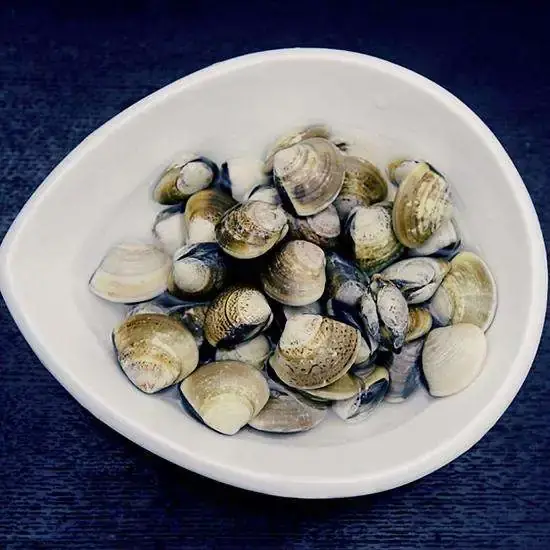
Photo adjustments
EXIF orientation normalized; resized without changing aspect ratio; converted to WebP. No subject edits.
Yellow River Estuary Hard Clams (黄河口文蛤) is the hard clam raised on the tidal flats where the Yellow River mixes with the Bohai Sea near Dongying, in Shandong — farmed rather than gathered, and sold as one of the coast’s shellfish staples.
How it is made
These clams are not simply picked up off a beach. The Dongying district of 河口区 treats 文蛤 and 杂色蛤 as its main species and runs the beds as a managed crop: spat is bought and sown onto the flats, the small clams are kept back while the grown ones are taken, and the harvest rotates from bed to bed so that heavy clearing never strips one area. Across the management zone that has added up to tens of thousands of tonnes of standing shellfish stock, with several thousand tonnes lifted in a year. Eleven shallow-sea shellfish farms are reported in the district.
Flavour & texture
A hard clam is judged by meat and by grit. The river-mouth mixing zone that grows these clams is high in oxygen, rich in organic matter and full of natural feed, which is why the flats produce shellfish at all; 文蛤 raised there are sold on the size and quality of the meat rather than as anonymous seafood. Expect a firm, slightly chewy body with a clean saline sweetness. The single biggest risk to a good bowl is sand, not seasoning — so the purging matters as much as the cooking.
Local roots & traditions
Shellfish is the working identity of the lower Yellow River delta, and Dongying has built fisheries policy around it. The city describes 河口区 as home to the province’s largest production base for quality clams including 文蛤, and the district has run shellfish restoration and managed harvest since the late 1990s, adding 泥螺 and other species alongside the clams.
Ingredients & dietary needs
The base is clams, clean water and salt — purged hard clams, then a hot pan or a pot of broth with ginger, scallion and a little rice wine or vinegar. Shellfish is a major allergen, and clams carry iodine and a fair amount of sodium, so check with the kitchen if either matters. Ask whether a dish is cooked with wine or with a meat stock, because a soup or a braise may carry ingredients a plain clam dish does not.
How to order Yellow River Estuary Hard Clams
Ask for 黄河口文蛤, or simply 文蛤, and ask which coast it came from — other Chinese coasts sell clams under the same two characters. In Dongying, ask whether the clams are 河口 or 垦利 landings. Live clams should be closed tight and heavy for their size, and a seller should be willing to tell you how long they have been purged. Ask how the kitchen intends to cook them: a clear soup keeps the clam itself in focus, while a heavier braise will bury a small one. If you are buying by weight, ask for the size grade.
How to eat it & plan a meal
Clams should arrive just opened. Once a shell is wide and the meat has firmed, it is done; leave it in the pot another minute and it toughens. Lift the meat out with chopsticks, dip it in the cooking broth or a light vinegar dip, and leave any clam that stayed shut. A bowl of clam soup is a starter for two to three people rather than a main course, so pair it with rice and one or two stronger dishes.
More dishes to compare
Explore related local specialties and compare their names, preparation notes and ordering guidance.
Yellow River Estuary Hairy Crabs 黄河口大闸蟹 →
Yellow River Estuary Hairy Crabs (黄河口大闸蟹) is the other shellfish Dongying brands for the same stretch of coast, and the contrast is one of farming model and occasion. The crab is a ponded animal: stocked at around 1,500 juveniles per mu, fed on planted weed and seeded snails, graded by size and sold in early autumn as a seasonal luxury. Huang He Kou Wen Ge (黄河口文蛤) is a tidal-flat animal, sown and rotated across intertidal beds and shipped in bulk by weight.
Questions before you order
Why do these clams come from tidal flats?
The mixing zone where the river meets the sea is high in oxygen with heavy organic matter and natural feed, so the flats can support dense shellfish beds.
How do I know the clams were purged?
Live clams should be shut tight and heavy, and the kitchen should be able to say how long they were held in salt water; sand is the usual fault in a badly handled bowl.
Sources & reading
The supplied food list supports this name and regional association. The culinary terms below are explained as menu vocabulary; a local recipe, origin story and venue availability have not been independently verified.