

Stir-Fried Pork with Jingdong Pickled Cabbage 京冬菜炒肉
Stir-Fried Pork with Jingdong Pickled Cabbage is featured among the local specialties of Shandong.
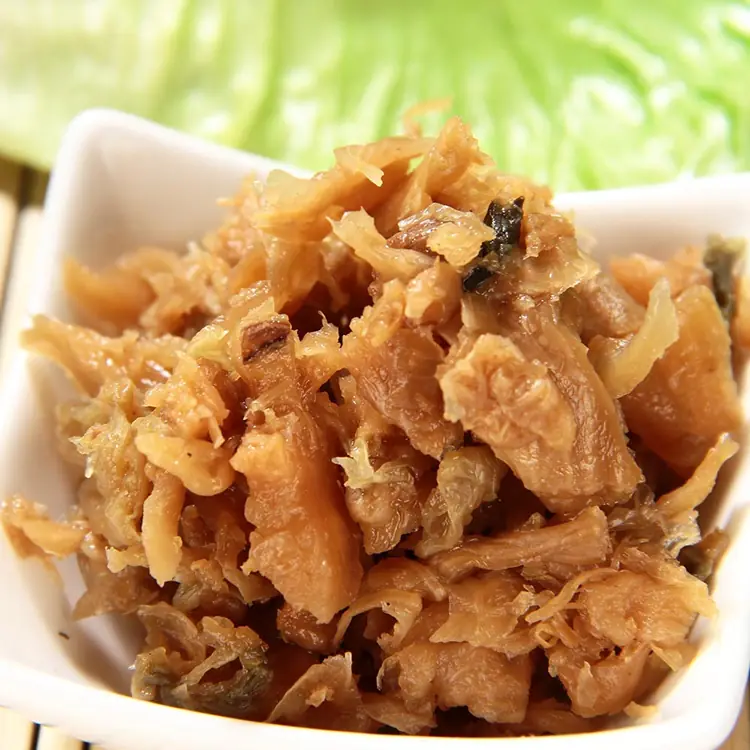
Image notes
Resized for the web; the photo itself has not been edited.
Stir-Fried Pork with Jingdong Pickled Cabbage (京冬菜炒肉) is a pork stir-fry built on 京冬菜, the hand-made cabbage pickle of Rizhao in Shandong that was once the county’s only tribute to the imperial court.
How it is made
Everything here starts with the pickle, and the pickle is slow. Firm, juicy cabbage is trimmed down to the pale inner leaves and cut by hand into fine even strips, then spread in the sun and turned regularly for three to five days until dry. The dried strips are mixed with the yard’s own brewed soy sauce and Shaoxing huadiao wine, kneaded once a day for seven days, and then given pepper skin, white sugar and natural sun-seasoning before being packed tight into jars, sealed and left to steep for a hundred days. The dish itself is the fast part: pork is stir-fried and the finished 京冬菜 goes in with it, so the cured cabbage brings the salt, the soy aroma and the crunch.
Flavour & texture
A good 京冬菜 is described as 色泽如棕、酱香宜人、味美开胃 — brown in colour, pleasant in soy aroma, tasty and appetite-opening — with a texture that is 清亮、甜脆、鲜咸. It has none of the raw bite of fresh cabbage: the long cure and the hundred days in the jar leave something closer to a firm relish, sweet at the edge and savoury underneath. In the stir-fry that pickle does the seasoning, so the pork takes on its soy and wine flavour while the cabbage strips keep their crunch.
Local roots & traditions
京冬菜 belongs to Taoluo town in Rizhao, where the Yuyuan sauce yard created the brand in 1851, and the 京 in its name records a rarer fact: it was the only item Rizhao county sent to the imperial court as tribute in the Qing period. The technique is more than 160 years old, and in 2007 the traditional production process entered Rizhao’s first municipal intangible-heritage list. By the Daoguang period it had become standard on the tables of the larger Taoluo families.
Ingredients & dietary needs
The pickle is cabbage, brewed soy sauce, Shaoxing wine, pepper skin and white sugar; the stir-fry adds pork. That makes the dish unsuitable for vegetarians as written, and both soy and wheat are usually present in the brewed soy sauce, so anyone avoiding either should ask what the kitchen used. Salt is the thing to watch: 京冬菜 is a preserved vegetable and already seasoned, so a cook who adds soy or salt on top of a generous handful can push the dish well past savoury.
How to order Stir-Fried Pork with Jingdong Pickled Cabbage
Ask for 京冬菜炒肉 and, if the menu allows, ask whether the kitchen uses the hand-made Taoluo pickle or a factory jar, because the two differ in sweetness and firmness. In Rizhao you can also buy 京冬菜 by the jar or the small dish as a relish to take home; ask for a taste before buying a whole jar. Say how spicy you want it if chilli goes in, and ask whether the pork is shredded or sliced so you know what is coming. If you only want the pickle rather than the stir-fry, ask for it as a 小菜 with rice.
How to eat it & plan a meal
Serve it with plain rice or porridge rather than with another strongly seasoned dish: the pickle is the flavour, and a bowl of white rice lets you eat more of it. On its own, a spoonful of 京冬菜 works the way a relish does, alongside steamed bread or congee in the morning. Because the pickle keeps about three years sealed and a long time after opening in the fridge, it makes a sensible souvenir; keep it cold, use a dry spoon, and taste before adding it to a second dish so you do not double the salt.
More dishes to compare
Explore related local specialties and compare their names, preparation notes and ordering guidance.
Bazirou 把子肉 →
Bazirou (把子肉) is the substantial braised pork of everyday Jinan eating — a thick piece of belly cooked in soy sauce until it is soft enough to spoon over rice. Jing Dong Cai Chao Rou (京冬菜炒肉) is the opposite kind of pork dish: quick-fried, and led by a fermented cabbage that carries the salt, the wine and the crunch while the meat takes a supporting role. One is a braise that needs hours; the other is a wok dish built on a pickle that took a hundred days to make.
Questions before you order
What does the 京 in 京冬菜 mean?
It records the pickle’s history as tribute: Rizhao county’s 京冬菜 went to the imperial court in Beijing, and the name has kept that link.
How long does 京冬菜 keep?
Sealed and fully steeped, the finished pickle is described as keeping about three years; once opened, refrigerate it and use a dry spoon.
Sources & reading
The supplied food list supports this name and regional association. The culinary terms below are explained as menu vocabulary; a local recipe, origin story and venue availability have not been independently verified.