

Laoshuku Glutinous Rice Balls 老鼠窟元宵
Laoshuku Glutinous Rice Balls is featured among the local specialties of Shanxi.
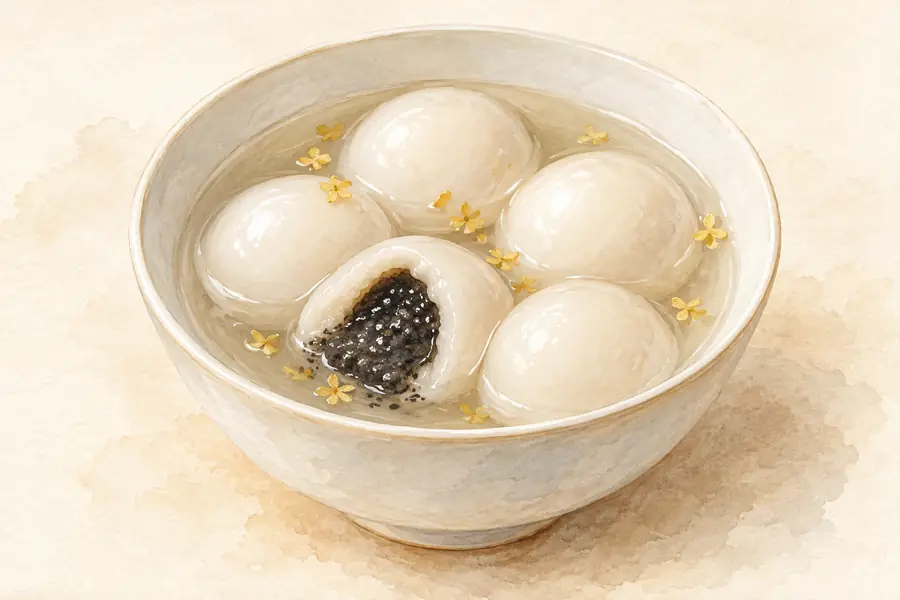
Laoshuku Glutinous Rice Balls (老鼠窟元宵) are the yuanxiao (元宵) of the Hengyicheng Sweet Shop (恒义诚甜食店) in Taiyuan (太原), Shanxi. The shop stood at the mouth of Laoshuku Lane (老鼠窟, literally "rat hole") on Zhonglou Street (钟楼街), and the lane gave the rice balls their popular name. In 2009 they were added to Shanxi's second provincial list of intangible cultural heritage.
Where it comes from
Taiyuan Daily traces the rice balls to the 1930s, when a street hawker named Shen You (申友), known by his childhood name "Sanhuo" (三货), carried yuanxiao and other sweets around the Zhonglou Street area. As trade grew, the Shen family fixed their stall at the mouth of Laoshuku Lane, and take-away packets carried a red slip printed "Shen's yuanxiao, Laoshuku mouth" (申记元宵、老鼠窟口). The family later took over the failing Hengyicheng butcher's shop next door, kept its name and opened the Hengyicheng Sweet Shop.
After 1956 the shop became a state enterprise under the Taiyuan catering company. During the Cultural Revolution it was renamed the Red Guard Sweet Shop, and the city government restored the Hengyicheng sign in 1984. Its assorted osmanthus yuanxiao were named one of Taiyuan's ten famous snacks in the 1960s, and in 1996 the Ministry of Internal Trade listed Hengyicheng as a China Time-honoured Brand (中华老字号).
How it is made
According to a long-time Hengyicheng employee quoted by Taiyuan Daily, the founder used only glutinous rice from the area of Huata village (花塔村) at Jinci (晋祠). The rice was soaked for three to four hours in summer and twelve to thirteen in winter, ground on a stone roller and sifted through a fine sieve. The rose filling is made from blossoms picked when they are just about to open, pulled apart petal by petal, worked repeatedly with white sugar and then cured. The balls are rolled without a pause, going through at least six rounds of dipping and rolling in the flour, which leaves them firm yet springy.
Flavour and texture
The rice balls have a thin skin and a large filling, and the skin is snow-white, soft and sticky. Biting into a rose yuanxiao releases the scent of rose. Besides the traditional assorted osmanthus filling, the shop later added rose, sesame, peanut and black sesame. China National Radio reports that long-time Taiyuan residents eat a bowl of Laoshuku yuanxiao every Lantern Festival (元宵节, the 15th day of the first lunar month), and Taiyuan Daily describes queues at the shop in the days before the festival.
Sources & reading
Written from the linked sources and fact-checked against them on 2026-09-24. Recipes and servings vary between kitchens.