

Lingshi Gulei Dish 灵石骨累
Lingshi Gulei Dish is featured among the local specialties of Shanxi.
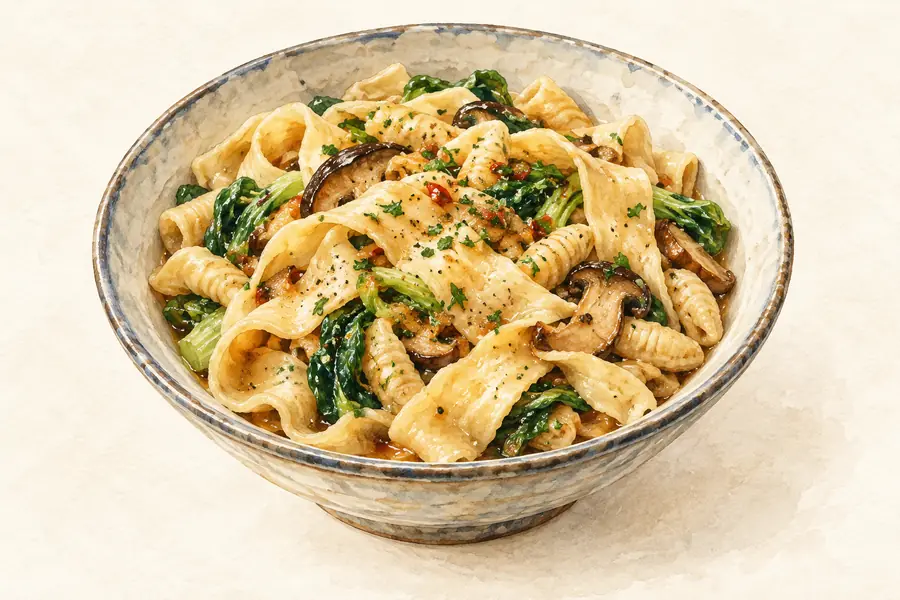
Lingshi Gulei Dish (灵石骨累) appears in the Shanxi list under 灵石 in the Jinzhong area, and its name is the useful part: 骨 points towards bone or bone-in meat, while the full name is not standard menu vocabulary.
Reading a name that does not explain itself
Chinese dish names usually tell you something. A character may name the main ingredient, the cooking method or the shape, and a reader can often predict the plate from the label. 灵石骨累 does not work that way. The first two characters are the place, and of the remaining two, 骨 in a food name most often signals bone or a bone-in cut, while the second character is not a standard cooking term at all. That is a real limit rather than a translation problem, because a name that does not describe a technique cannot tell you what the kitchen will do.
The practical answer is not to guess, because a household version and a kitchen version can differ most where the name constrains neither cook.
What to expect from a banquet-grouped dish
Entries catalogued with regional dishes and banquets in Shanxi tend to be cooked, shared and served in a bowl or a deep plate, which is what makes them work at a table of several people. That is the broad shape, not a promise about this plate. The flavour could sit anywhere between a clean braise and something heavy with fat, salt and spice, so the honest expectation is a savoury cooked dish to be shared, with the details supplied at the table rather than by the label.
The place in the name
灵石骨累 opens with 灵石, a place name in the Jinzhong part of central Shanxi, and that prefix is the part of the name a reader can rely on: it narrows the dish to one place rather than to a region-wide standard. The remaining characters resist translation, in the way that Shanxi names built on 面, 饼 or 火烧 do not. That is what makes the venue rather than a dictionary the right place to ask.
Ingredients and dietary checks
Because the name does not fix the ingredients, every dietary question has to be asked rather than inferred. The place to start is the main component: ask 主料是什么 (what is the main ingredient), 有肉吗 (is there meat), 是什么肉 (which meat) and 辣不辣 (how spicy). If the dish does involve bone or a bone-in cut, ask 带骨吗 (is it served on the bone), then ask 有汤吗 (is there liquid) and 有辣椒吗 (is there chilli). Anyone avoiding gluten should ask about soy sauce and wheat-based seasoning separately.
How to order it
Show the four characters 灵石骨累 and ask the kitchen to describe the plate before you commit: 是什么做的 (what is it made from), 怎么做的 (how is it cooked) and 一份多大 (how big is a portion). If the reply mentions meat, ask 是什么肉 next, and if it mentions bone, ask 能要没骨头的吗 (can it be without bone). Where it is served as a shared dish, ask 可以小份吗 (is a smaller portion possible) and 配什么主食 (what staple goes with it).
Eating and sharing it
Serve it from the middle of the table with the serving spoon, and take a small amount first, since an unknown braise can be saltier or richer than its appearance suggests. If there is liquid, spoon some over rice rather than over a steamed bread, which will simply absorb and soften. Use the serving utensils rather than your own chopsticks, and ask 有公筷吗 (are there serving chopsticks) when the dish arrives.
More dishes to compare
Explore related local specialties and compare their names, preparation notes and ordering guidance.
Tijian noodles 剔尖 →
Tijian noodles (剔尖) show the opposite case: the name is short, the technique is legible, and a reader can picture boiled wheat pieces before ordering. Placed next to an opaque local name, it makes the point that in Shanxi the label is sometimes a map and sometimes only a place.
Questions before you order
What does 骨累 mean?
It is a local dish name rather than a description. 骨 usually points towards bone or a bone-in cut in Chinese food names, but the whole phrase is not standard menu vocabulary, so the plate has to be described by the kitchen.
How should I order a dish I cannot translate?
Show the Chinese characters and ask 是什么做的 (what is it made from), 怎么做的 (how is it cooked) and 有肉吗 (is there meat). Read the answer before deciding, and ask 一份多大 (how big is a portion) if it looks like a shared dish.
Sources & reading
The supplied food list supports this name and regional association. The culinary terms below are explained as menu vocabulary; a local recipe, origin story and venue availability have not been independently verified.